Museo de Bellas Artes de Murcia, Art museum in central Murcia, Spain
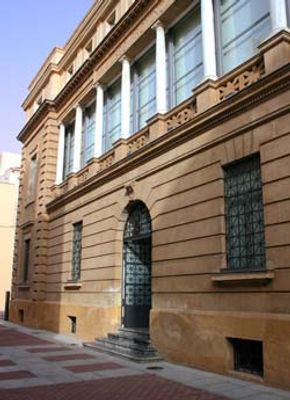
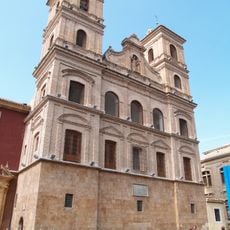
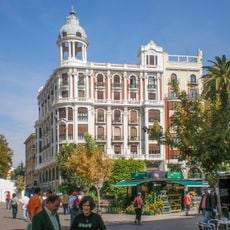
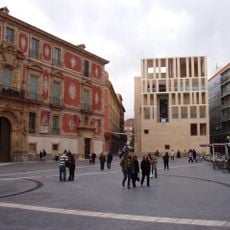
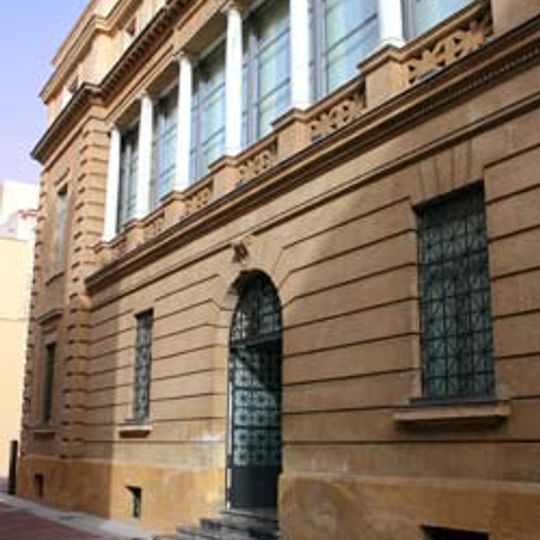
The Museo de Bellas Artes de Murcia occupies the Pabellón Cerdán, a stone building erected between 1903 and 1905 by architect Pedro Cerdán on the site of the former Convento de la Trinidad. Its lower storey has rusticated horizontal grooves and a dark metal double door with a curved top and small panes; above, four tall arched windows are separated by pale columns over a carved stone balustrade. A second building, the Pabellón Contraste, holds offices, an auditorium and temporary exhibition rooms.
The Provincial Museum was created in 1864 and first occupied the Salón de Levante of the Teatro de los Infantes, later moving to the Palacio del Contraste de la Seda on Plaza de Santa Catalina. Between 1903 and 1905 Pedro Cerdán built the present museum on the site of the former Convento de la Trinidad, reusing its white marble cloister columns and wooden staircase. It opened in 1910, and in 1953 the archaeology section moved out, leaving the fine arts collections.
The collection is arranged by floor: 16th-century Renaissance panels by Hernando de los Llanos and Juan de Vitoria, then Murcian baroque painters such as Pedro de Orrente and Nicolás de Villacís, with Nicolás de Bussy's sculpture of Saint Francis Borgia. The second floor holds Zurbarán, Ribera, Murillo and Valdés Leal plus a Gabinete with maps of the Huerta de Murcia, 18th-century ceramics and Piranesi engravings. The top floor covers the 19th century, from Rafael Tegeo to Sorolla and the sketches for the Teatro Romea ceiling.
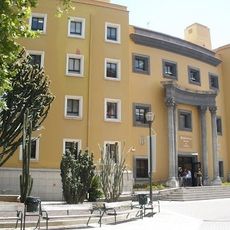
The museum occupies two pavilions: the historic Pabellón Cerdán, which holds the collections, and the Pabellón Contraste, used for offices, the assembly hall and temporary exhibitions. The entrance on the stone facade has a few steps and a tall grilled door. The building was remodelled between 2000 and 2005 to bring its facilities up to date.
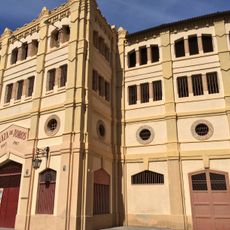
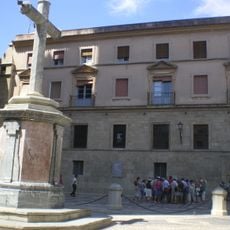
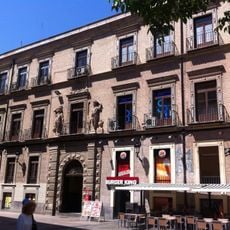
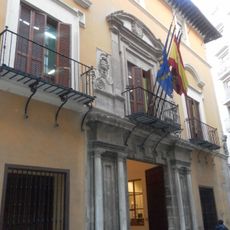
The two large baroque facades on the building came from the Palacio del Contraste de la Seda, the museum's former home on Plaza de Santa Catalina, after its demolition in the 1930s. The building also reuses white marble columns from the old convent cloister and the convent's wooden staircase.
The community of curious travelers
AroundUs brings together thousands of curated places, local tips, and hidden gems, enriched daily by 95,118 contributors worldwide.