Plaza Mayor, Cáceres, Porticoed square in Cáceres, Spain
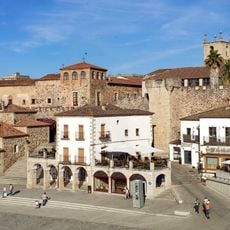
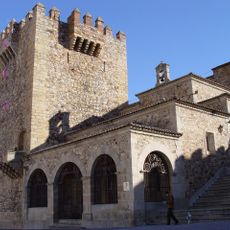
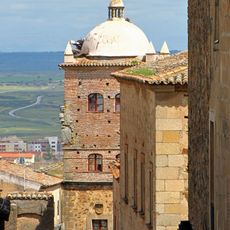
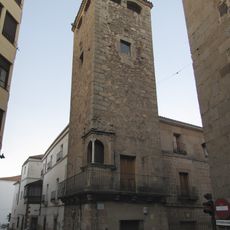
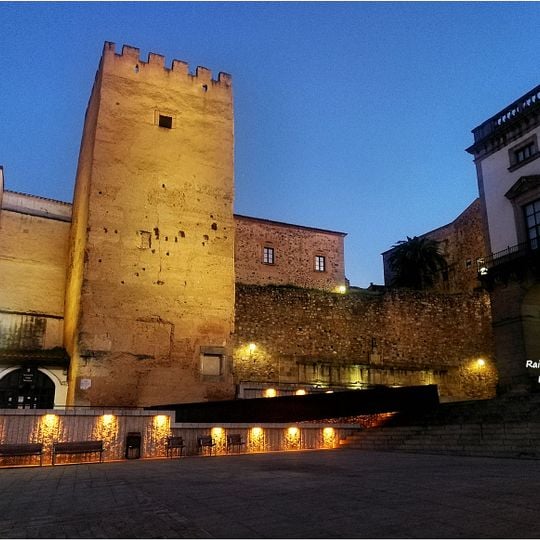
Plaza Mayor is a slightly sloping rectangular square in Cáceres, bordered to the east by the city wall with the Torre de Bujaco, the Arco de la Estrella and the Torre de los Púlpitos. Most surrounding buildings have three storeys, and the west side keeps 16th-century arcades with segmental arches on stone pillars. The centre has a promenade built in 2001.
The square appeared in the 14th century on a slightly sloping rectangular plot equidistant from the two main settlements outside the walls: the houses around the church of Santiago and those by the Puerta de Coria. It was laid out for fairs, markets and public festivities, and over the years became the city's main square, replacing the esplanade beside Santa María.
The name Plaza Mayor simply marks it as the town's main square, a role it took over from the esplanade beside Santa María. Fairs and markets have been held on this slightly sloping rectangle since the 14th century, when it grew between the Santiago and Coria quarters. The arcaded west side now holds bars, restaurants and shops, and Calle Pintores, the city's most commercial street, starts at the south end.
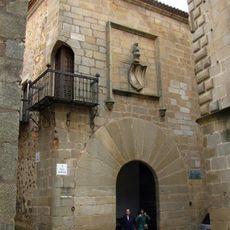
The square slopes slightly and is paved with a pattern recalling Cáceres brick vaulting; in summer, water runs across the central pavement from jets. The 16th-century arcades on the west side shelter pedestrians from sun and rain. The Arch of La Estrella, beside the Bujaco tower, leads into the monumental city.
The central pavement of the square reproduces the pattern of the brick vaults typical of Cáceres, and water spouts set into it slide water across the surface during the hottest summer hours. The 2011 redesign by Antonino Antequera, Francisco Pol Méndez and Asunción Rodríguez Montejano also added a shaded summer square with trees and fountains.
The community of curious travelers
AroundUs brings together thousands of curated places, local tips, and hidden gems, enriched daily by 93,378 contributors worldwide.