See the monuments around you in AROpen chests in the app
Around Us is built for your phone — point your camera at the streets and discover the monuments and places around you in augmented reality.Around Us is built for your phone — chests unlock when you walk, explore and capture nearby places.
Tourism in Extremadura: Roman towns, medieval villages, natural parks
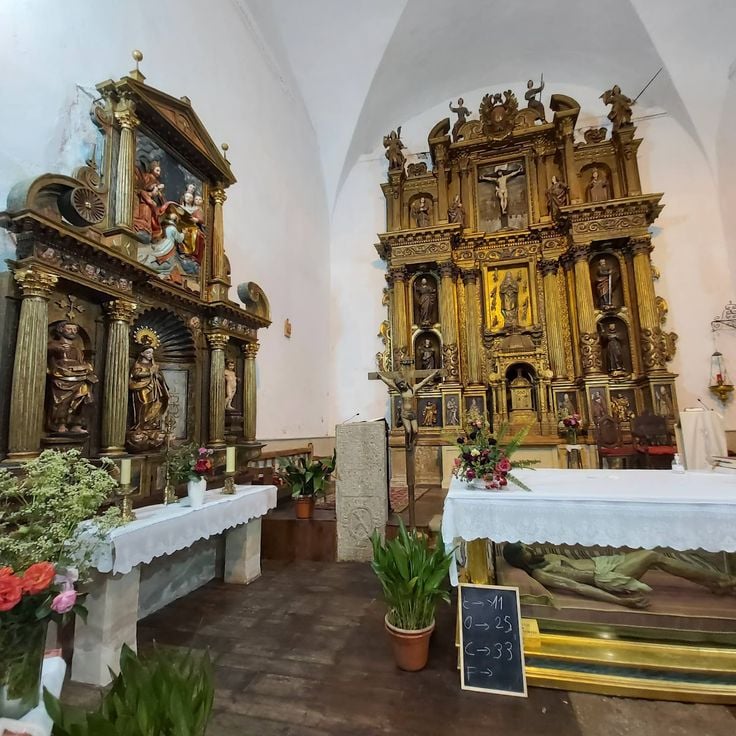
Extremadura, located in the west of Spain near the Portuguese border, keeps traces of history from Roman times and quiet natural areas. It has towns like Cáceres, whose old center is listed as a UNESCO World Heritage site, and Mérida, which has the best-preserved Roman theater on the Iberian Peninsula. There are also Moorish castles in Badajoz, fortified villages like Trujillo where several explorers were born, and monasteries like the one in Guadalupe, a stop for pilgrims since the Middle Ages.
Beyond the monuments, Extremadura has mountain landscapes in the Jerte valley, known for its cherry trees in spring, and natural parks like Monfragüe, where vultures and eagles live. Medieval villages like Granadilla or Hervás kept their original look, with narrow streets and stone houses. This list of forty places shows the variety of the region, mixing history, nature, and local life, spread across the area.
Tourism in Extremadura: Roman towns, medieval villages, natural parks
Extremadura, located in the west of Spain near the Portuguese border, keeps traces of history from Roman times and quiet natural areas. It has towns like Cáceres, whose old center is listed as a UNESCO World Heritage site, and Mérida, which has the best-preserved Roman theater on the Iberian Peninsula. There are also Moorish castles in Badajoz, fortified villages like Trujillo where several explorers were born, and monasteries like the one in Guadalupe, a stop for pilgrims since the Middle Ages.
Beyond the monuments, Extremadura has mountain landscapes in the Jerte valley, known for its cherry trees in spring, and natural parks like Monfragüe, where vultures and eagles live. Medieval villages like Granadilla or Hervás kept their original look, with narrow streets and stone houses. This list of forty places shows the variety of the region, mixing history, nature, and local life, spread across the area.
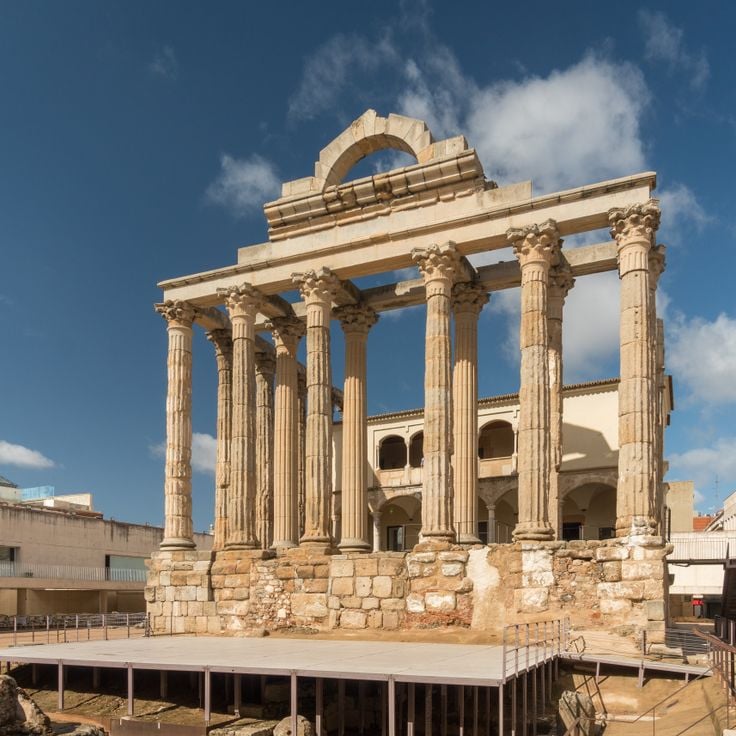
The Temple of Diana in Mérida is a Roman ruin with Corinthian columns still visible. This structure dates from when Mérida was an important city of the Roman Empire. The remains show the skill of Roman builders. Visitors can experience history directly here and understand how significant this city once was.
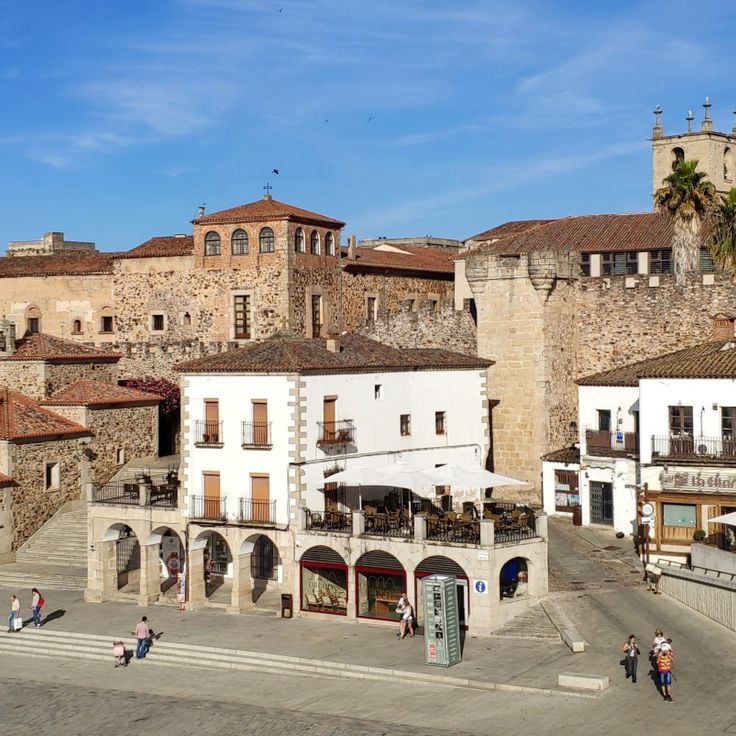
The Plaza Mayor of Cáceres is the central square of this city, surrounded by historic buildings and cafes. This place has been the heart of public life for centuries and remains a gathering spot for locals and visitors. The architecture of the surrounding buildings reflects different periods of the city's history. Here you can observe daily life and feel the city's past.
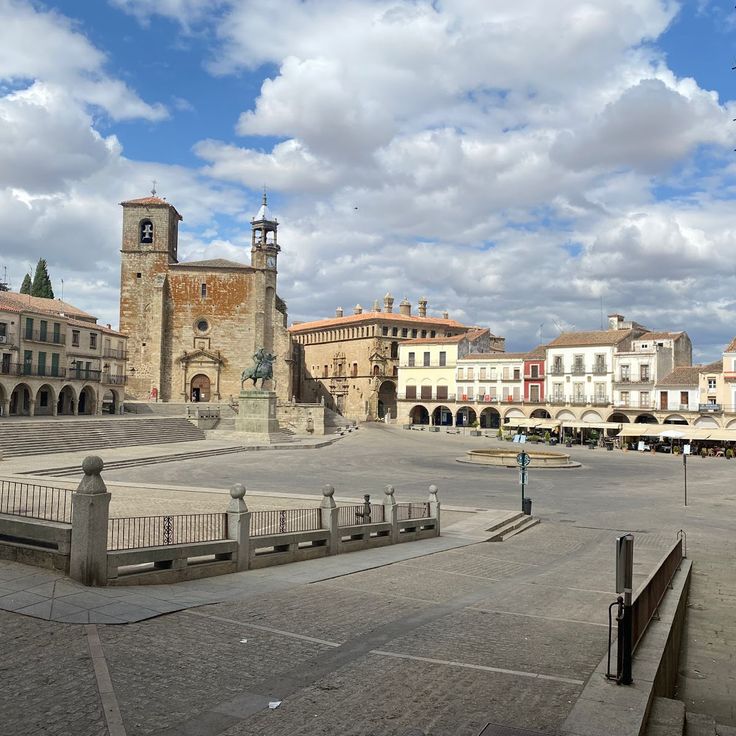
The Plaza Mayor of Trujillo is the main square of this fortified town in Extremadura. Equestrian statues here honor the conquistadors who were born in this place. Above the plaza stands the castle, rising over the town and reflecting its medieval past. The square is surrounded by arcades where local people and visitors walk and gather. Narrow streets around the plaza lead to old stone buildings and churches that tell the story of this place's long history.
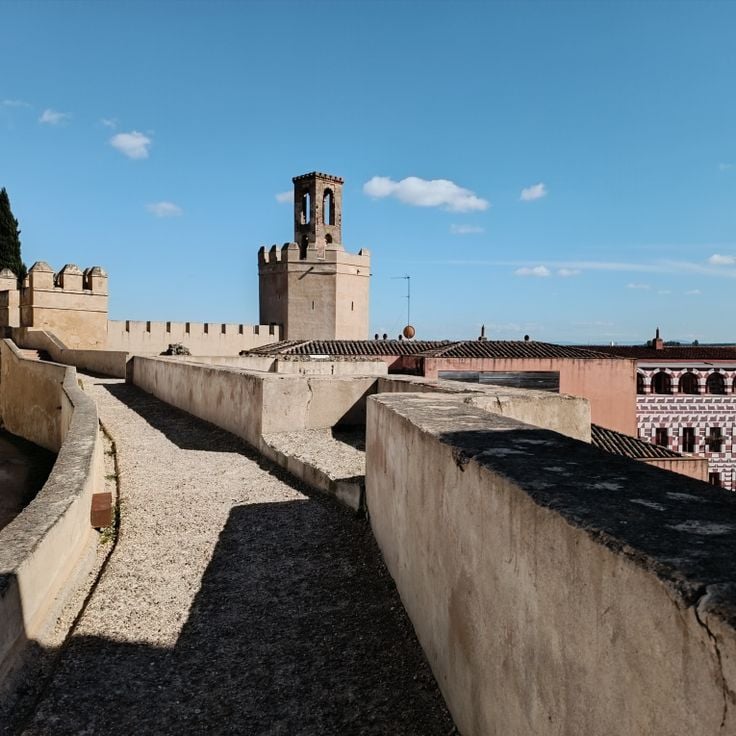
The Alcazaba of Badajoz is a medieval fortress that rises above the city and overlooks the Guadiana River. This fortification dates to the time of Moorish rule and reflects the strategic importance of Badajoz as a border city between Spain and Portugal. The massive walls and towers of the Alcazaba shape the city's skyline and tell of the turbulent history of this frontier region.
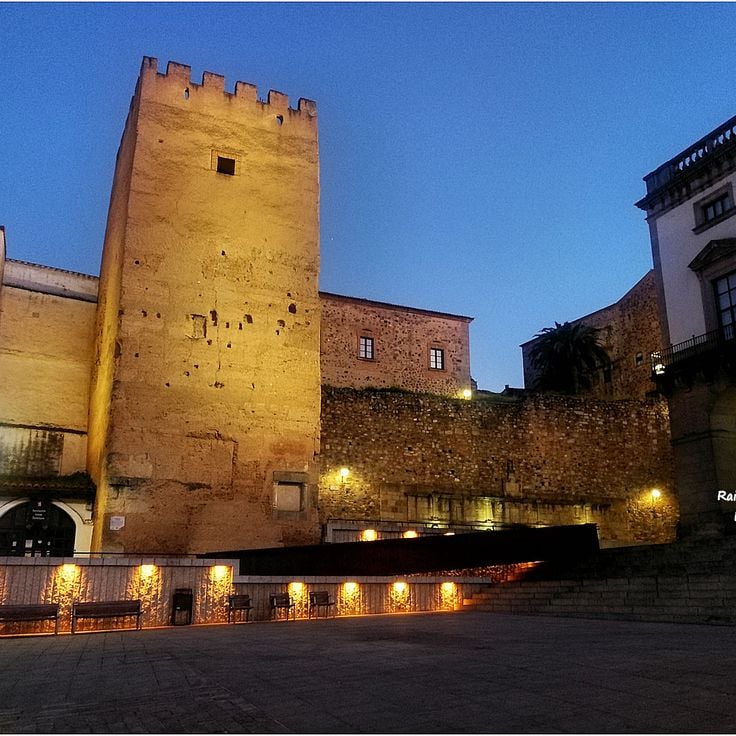
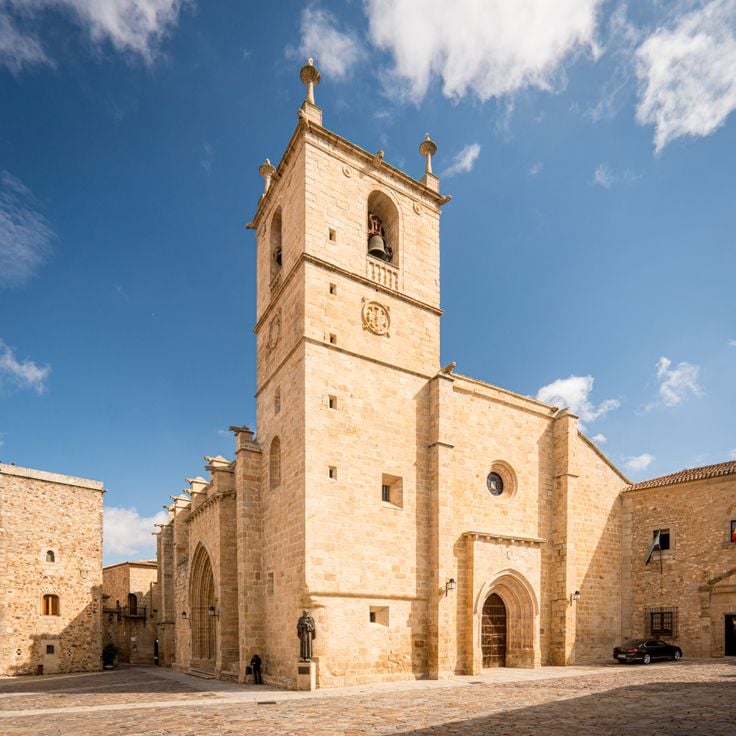
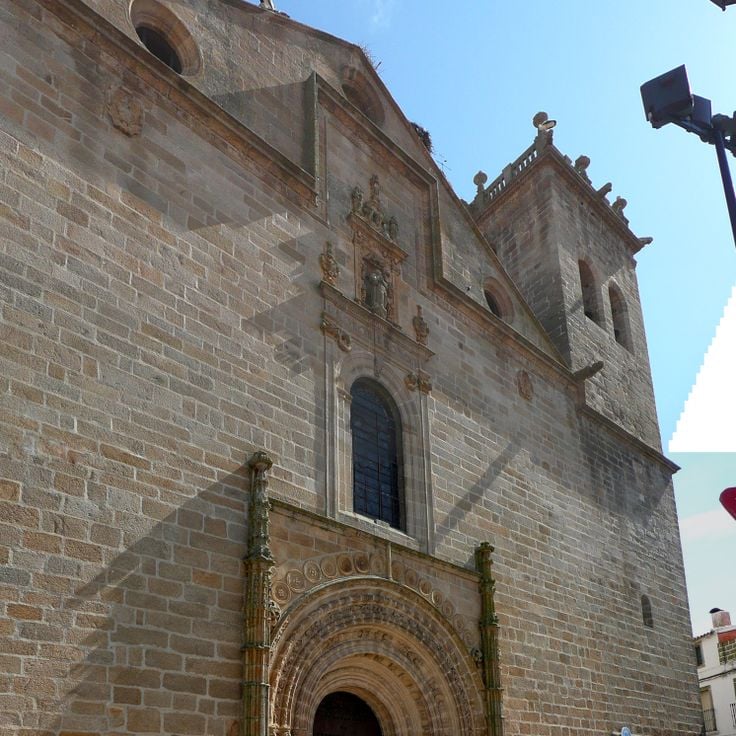
The Cathedral of Cáceres sits in the heart of the medieval old town and reflects the religious history of this region. The building combines Gothic and Renaissance elements and was expanded over several centuries. The cathedral dominates the plaza and is surrounded by medieval fortifications that once protected the old city. Visitors can explore the stone walls and narrow streets around the building and feel the passage of time in these spaces.
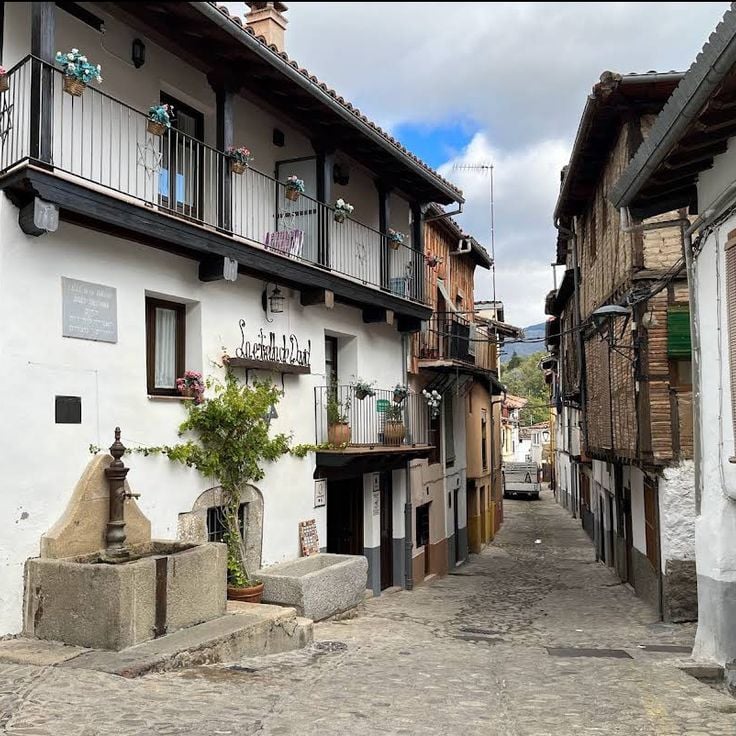
The Jewish quarter of Hervás is defined by narrow streets that wind between tightly built medieval houses. This preserved neighborhood shows how the Jewish community lived here among stone and history. The location sits in Extremadura, a region marked by traces of many periods. The houses with their low doors and winding lanes tell the story of daily life that unfolded here over centuries.
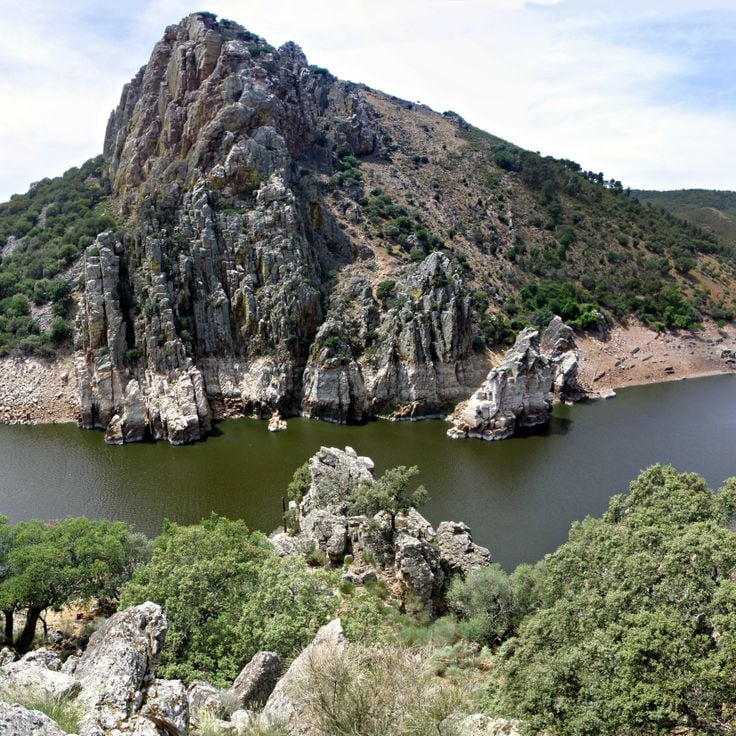
Monfragüe National Park features dramatic limestone cliffs and narrow gorges shaped by the Tajo River. The park is known for its population of raptors, including Egyptian vultures and golden eagles that nest on the rock faces. Visitors can explore on foot along various trails and from viewpoints that offer chances to observe the birds. The river creates pockets of green vegetation in the otherwise dry landscape. This park plays an important role in protecting wildlife and offers a natural escape within Extremadura.
Olivenza is a town in Extremadura shaped by its Portuguese past. The architecture and layout of the town show clear influences from this history. Narrow streets with stone houses wind through the old center, where you can read the story in the details of facades and windows. The fortifications date from when the town changed hands between Portuguese and Spanish rule. This blend of both cultures makes Olivenza a special place where you can still feel the life and building style of past times.
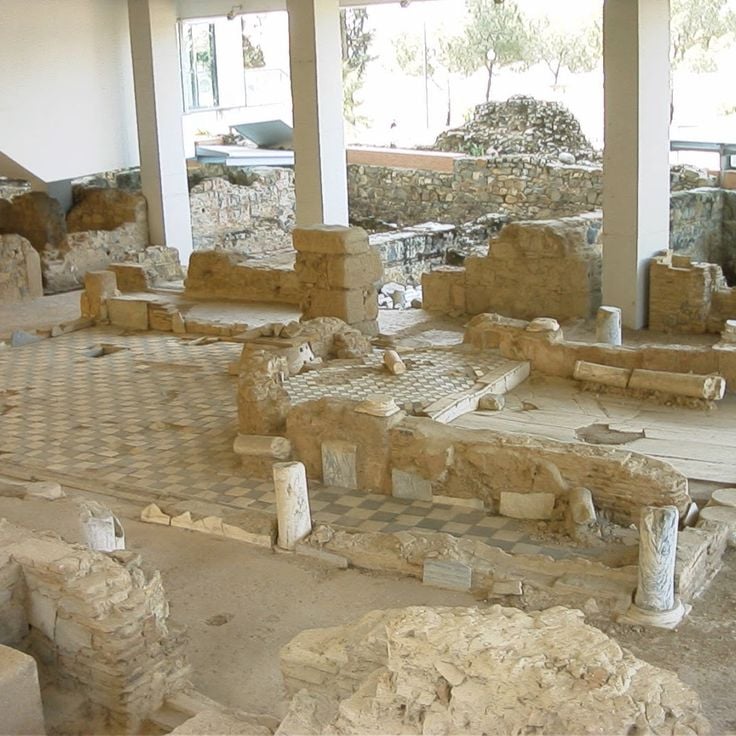
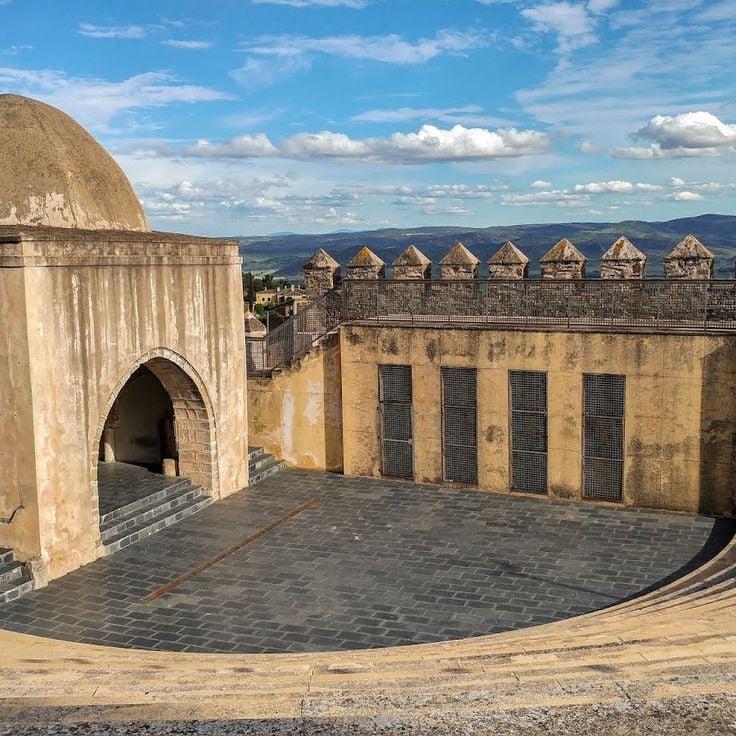
The Mérida archaeological complex is one of the most important Roman centers on the Iberian Peninsula. Here you can find the best-preserved Roman theater of the region, an amphitheater, and temple ruins that speak to the significance of this ancient city. The site was inscribed on the UNESCO World Heritage List. Visitors can walk through the excavations and see the layers of Roman history directly, from the foundations of buildings to architectural details. The place shows how the Romans built a thriving settlement here around 2000 years ago and equipped it with structures that have endured to the present day.
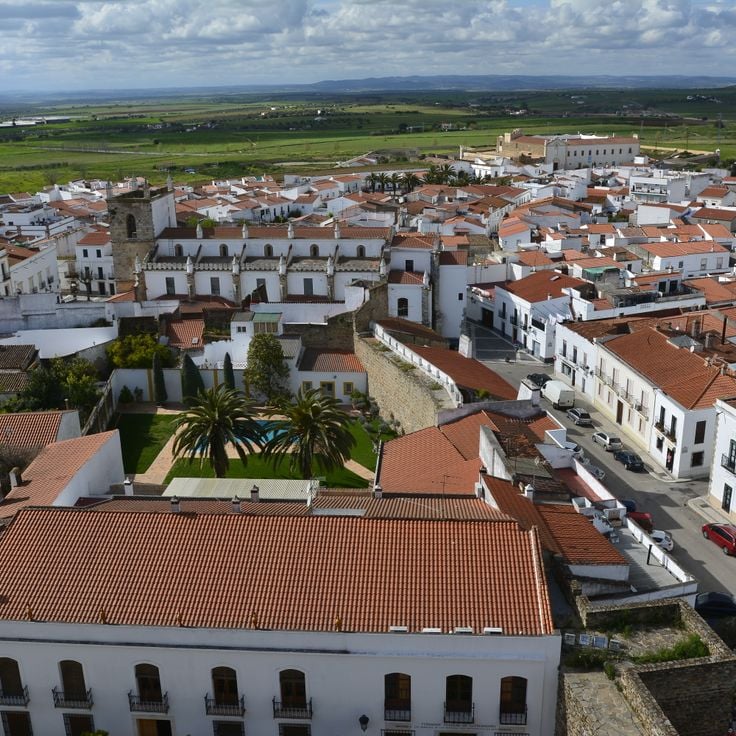
The historic center of Caceres is a medieval ensemble surrounded by walls and towers. The old town was inscribed on the UNESCO World Heritage list and displays architecture from different periods. Narrow streets wind between stone houses, and you see traces everywhere of Moors, Jews, and Christians who lived here. The structures date mainly from the Middle Ages, with later additions from the Renaissance period. This center represents one of the places in Extremadura that best preserves the rich history of this region.
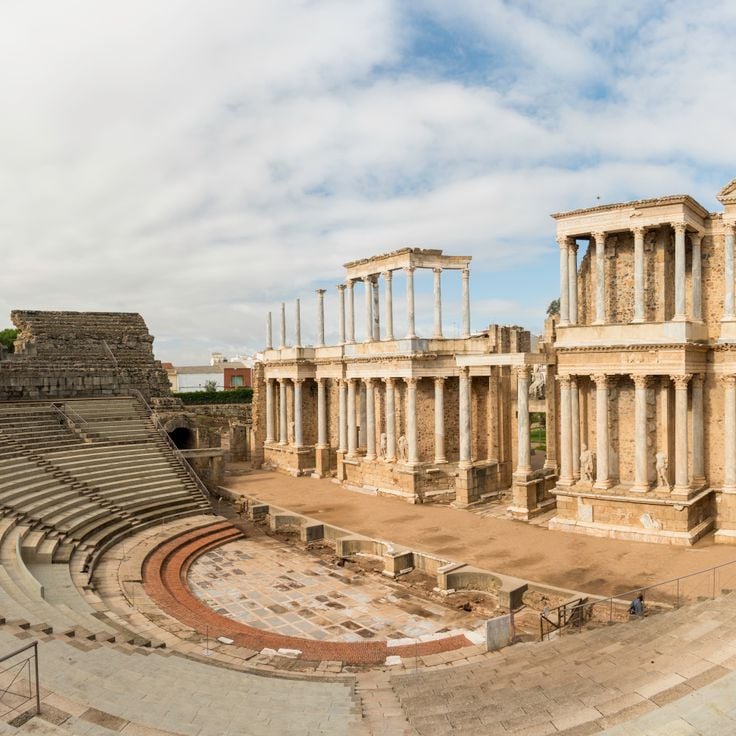
The Roman Theatre of Mérida stands as one of the best-preserved theatres from the Roman world. Built in ancient times, it reveals the craftsmanship and engineering knowledge of the Romans. Visitors can walk through the ruins and imagine audiences gathering here about 2000 years ago. The theatre sits in the heart of Mérida, a city rich with Roman history. This structure forms an important part of Extremadura's cultural heritage.
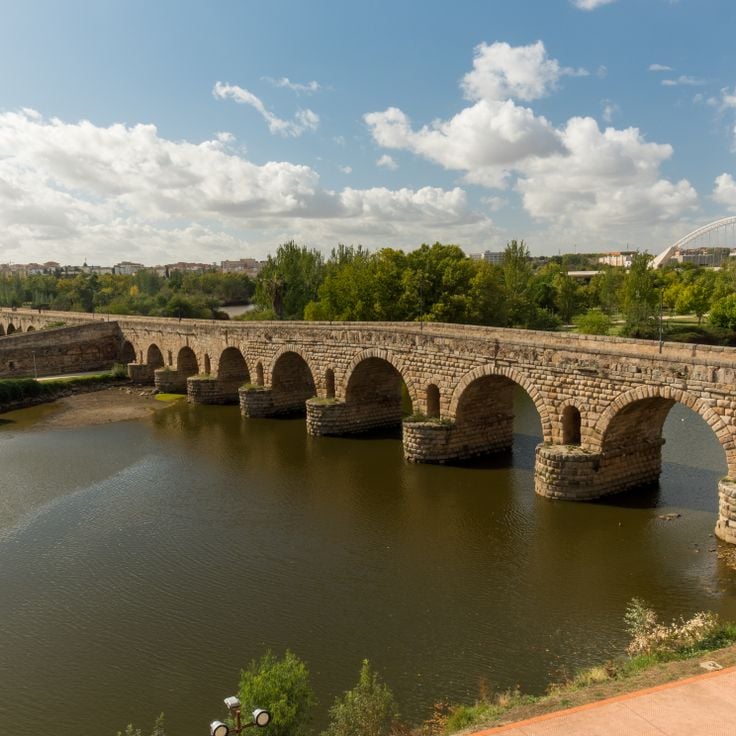
The Roman bridge spanning the Guadiana River in Mérida has connected the city across the water since ancient times. Built from stone during the period of Roman rule on the Iberian Peninsula, the structure continues to serve pedestrians and occasional traffic today. The bridge demonstrates the engineering skill of Roman builders and stands as a living testament to the ancient past of this region.
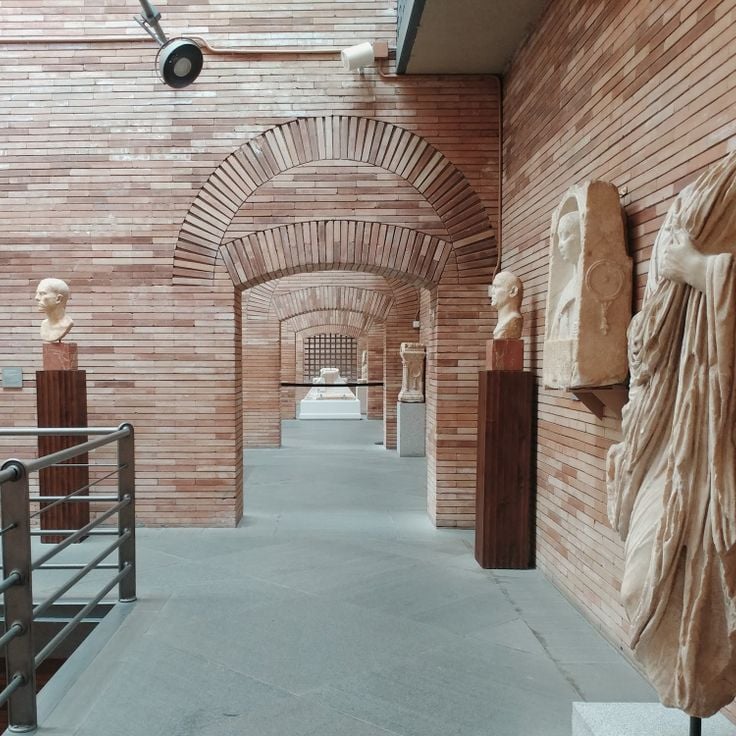
The National Museum of Roman Art in Mérida displays an extensive collection of mosaics, sculptures, and Roman objects. Located in one of the most important Roman cities on the Iberian Peninsula, the museum presents works that reflect the life and culture of the ancient population. The exhibits come from excavations in the city and surrounding area, allowing visitors to understand the history of this region.
Plasencia's old town is a medieval city with two cathedrals standing side by side, each reflecting different periods of history. Narrow streets wind past stone houses and ancient walls that still shape the city's character. Plasencia was an important stop for pilgrims traveling through the region, and its two churches tell stories of centuries of religious and urban life. The main square is lined with arcades where daily life unfolds. This city keeps the appearance of a time when trade and faith shaped the settlement.
Brozas is a fortified village in Extremadura that bears the influence of the Knights Templar order. The village still shows traces of this medieval past in its walls and structures. Narrow streets wind through a settlement that has kept its original character, built largely from stone. Visitors can understand how the Templars controlled this place and what role it played in the region's history.
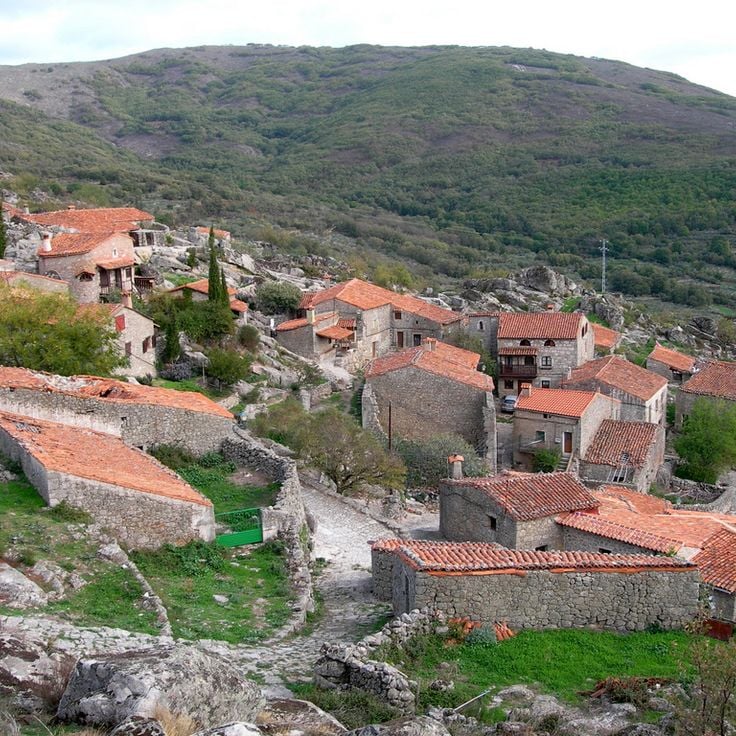
Robledillo de Gata is a village perched high in the Sierra de Gata mountains. The houses are built close together using traditional construction methods of the region. Narrow streets wind between stone buildings, and from the heights you can see the surrounding mountain landscape. The village shows how people have lived in this mountainous area for many generations.
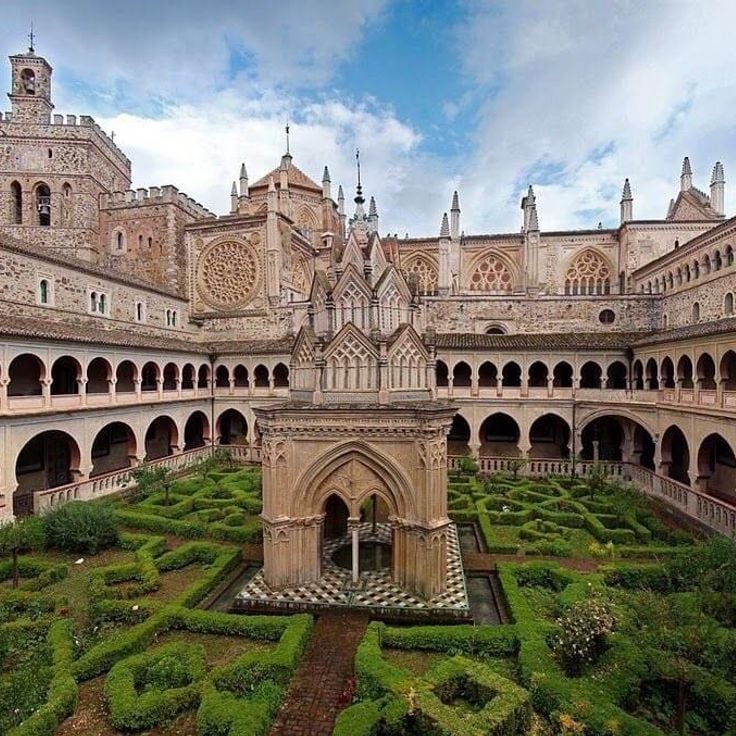
The Royal Monastery of Guadalupe is a major gothic abbey church that has drawn pilgrims for centuries. The monastery was founded in the Middle Ages and became an important spiritual center in the region. It houses remarkable religious artworks and spaces decorated with intricate details. The building sits within the mountainous landscape of Extremadura, creating an environment where history becomes tangible. This UNESCO World Heritage site demonstrates religious and artistic development across centuries. Visitors can explore the architecture and understand the role this monastery played in medieval life and pilgrimage routes through the Iberian Peninsula.
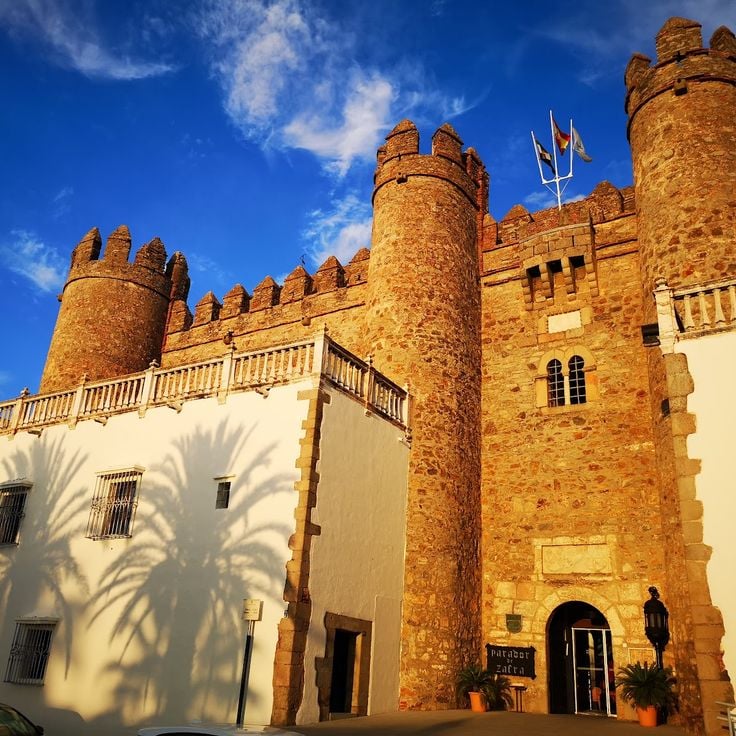
The castle of Zafra sits in a medieval town with white buildings in Extremadura. The city is marked by an Alcazar, a fortress from Moorish times that was later rebuilt. Around the castle are Renaissance squares that shape the town's character. Zafra was an important trade center and kept its old structure with narrow streets and stone houses.
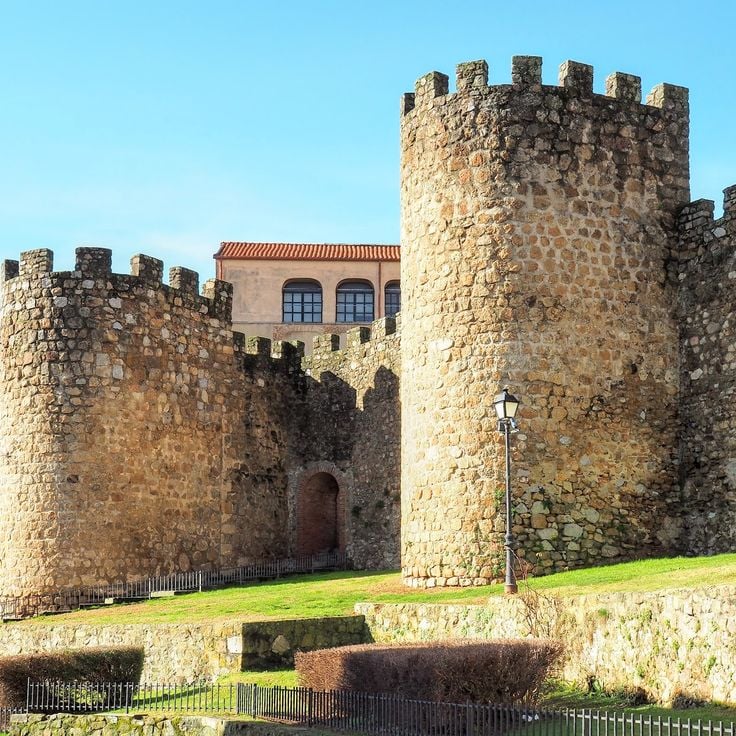
The Castle of Alburquerque is a medieval fortress with fortified walls that rises above the town. This structure shows the building techniques and defensive methods used when such castles controlled the borders between kingdoms. From the walls, you can look out over the surrounding landscape of Extremadura. The castle tells the story of how people lived here and how they protected their settlements over centuries.
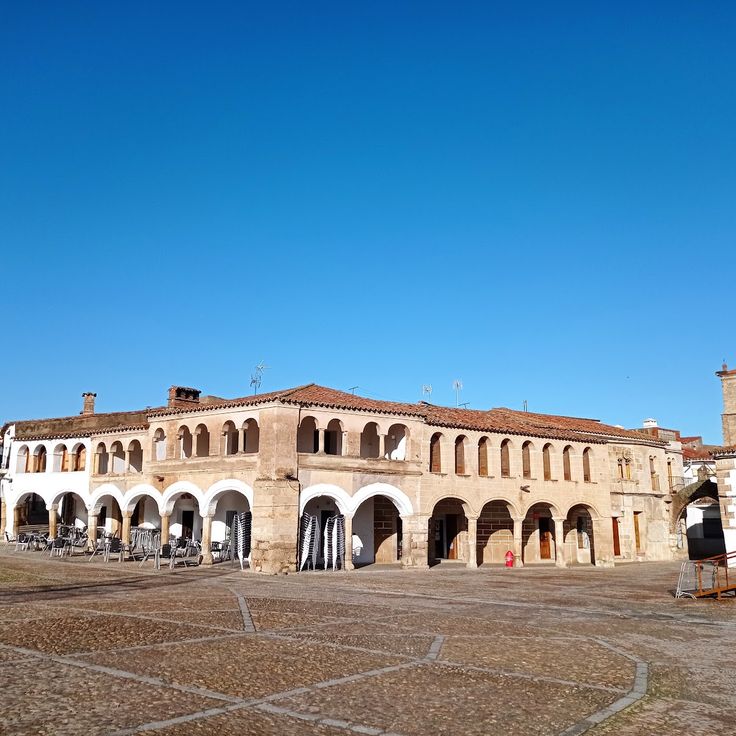
The Plaza Mayor of Garrovillas de Alconétar is the central square of this small town in Extremadura. It shows how life unfolds in a traditional village, with buildings arranged around the square that define the public space. This place is part of the region's history, where medieval settlements have kept their form over the centuries. The square serves as a gathering place for residents and visitors, surrounded by architecture shaped by local building styles and historical influences.
The castle of Trujillo rises above this medieval city in Extremadura. This fortress was built by the Moors and later rebuilt by Christian rulers. From its walls, you can see the city and the surrounding landscape. The castle shows how important this place was in history, as several conquistadors who later explored the Americas were born here.
Parc Naturel de Tajo Internacional sits on the border between Spain and Portugal in Extremadura. The park follows the Tajo River, where steep gorges and river canyons define the landscape. Eagles and vultures nest in the cliff faces, and the river has carved deep channels through the rock. The park sees fewer visitors than other protected areas in the region, making it a quieter place to explore. Walking trails offer views of the water, cliffs, and wildlife that inhabit this riverside environment.
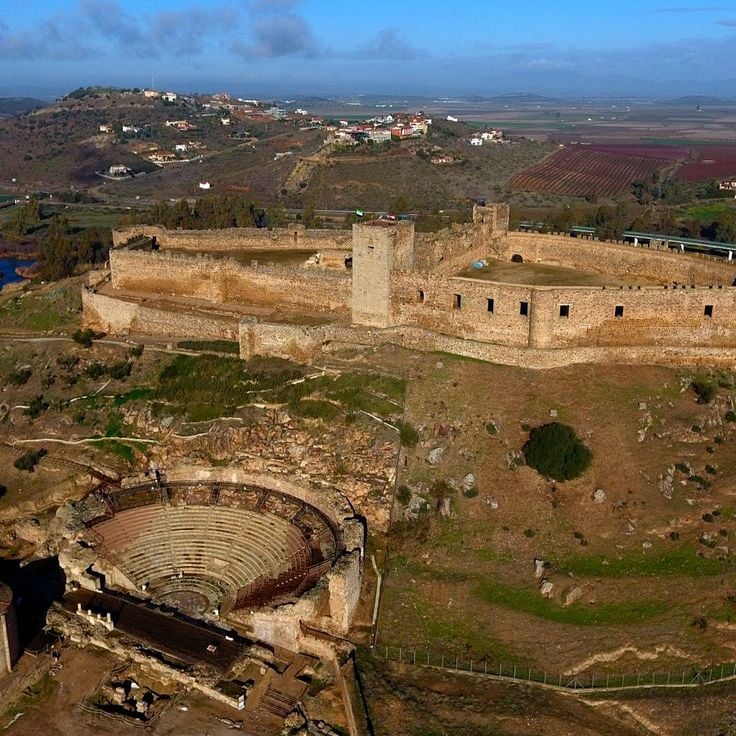
The ruins of Medellín Castle stand on a hilltop and show the medieval past of Extremadura. This fortress was once an important point in the region and sits in a landscape shaped by history. Today visitors can explore the remains and look out over the surrounding area from above. The ruin tells the story of when such fortresses controlled and protected the region.
Trevejo is a medieval village perched on a hilltop near the Portuguese border, surrounded by old walls that have stood for centuries. The village keeps its medieval layout with narrow streets and stone houses that blend into the landscape. Remains of the fortress still rise above the rooftops, offering views across the surrounding countryside. Trevejo shows how people lived in this border region and built their homes to stay safe.
Jerez de los Caballeros castle sits in a town that has kept its medieval character to this day. The settlement is defined by sturdy defensive towers and gothic churches that speak to the wealth and importance of this place. Jerez de los Caballeros was a significant stronghold for knights and still bears the marks of a fortified community from centuries past.
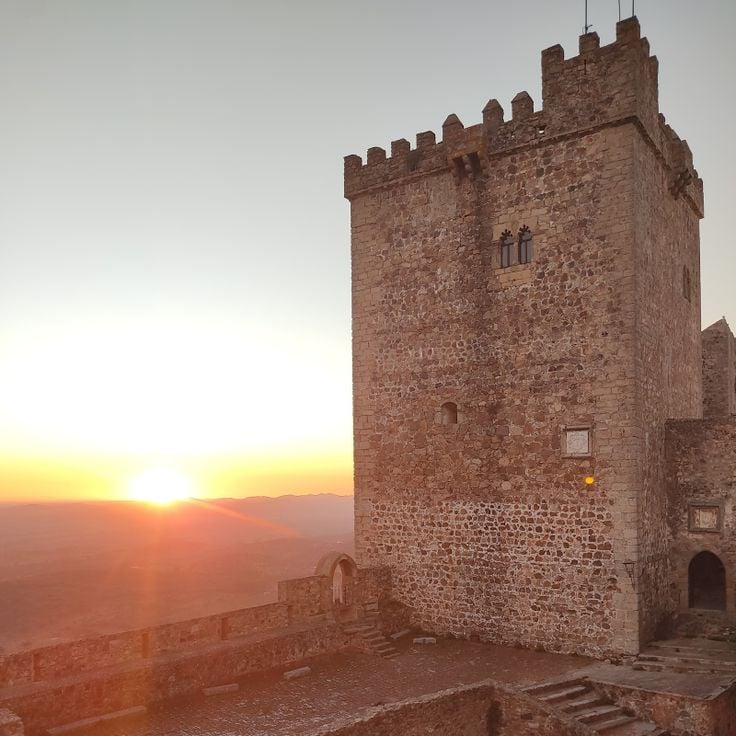
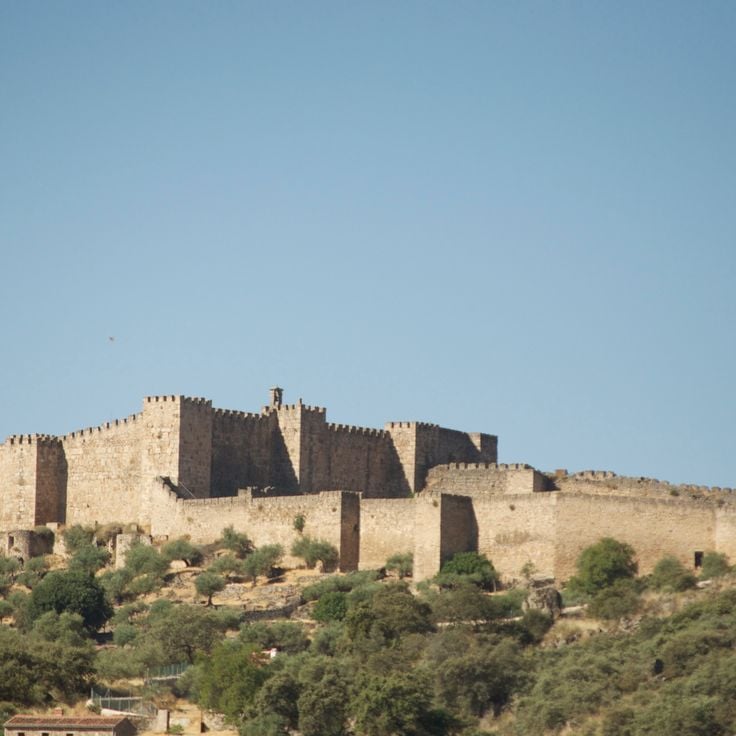
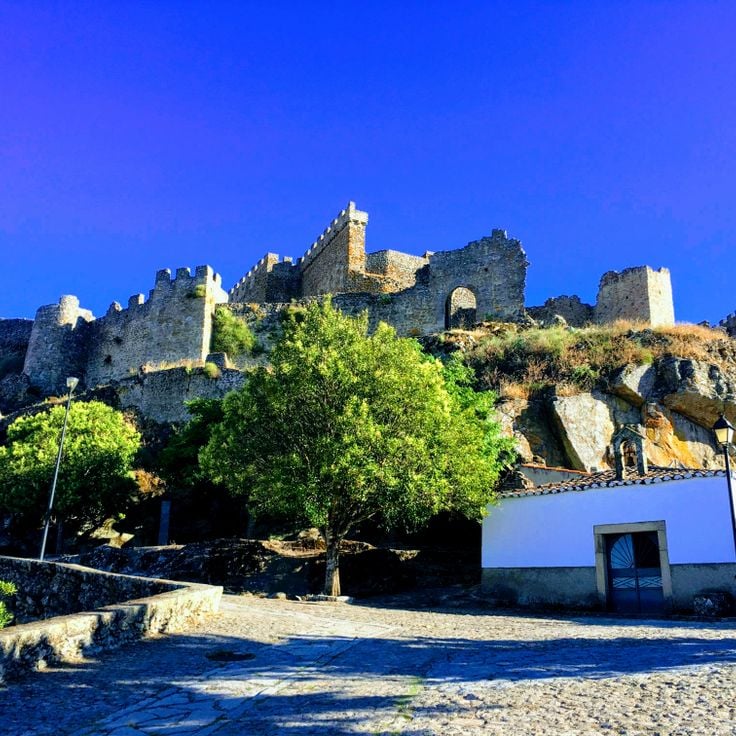
The castle of Montánchez is a medieval fortress with defensive towers rising above the landscape of Extremadura. This stronghold displays the defensive architecture from periods when the region was contested by various rulers. The structure with its massive towers gives a sense of the strategic importance this place held in the region's history.
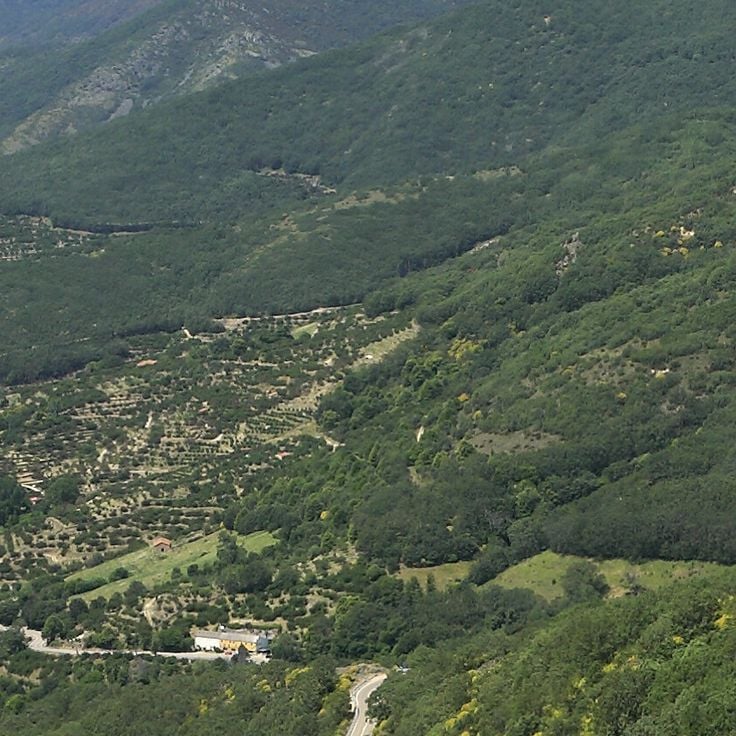
Valle del Jerte is a valley in western Spain near the Portuguese border, known for its cherry trees that flower in spring. The landscape is covered with forests and offers paths for walking through natural areas. This valley is part of Extremadura, a region with diverse history and untouched natural spaces. Visitors can explore the land and experience the changing seasons throughout the year.
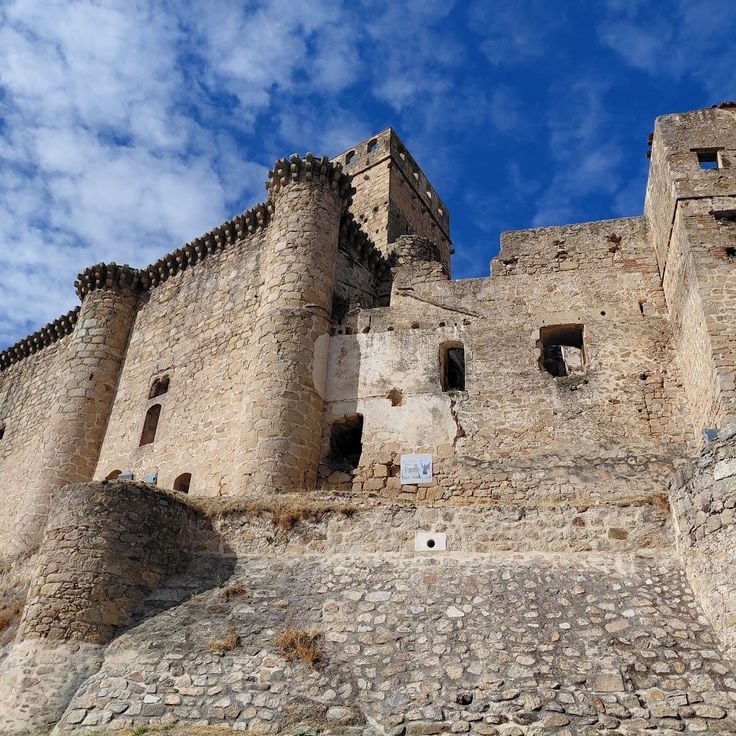
The Castle of Belvís de Monroy is a medieval fortress in the western Spanish region of Extremadura, near the Portuguese border. This castle stands in a region marked by Roman ruins, Moorish fortifications, and medieval villages. The fortress shows the architecture and construction methods of the period when such strongholds played an important role in this area. Visitors can trace the region's history here and explore the stone walls that have survived centuries.
Salto del Gitano is a viewpoint in Monfragüe National Park where you can look out over the canyons of this protected area. From this spot, visitors see steep rock cliffs and the river valley below, and watch birds like vultures and eagles circle above the rocks. The place sits where the valley becomes particularly deep, offering a sense of the wild landscape that defines this region.
The Cornalvo Natural Park sits in Badajoz and brings together nature with history. The protected area has lakes and the remains of Roman dams from ancient times. Visitors find forests and water that provide habitat for different animal species. The Roman structures show how people in this region worked with water and shaped the land long ago.
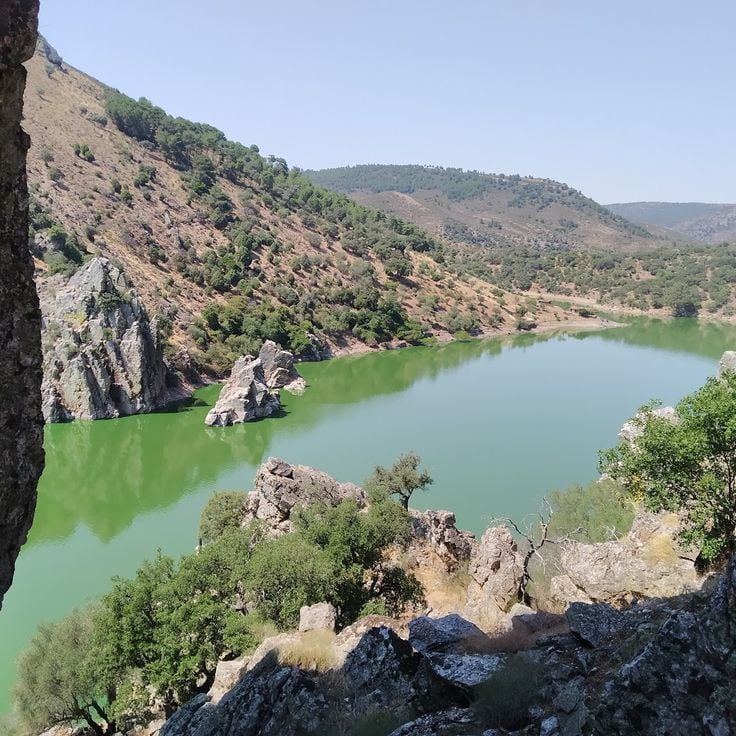
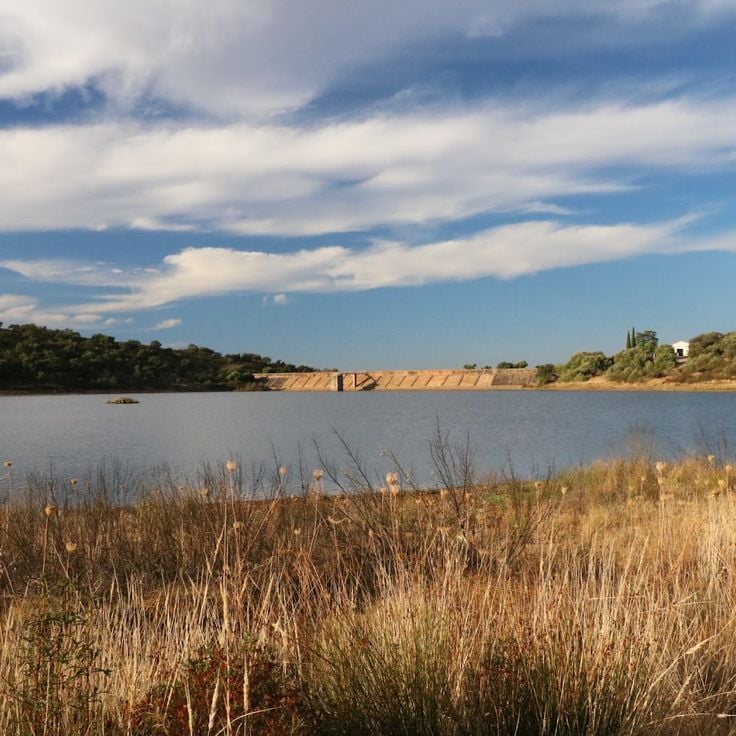
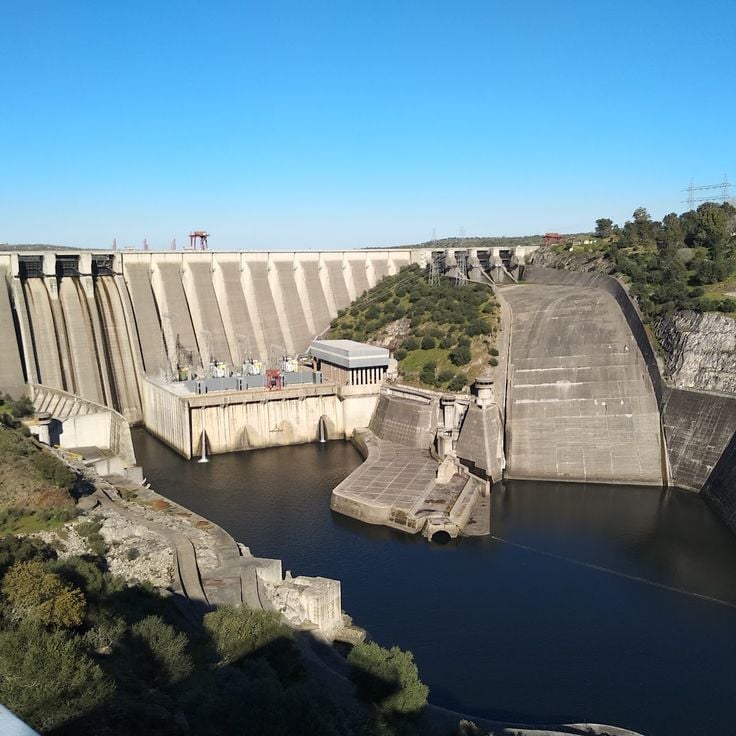
The Alcántara reservoir is a body of water that fits into the landscape of Extremadura. The impoundment creates a wide water surface surrounded by river valleys. Visitors find quiet coves and shorelines where nature shapes the water's edge. The lake offers views of the surrounding hills and fluvial terrain. People use this place for relaxation or water activities. The area shows how water and land meet to create new spaces.
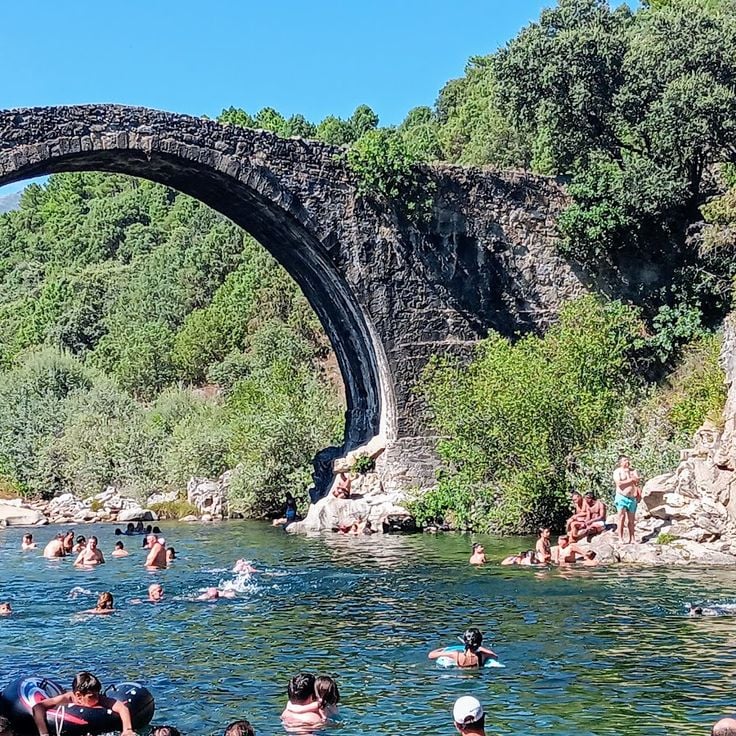
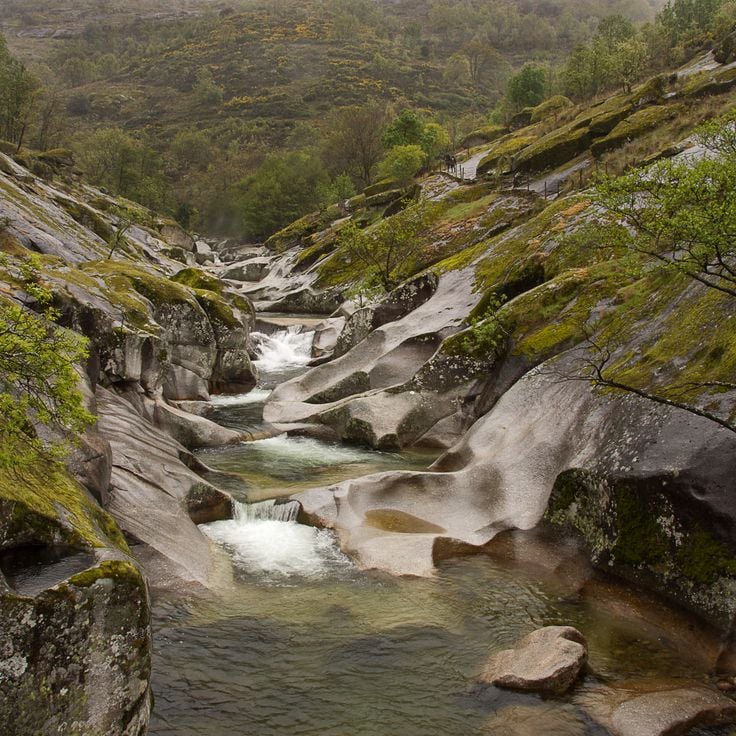
Garganta de los Infiernos is a natural site in the Jerte valley where rivers have carved pools and waterfalls into the landscape. The area features clear water basins perfect for swimming and steep rock walls that frame the gorge. Walking paths wind through green forests of pines and chestnuts, particularly striking in spring when cherry blossoms cover the region. The site draws visitors who want to swim in nature and experience the quiet of the mountains.
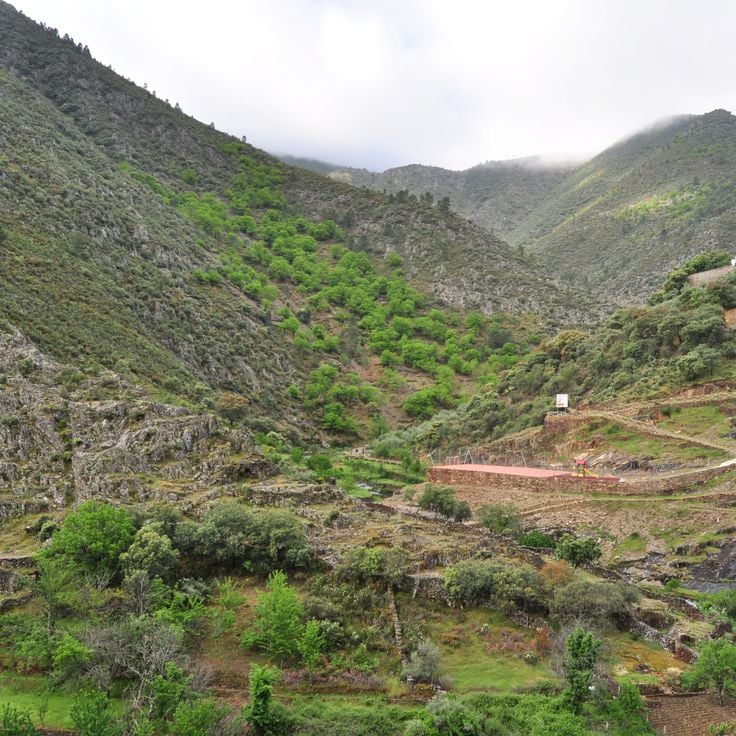
Las Hurdes is a mountainous region in Extremadura characterized by its remote traditional villages and wild landscapes. The region sits away from main travel routes and has kept its rural character intact. Here you find stone houses, narrow streets, and a landscape of forests and mountains. People live according to long-standing traditions that shape daily life and the region's rhythm. Visitors experience an area that remains largely untouched by mass tourism.
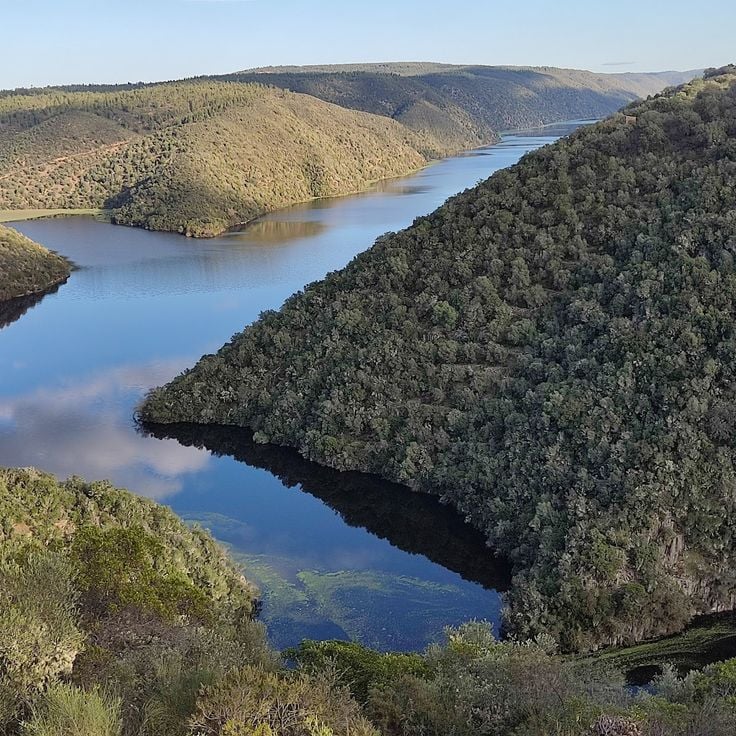
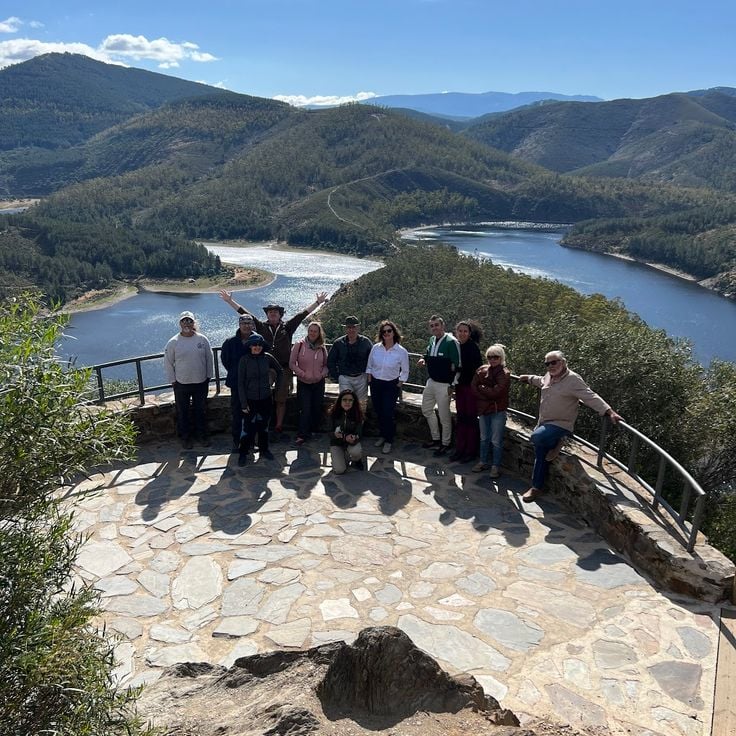
The Meandro del Melero offers a view of a striking curve in the Tajo River. This river bend is located in Extremadura, where the river winds through the landscape and forms dramatic turns. The place shows the natural power of water that has shaped the land over time. From here, you can understand the geology of the region and observe how the river has marked the surroundings.
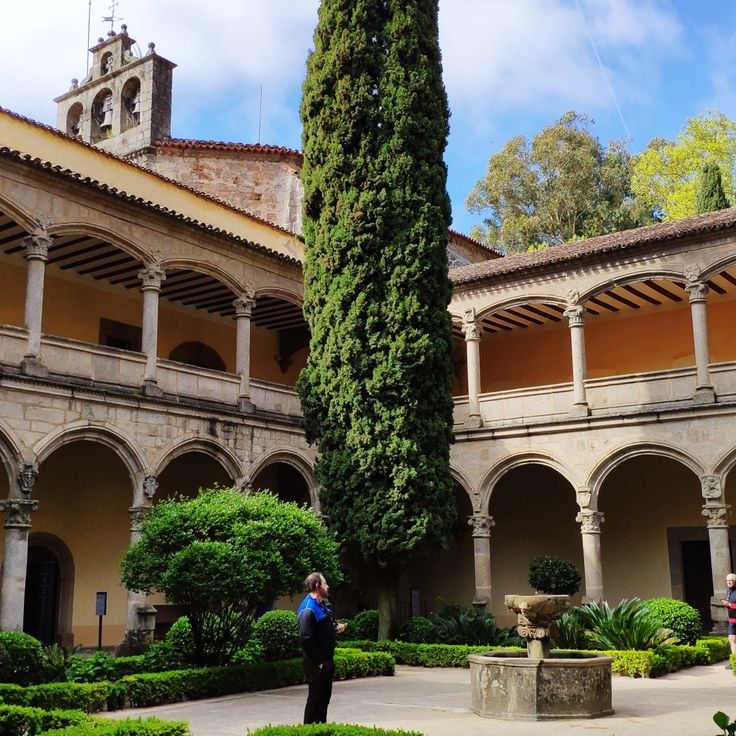
The Monastery of Yuste was the retreat of Emperor Charles V in the 16th century. The emperor came here after giving up his power. The monastery has a cloister and a church that visitors can see. The buildings show the Renaissance architecture of that time. The place sits in the green hills of Extremadura and is an important point when traveling through the region's history. Pilgrims and visitors came here to experience the spiritual place, and you can do the same today.
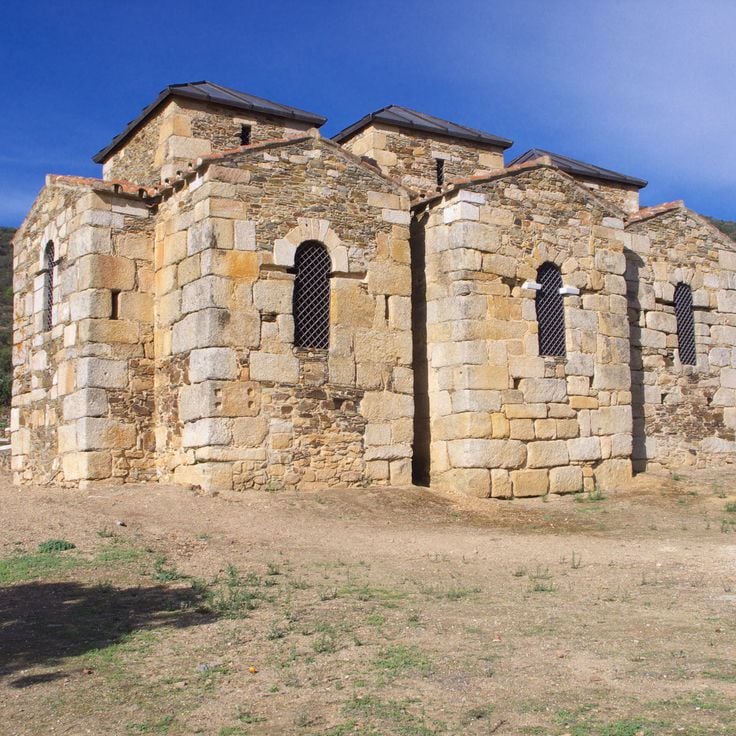
The Basilica of Santa Lucía del Trampal in Alcuéscar is an ancient church built during the Visigothic period. It displays features and construction methods from that distant time and contains archaeological remains. The basilica sits within Extremadura and tells the story of early centuries, long before Romans and Moors shaped the region. Visitors can see how people built during this era and observe what traces from that time still survive.
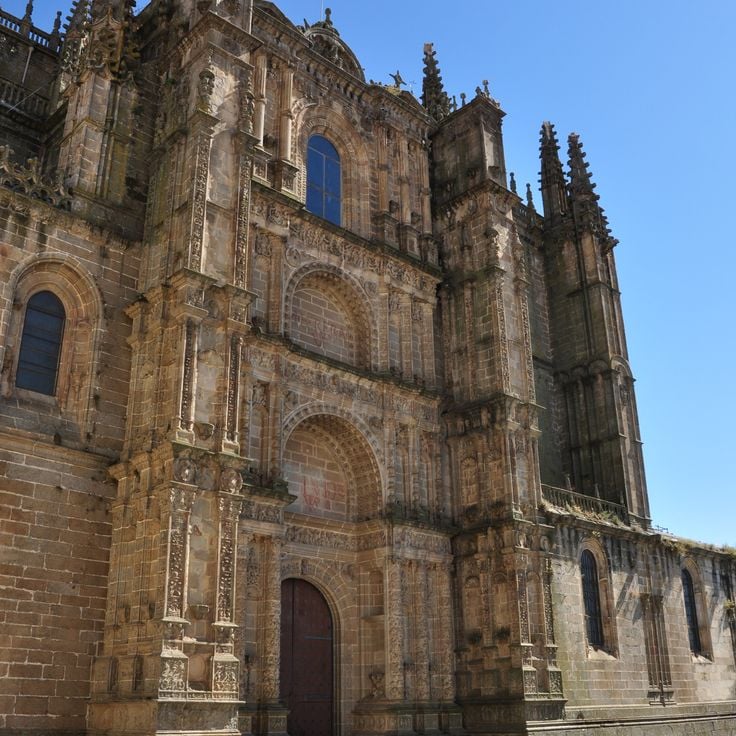
The Cathedral of Plasencia contains two cathedrals built one over the other, one in Gothic style and one in Renaissance style. The older building dates from the 13th century, while the newer cathedral was constructed starting in the 16th century. The two churches are connected by doors and show different building styles from different periods. Visitors can see stonework and altars in both spaces that reflect the craftsmanship of different generations.
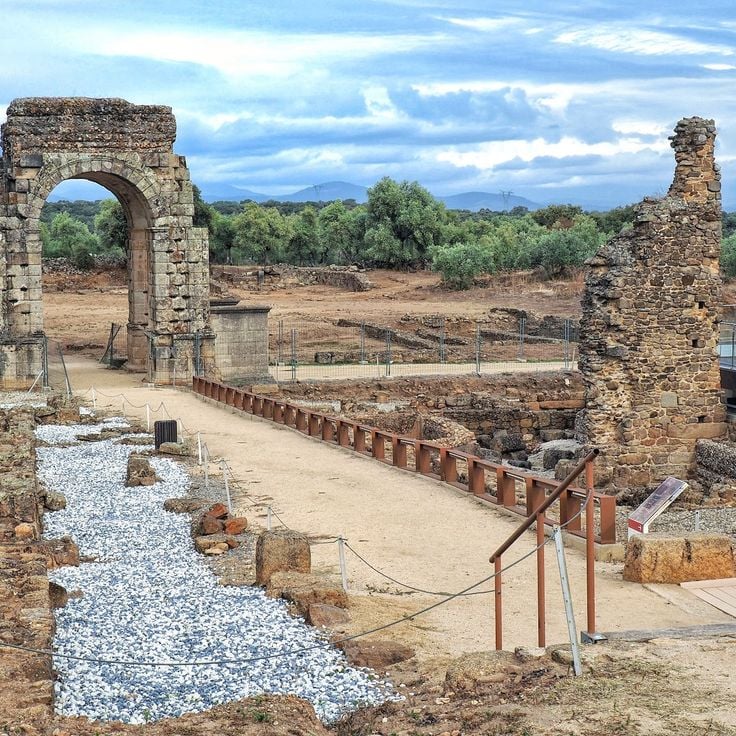
The Roman site of Cáparra in Cáceres preserves the remains of an ancient city from the Roman period. Visitors can see a monumental gateway with four openings that once stood at the heart of the settlement. The ruins sit in the Extremadura landscape, where stone and earth hold the story of how important this region was during Roman times.
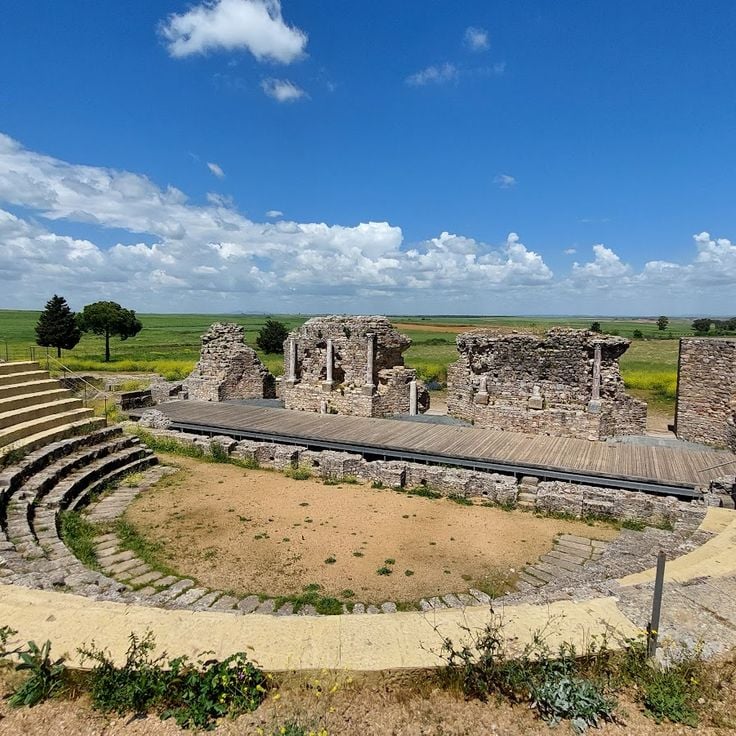
The Roman site of Regina Turdulorum in Extremadura preserves the remains of an ancient city from the Roman period. Visitors can see building foundations, mosaic fragments, and stonework scattered across the site that reveal details about life here. The location sits in the countryside and offers insight into how people lived nearly two thousand years ago.
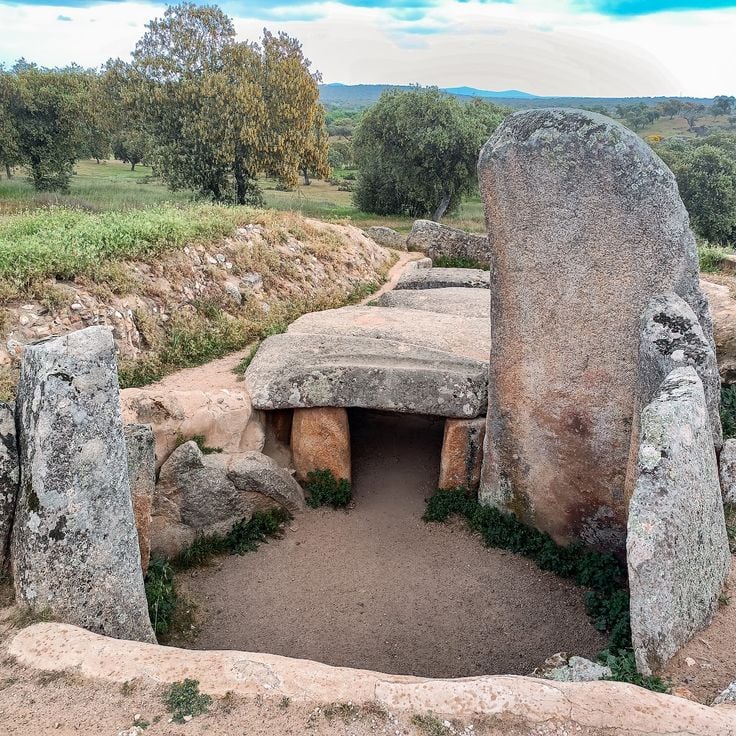
The Dolmen de Lácara is a prehistoric megalithic monument in the province of Badajoz. This stone chamber shows how early settlers thousands of years ago buried their dead and gathered as communities. The monument consists of large standing stones that form a chamber. It is a simple but compelling example of early human cultures in Extremadura and illustrates the long history of settlement in this region since prehistoric times.
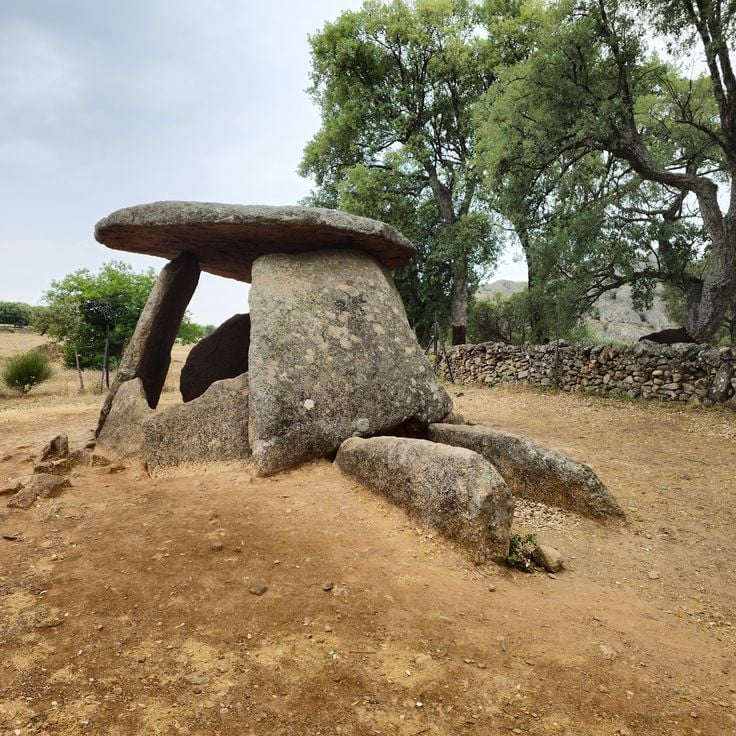
The Dolmen of Valencia de Alcántara is a prehistoric megalithic structure in Extremadura. This stone chamber shows how ancient people buried their dead and built their communities. The structure is made of large stone blocks fitted together without mortar. It is evidence of the long human history of this region, going back to times before the Romans arrived. Valencia de Alcántara sits in the western part of Extremadura and is known for its dolmens and other archaeological sites.
The natural hot springs of the Vera are located in the rural landscape of Extremadura, where warm waters flow directly from the earth. These hot springs fit into the region's varied offer, which combines Roman and medieval heritage with natural spaces away from crowds. Visitors can enjoy the thermal baths set up around the springs, experiencing one of the region's most direct connections to its geological character.
The Temple of Diana in Mérida is a Roman ruin with Corinthian columns still visible. This structure dates from when Mérida was an important city of the Roman Empire. The remains show the skill of Roman builders. Visitors can experience history directly here and understand how significant this city once was.
The Plaza Mayor of Cáceres is the central square of this city, surrounded by historic buildings and cafes. This place has been the heart of public life for centuries and remains a gathering spot for locals and visitors. The architecture of the surrounding buildings reflects different periods of the city's history. Here you can observe daily life and feel the city's past.
The Plaza Mayor of Trujillo is the main square of this fortified town in Extremadura. Equestrian statues here honor the conquistadors who were born in this place. Above the plaza stands the castle, rising over the town and reflecting its medieval past. The square is surrounded by arcades where local people and visitors walk and gather. Narrow streets around the plaza lead to old stone buildings and churches that tell the story of this place's long history.
The Alcazaba of Badajoz is a medieval fortress that rises above the city and overlooks the Guadiana River. This fortification dates to the time of Moorish rule and reflects the strategic importance of Badajoz as a border city between Spain and Portugal. The massive walls and towers of the Alcazaba shape the city's skyline and tell of the turbulent history of this frontier region.
The Cathedral of Cáceres sits in the heart of the medieval old town and reflects the religious history of this region. The building combines Gothic and Renaissance elements and was expanded over several centuries. The cathedral dominates the plaza and is surrounded by medieval fortifications that once protected the old city. Visitors can explore the stone walls and narrow streets around the building and feel the passage of time in these spaces.
The Jewish quarter of Hervás is defined by narrow streets that wind between tightly built medieval houses. This preserved neighborhood shows how the Jewish community lived here among stone and history. The location sits in Extremadura, a region marked by traces of many periods. The houses with their low doors and winding lanes tell the story of daily life that unfolded here over centuries.
Monfragüe National Park features dramatic limestone cliffs and narrow gorges shaped by the Tajo River. The park is known for its population of raptors, including Egyptian vultures and golden eagles that nest on the rock faces. Visitors can explore on foot along various trails and from viewpoints that offer chances to observe the birds. The river creates pockets of green vegetation in the otherwise dry landscape. This park plays an important role in protecting wildlife and offers a natural escape within Extremadura.
Olivenza is a town in Extremadura shaped by its Portuguese past. The architecture and layout of the town show clear influences from this history. Narrow streets with stone houses wind through the old center, where you can read the story in the details of facades and windows. The fortifications date from when the town changed hands between Portuguese and Spanish rule. This blend of both cultures makes Olivenza a special place where you can still feel the life and building style of past times.
The Mérida archaeological complex is one of the most important Roman centers on the Iberian Peninsula. Here you can find the best-preserved Roman theater of the region, an amphitheater, and temple ruins that speak to the significance of this ancient city. The site was inscribed on the UNESCO World Heritage List. Visitors can walk through the excavations and see the layers of Roman history directly, from the foundations of buildings to architectural details. The place shows how the Romans built a thriving settlement here around 2000 years ago and equipped it with structures that have endured to the present day.
The historic center of Caceres is a medieval ensemble surrounded by walls and towers. The old town was inscribed on the UNESCO World Heritage list and displays architecture from different periods. Narrow streets wind between stone houses, and you see traces everywhere of Moors, Jews, and Christians who lived here. The structures date mainly from the Middle Ages, with later additions from the Renaissance period. This center represents one of the places in Extremadura that best preserves the rich history of this region.
The Roman Theatre of Mérida stands as one of the best-preserved theatres from the Roman world. Built in ancient times, it reveals the craftsmanship and engineering knowledge of the Romans. Visitors can walk through the ruins and imagine audiences gathering here about 2000 years ago. The theatre sits in the heart of Mérida, a city rich with Roman history. This structure forms an important part of Extremadura's cultural heritage.
The Roman bridge spanning the Guadiana River in Mérida has connected the city across the water since ancient times. Built from stone during the period of Roman rule on the Iberian Peninsula, the structure continues to serve pedestrians and occasional traffic today. The bridge demonstrates the engineering skill of Roman builders and stands as a living testament to the ancient past of this region.
The National Museum of Roman Art in Mérida displays an extensive collection of mosaics, sculptures, and Roman objects. Located in one of the most important Roman cities on the Iberian Peninsula, the museum presents works that reflect the life and culture of the ancient population. The exhibits come from excavations in the city and surrounding area, allowing visitors to understand the history of this region.
Plasencia's old town is a medieval city with two cathedrals standing side by side, each reflecting different periods of history. Narrow streets wind past stone houses and ancient walls that still shape the city's character. Plasencia was an important stop for pilgrims traveling through the region, and its two churches tell stories of centuries of religious and urban life. The main square is lined with arcades where daily life unfolds. This city keeps the appearance of a time when trade and faith shaped the settlement.
Brozas is a fortified village in Extremadura that bears the influence of the Knights Templar order. The village still shows traces of this medieval past in its walls and structures. Narrow streets wind through a settlement that has kept its original character, built largely from stone. Visitors can understand how the Templars controlled this place and what role it played in the region's history.
Robledillo de Gata is a village perched high in the Sierra de Gata mountains. The houses are built close together using traditional construction methods of the region. Narrow streets wind between stone buildings, and from the heights you can see the surrounding mountain landscape. The village shows how people have lived in this mountainous area for many generations.
The Royal Monastery of Guadalupe is a major gothic abbey church that has drawn pilgrims for centuries. The monastery was founded in the Middle Ages and became an important spiritual center in the region. It houses remarkable religious artworks and spaces decorated with intricate details. The building sits within the mountainous landscape of Extremadura, creating an environment where history becomes tangible. This UNESCO World Heritage site demonstrates religious and artistic development across centuries. Visitors can explore the architecture and understand the role this monastery played in medieval life and pilgrimage routes through the Iberian Peninsula.
The castle of Zafra sits in a medieval town with white buildings in Extremadura. The city is marked by an Alcazar, a fortress from Moorish times that was later rebuilt. Around the castle are Renaissance squares that shape the town's character. Zafra was an important trade center and kept its old structure with narrow streets and stone houses.
The Castle of Alburquerque is a medieval fortress with fortified walls that rises above the town. This structure shows the building techniques and defensive methods used when such castles controlled the borders between kingdoms. From the walls, you can look out over the surrounding landscape of Extremadura. The castle tells the story of how people lived here and how they protected their settlements over centuries.
The Plaza Mayor of Garrovillas de Alconétar is the central square of this small town in Extremadura. It shows how life unfolds in a traditional village, with buildings arranged around the square that define the public space. This place is part of the region's history, where medieval settlements have kept their form over the centuries. The square serves as a gathering place for residents and visitors, surrounded by architecture shaped by local building styles and historical influences.
The castle of Trujillo rises above this medieval city in Extremadura. This fortress was built by the Moors and later rebuilt by Christian rulers. From its walls, you can see the city and the surrounding landscape. The castle shows how important this place was in history, as several conquistadors who later explored the Americas were born here.
Parc Naturel de Tajo Internacional sits on the border between Spain and Portugal in Extremadura. The park follows the Tajo River, where steep gorges and river canyons define the landscape. Eagles and vultures nest in the cliff faces, and the river has carved deep channels through the rock. The park sees fewer visitors than other protected areas in the region, making it a quieter place to explore. Walking trails offer views of the water, cliffs, and wildlife that inhabit this riverside environment.
The ruins of Medellín Castle stand on a hilltop and show the medieval past of Extremadura. This fortress was once an important point in the region and sits in a landscape shaped by history. Today visitors can explore the remains and look out over the surrounding area from above. The ruin tells the story of when such fortresses controlled and protected the region.
Trevejo is a medieval village perched on a hilltop near the Portuguese border, surrounded by old walls that have stood for centuries. The village keeps its medieval layout with narrow streets and stone houses that blend into the landscape. Remains of the fortress still rise above the rooftops, offering views across the surrounding countryside. Trevejo shows how people lived in this border region and built their homes to stay safe.
Jerez de los Caballeros castle sits in a town that has kept its medieval character to this day. The settlement is defined by sturdy defensive towers and gothic churches that speak to the wealth and importance of this place. Jerez de los Caballeros was a significant stronghold for knights and still bears the marks of a fortified community from centuries past.
The castle of Montánchez is a medieval fortress with defensive towers rising above the landscape of Extremadura. This stronghold displays the defensive architecture from periods when the region was contested by various rulers. The structure with its massive towers gives a sense of the strategic importance this place held in the region's history.
Valle del Jerte is a valley in western Spain near the Portuguese border, known for its cherry trees that flower in spring. The landscape is covered with forests and offers paths for walking through natural areas. This valley is part of Extremadura, a region with diverse history and untouched natural spaces. Visitors can explore the land and experience the changing seasons throughout the year.
The Castle of Belvís de Monroy is a medieval fortress in the western Spanish region of Extremadura, near the Portuguese border. This castle stands in a region marked by Roman ruins, Moorish fortifications, and medieval villages. The fortress shows the architecture and construction methods of the period when such strongholds played an important role in this area. Visitors can trace the region's history here and explore the stone walls that have survived centuries.
Salto del Gitano is a viewpoint in Monfragüe National Park where you can look out over the canyons of this protected area. From this spot, visitors see steep rock cliffs and the river valley below, and watch birds like vultures and eagles circle above the rocks. The place sits where the valley becomes particularly deep, offering a sense of the wild landscape that defines this region.
The Cornalvo Natural Park sits in Badajoz and brings together nature with history. The protected area has lakes and the remains of Roman dams from ancient times. Visitors find forests and water that provide habitat for different animal species. The Roman structures show how people in this region worked with water and shaped the land long ago.
The Alcántara reservoir is a body of water that fits into the landscape of Extremadura. The impoundment creates a wide water surface surrounded by river valleys. Visitors find quiet coves and shorelines where nature shapes the water's edge. The lake offers views of the surrounding hills and fluvial terrain. People use this place for relaxation or water activities. The area shows how water and land meet to create new spaces.
Garganta de los Infiernos is a natural site in the Jerte valley where rivers have carved pools and waterfalls into the landscape. The area features clear water basins perfect for swimming and steep rock walls that frame the gorge. Walking paths wind through green forests of pines and chestnuts, particularly striking in spring when cherry blossoms cover the region. The site draws visitors who want to swim in nature and experience the quiet of the mountains.
Las Hurdes is a mountainous region in Extremadura characterized by its remote traditional villages and wild landscapes. The region sits away from main travel routes and has kept its rural character intact. Here you find stone houses, narrow streets, and a landscape of forests and mountains. People live according to long-standing traditions that shape daily life and the region's rhythm. Visitors experience an area that remains largely untouched by mass tourism.
The Meandro del Melero offers a view of a striking curve in the Tajo River. This river bend is located in Extremadura, where the river winds through the landscape and forms dramatic turns. The place shows the natural power of water that has shaped the land over time. From here, you can understand the geology of the region and observe how the river has marked the surroundings.
The Monastery of Yuste was the retreat of Emperor Charles V in the 16th century. The emperor came here after giving up his power. The monastery has a cloister and a church that visitors can see. The buildings show the Renaissance architecture of that time. The place sits in the green hills of Extremadura and is an important point when traveling through the region's history. Pilgrims and visitors came here to experience the spiritual place, and you can do the same today.
The Basilica of Santa Lucía del Trampal in Alcuéscar is an ancient church built during the Visigothic period. It displays features and construction methods from that distant time and contains archaeological remains. The basilica sits within Extremadura and tells the story of early centuries, long before Romans and Moors shaped the region. Visitors can see how people built during this era and observe what traces from that time still survive.
The Cathedral of Plasencia contains two cathedrals built one over the other, one in Gothic style and one in Renaissance style. The older building dates from the 13th century, while the newer cathedral was constructed starting in the 16th century. The two churches are connected by doors and show different building styles from different periods. Visitors can see stonework and altars in both spaces that reflect the craftsmanship of different generations.
The Roman site of Cáparra in Cáceres preserves the remains of an ancient city from the Roman period. Visitors can see a monumental gateway with four openings that once stood at the heart of the settlement. The ruins sit in the Extremadura landscape, where stone and earth hold the story of how important this region was during Roman times.
The Roman site of Regina Turdulorum in Extremadura preserves the remains of an ancient city from the Roman period. Visitors can see building foundations, mosaic fragments, and stonework scattered across the site that reveal details about life here. The location sits in the countryside and offers insight into how people lived nearly two thousand years ago.
The Dolmen de Lácara is a prehistoric megalithic monument in the province of Badajoz. This stone chamber shows how early settlers thousands of years ago buried their dead and gathered as communities. The monument consists of large standing stones that form a chamber. It is a simple but compelling example of early human cultures in Extremadura and illustrates the long history of settlement in this region since prehistoric times.
The Dolmen of Valencia de Alcántara is a prehistoric megalithic structure in Extremadura. This stone chamber shows how ancient people buried their dead and built their communities. The structure is made of large stone blocks fitted together without mortar. It is evidence of the long human history of this region, going back to times before the Romans arrived. Valencia de Alcántara sits in the western part of Extremadura and is known for its dolmens and other archaeological sites.
The natural hot springs of the Vera are located in the rural landscape of Extremadura, where warm waters flow directly from the earth. These hot springs fit into the region's varied offer, which combines Roman and medieval heritage with natural spaces away from crowds. Visitors can enjoy the thermal baths set up around the springs, experiencing one of the region's most direct connections to its geological character.
The Temple of Diana in Mérida is a Roman ruin with Corinthian columns still visible. This structure dates from when Mérida was an important city of the Roman Empire. The remains show the skill of Roman builders. Visitors can experience history directly here and understand how significant this city once was.
The Plaza Mayor of Cáceres is the central square of this city, surrounded by historic buildings and cafes. This place has been the heart of public life for centuries and remains a gathering spot for locals and visitors. The architecture of the surrounding buildings reflects different periods of the city's history. Here you can observe daily life and feel the city's past.
The Plaza Mayor of Trujillo is the main square of this fortified town in Extremadura. Equestrian statues here honor the conquistadors who were born in this place. Above the plaza stands the castle, rising over the town and reflecting its medieval past. The square is surrounded by arcades where local people and visitors walk and gather. Narrow streets around the plaza lead to old stone buildings and churches that tell the story of this place's long history.
The Alcazaba of Badajoz is a medieval fortress that rises above the city and overlooks the Guadiana River. This fortification dates to the time of Moorish rule and reflects the strategic importance of Badajoz as a border city between Spain and Portugal. The massive walls and towers of the Alcazaba shape the city's skyline and tell of the turbulent history of this frontier region.
The Cathedral of Cáceres sits in the heart of the medieval old town and reflects the religious history of this region. The building combines Gothic and Renaissance elements and was expanded over several centuries. The cathedral dominates the plaza and is surrounded by medieval fortifications that once protected the old city. Visitors can explore the stone walls and narrow streets around the building and feel the passage of time in these spaces.
The Jewish quarter of Hervás is defined by narrow streets that wind between tightly built medieval houses. This preserved neighborhood shows how the Jewish community lived here among stone and history. The location sits in Extremadura, a region marked by traces of many periods. The houses with their low doors and winding lanes tell the story of daily life that unfolded here over centuries.
Monfragüe National Park features dramatic limestone cliffs and narrow gorges shaped by the Tajo River. The park is known for its population of raptors, including Egyptian vultures and golden eagles that nest on the rock faces. Visitors can explore on foot along various trails and from viewpoints that offer chances to observe the birds. The river creates pockets of green vegetation in the otherwise dry landscape. This park plays an important role in protecting wildlife and offers a natural escape within Extremadura.
Olivenza is a town in Extremadura shaped by its Portuguese past. The architecture and layout of the town show clear influences from this history. Narrow streets with stone houses wind through the old center, where you can read the story in the details of facades and windows. The fortifications date from when the town changed hands between Portuguese and Spanish rule. This blend of both cultures makes Olivenza a special place where you can still feel the life and building style of past times.
The Mérida archaeological complex is one of the most important Roman centers on the Iberian Peninsula. Here you can find the best-preserved Roman theater of the region, an amphitheater, and temple ruins that speak to the significance of this ancient city. The site was inscribed on the UNESCO World Heritage List. Visitors can walk through the excavations and see the layers of Roman history directly, from the foundations of buildings to architectural details. The place shows how the Romans built a thriving settlement here around 2000 years ago and equipped it with structures that have endured to the present day.
The historic center of Caceres is a medieval ensemble surrounded by walls and towers. The old town was inscribed on the UNESCO World Heritage list and displays architecture from different periods. Narrow streets wind between stone houses, and you see traces everywhere of Moors, Jews, and Christians who lived here. The structures date mainly from the Middle Ages, with later additions from the Renaissance period. This center represents one of the places in Extremadura that best preserves the rich history of this region.
The Roman Theatre of Mérida stands as one of the best-preserved theatres from the Roman world. Built in ancient times, it reveals the craftsmanship and engineering knowledge of the Romans. Visitors can walk through the ruins and imagine audiences gathering here about 2000 years ago. The theatre sits in the heart of Mérida, a city rich with Roman history. This structure forms an important part of Extremadura's cultural heritage.
The Roman bridge spanning the Guadiana River in Mérida has connected the city across the water since ancient times. Built from stone during the period of Roman rule on the Iberian Peninsula, the structure continues to serve pedestrians and occasional traffic today. The bridge demonstrates the engineering skill of Roman builders and stands as a living testament to the ancient past of this region.
The National Museum of Roman Art in Mérida displays an extensive collection of mosaics, sculptures, and Roman objects. Located in one of the most important Roman cities on the Iberian Peninsula, the museum presents works that reflect the life and culture of the ancient population. The exhibits come from excavations in the city and surrounding area, allowing visitors to understand the history of this region.
Plasencia's old town is a medieval city with two cathedrals standing side by side, each reflecting different periods of history. Narrow streets wind past stone houses and ancient walls that still shape the city's character. Plasencia was an important stop for pilgrims traveling through the region, and its two churches tell stories of centuries of religious and urban life. The main square is lined with arcades where daily life unfolds. This city keeps the appearance of a time when trade and faith shaped the settlement.
Brozas is a fortified village in Extremadura that bears the influence of the Knights Templar order. The village still shows traces of this medieval past in its walls and structures. Narrow streets wind through a settlement that has kept its original character, built largely from stone. Visitors can understand how the Templars controlled this place and what role it played in the region's history.
Robledillo de Gata is a village perched high in the Sierra de Gata mountains. The houses are built close together using traditional construction methods of the region. Narrow streets wind between stone buildings, and from the heights you can see the surrounding mountain landscape. The village shows how people have lived in this mountainous area for many generations.
The Royal Monastery of Guadalupe is a major gothic abbey church that has drawn pilgrims for centuries. The monastery was founded in the Middle Ages and became an important spiritual center in the region. It houses remarkable religious artworks and spaces decorated with intricate details. The building sits within the mountainous landscape of Extremadura, creating an environment where history becomes tangible. This UNESCO World Heritage site demonstrates religious and artistic development across centuries. Visitors can explore the architecture and understand the role this monastery played in medieval life and pilgrimage routes through the Iberian Peninsula.
The castle of Zafra sits in a medieval town with white buildings in Extremadura. The city is marked by an Alcazar, a fortress from Moorish times that was later rebuilt. Around the castle are Renaissance squares that shape the town's character. Zafra was an important trade center and kept its old structure with narrow streets and stone houses.
The Castle of Alburquerque is a medieval fortress with fortified walls that rises above the town. This structure shows the building techniques and defensive methods used when such castles controlled the borders between kingdoms. From the walls, you can look out over the surrounding landscape of Extremadura. The castle tells the story of how people lived here and how they protected their settlements over centuries.
The Plaza Mayor of Garrovillas de Alconétar is the central square of this small town in Extremadura. It shows how life unfolds in a traditional village, with buildings arranged around the square that define the public space. This place is part of the region's history, where medieval settlements have kept their form over the centuries. The square serves as a gathering place for residents and visitors, surrounded by architecture shaped by local building styles and historical influences.
The castle of Trujillo rises above this medieval city in Extremadura. This fortress was built by the Moors and later rebuilt by Christian rulers. From its walls, you can see the city and the surrounding landscape. The castle shows how important this place was in history, as several conquistadors who later explored the Americas were born here.
Parc Naturel de Tajo Internacional sits on the border between Spain and Portugal in Extremadura. The park follows the Tajo River, where steep gorges and river canyons define the landscape. Eagles and vultures nest in the cliff faces, and the river has carved deep channels through the rock. The park sees fewer visitors than other protected areas in the region, making it a quieter place to explore. Walking trails offer views of the water, cliffs, and wildlife that inhabit this riverside environment.
The ruins of Medellín Castle stand on a hilltop and show the medieval past of Extremadura. This fortress was once an important point in the region and sits in a landscape shaped by history. Today visitors can explore the remains and look out over the surrounding area from above. The ruin tells the story of when such fortresses controlled and protected the region.
Trevejo is a medieval village perched on a hilltop near the Portuguese border, surrounded by old walls that have stood for centuries. The village keeps its medieval layout with narrow streets and stone houses that blend into the landscape. Remains of the fortress still rise above the rooftops, offering views across the surrounding countryside. Trevejo shows how people lived in this border region and built their homes to stay safe.
Jerez de los Caballeros castle sits in a town that has kept its medieval character to this day. The settlement is defined by sturdy defensive towers and gothic churches that speak to the wealth and importance of this place. Jerez de los Caballeros was a significant stronghold for knights and still bears the marks of a fortified community from centuries past.
The castle of Montánchez is a medieval fortress with defensive towers rising above the landscape of Extremadura. This stronghold displays the defensive architecture from periods when the region was contested by various rulers. The structure with its massive towers gives a sense of the strategic importance this place held in the region's history.
Valle del Jerte is a valley in western Spain near the Portuguese border, known for its cherry trees that flower in spring. The landscape is covered with forests and offers paths for walking through natural areas. This valley is part of Extremadura, a region with diverse history and untouched natural spaces. Visitors can explore the land and experience the changing seasons throughout the year.
The Castle of Belvís de Monroy is a medieval fortress in the western Spanish region of Extremadura, near the Portuguese border. This castle stands in a region marked by Roman ruins, Moorish fortifications, and medieval villages. The fortress shows the architecture and construction methods of the period when such strongholds played an important role in this area. Visitors can trace the region's history here and explore the stone walls that have survived centuries.
Salto del Gitano is a viewpoint in Monfragüe National Park where you can look out over the canyons of this protected area. From this spot, visitors see steep rock cliffs and the river valley below, and watch birds like vultures and eagles circle above the rocks. The place sits where the valley becomes particularly deep, offering a sense of the wild landscape that defines this region.
The Cornalvo Natural Park sits in Badajoz and brings together nature with history. The protected area has lakes and the remains of Roman dams from ancient times. Visitors find forests and water that provide habitat for different animal species. The Roman structures show how people in this region worked with water and shaped the land long ago.
The Alcántara reservoir is a body of water that fits into the landscape of Extremadura. The impoundment creates a wide water surface surrounded by river valleys. Visitors find quiet coves and shorelines where nature shapes the water's edge. The lake offers views of the surrounding hills and fluvial terrain. People use this place for relaxation or water activities. The area shows how water and land meet to create new spaces.
Garganta de los Infiernos is a natural site in the Jerte valley where rivers have carved pools and waterfalls into the landscape. The area features clear water basins perfect for swimming and steep rock walls that frame the gorge. Walking paths wind through green forests of pines and chestnuts, particularly striking in spring when cherry blossoms cover the region. The site draws visitors who want to swim in nature and experience the quiet of the mountains.
Las Hurdes is a mountainous region in Extremadura characterized by its remote traditional villages and wild landscapes. The region sits away from main travel routes and has kept its rural character intact. Here you find stone houses, narrow streets, and a landscape of forests and mountains. People live according to long-standing traditions that shape daily life and the region's rhythm. Visitors experience an area that remains largely untouched by mass tourism.
The Meandro del Melero offers a view of a striking curve in the Tajo River. This river bend is located in Extremadura, where the river winds through the landscape and forms dramatic turns. The place shows the natural power of water that has shaped the land over time. From here, you can understand the geology of the region and observe how the river has marked the surroundings.
The Monastery of Yuste was the retreat of Emperor Charles V in the 16th century. The emperor came here after giving up his power. The monastery has a cloister and a church that visitors can see. The buildings show the Renaissance architecture of that time. The place sits in the green hills of Extremadura and is an important point when traveling through the region's history. Pilgrims and visitors came here to experience the spiritual place, and you can do the same today.
The Basilica of Santa Lucía del Trampal in Alcuéscar is an ancient church built during the Visigothic period. It displays features and construction methods from that distant time and contains archaeological remains. The basilica sits within Extremadura and tells the story of early centuries, long before Romans and Moors shaped the region. Visitors can see how people built during this era and observe what traces from that time still survive.
The Cathedral of Plasencia contains two cathedrals built one over the other, one in Gothic style and one in Renaissance style. The older building dates from the 13th century, while the newer cathedral was constructed starting in the 16th century. The two churches are connected by doors and show different building styles from different periods. Visitors can see stonework and altars in both spaces that reflect the craftsmanship of different generations.
The Roman site of Cáparra in Cáceres preserves the remains of an ancient city from the Roman period. Visitors can see a monumental gateway with four openings that once stood at the heart of the settlement. The ruins sit in the Extremadura landscape, where stone and earth hold the story of how important this region was during Roman times.
The Roman site of Regina Turdulorum in Extremadura preserves the remains of an ancient city from the Roman period. Visitors can see building foundations, mosaic fragments, and stonework scattered across the site that reveal details about life here. The location sits in the countryside and offers insight into how people lived nearly two thousand years ago.
The Dolmen de Lácara is a prehistoric megalithic monument in the province of Badajoz. This stone chamber shows how early settlers thousands of years ago buried their dead and gathered as communities. The monument consists of large standing stones that form a chamber. It is a simple but compelling example of early human cultures in Extremadura and illustrates the long history of settlement in this region since prehistoric times.
The Dolmen of Valencia de Alcántara is a prehistoric megalithic structure in Extremadura. This stone chamber shows how ancient people buried their dead and built their communities. The structure is made of large stone blocks fitted together without mortar. It is evidence of the long human history of this region, going back to times before the Romans arrived. Valencia de Alcántara sits in the western part of Extremadura and is known for its dolmens and other archaeological sites.
The natural hot springs of the Vera are located in the rural landscape of Extremadura, where warm waters flow directly from the earth. These hot springs fit into the region's varied offer, which combines Roman and medieval heritage with natural spaces away from crowds. Visitors can enjoy the thermal baths set up around the springs, experiencing one of the region's most direct connections to its geological character.