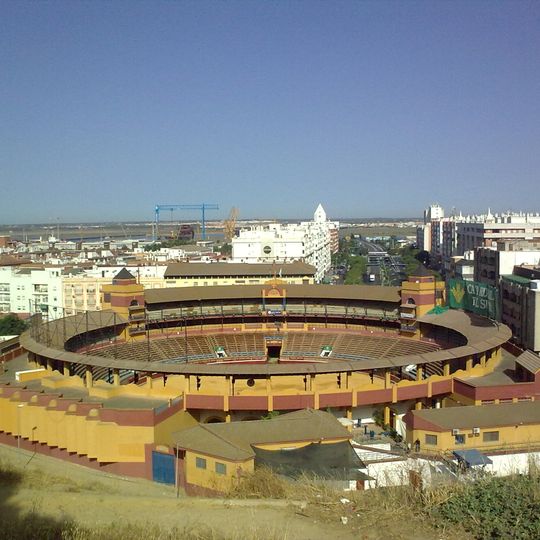
Plaza de Toros de La Merced, Bullring in Huelva, Spain
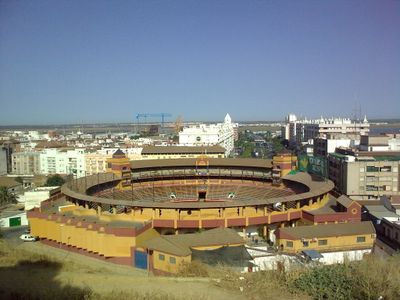
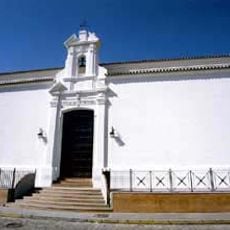
The Plaza de Toros de La Merced is a bullring on the slope of the Cabezo del Conquero in Huelva, built of brick on a hydraulic concrete foundation. Its main building forms a 48-sided polygon around a ring 50 metres across, with a 1.8-metre callejón, fourteen seating rows reached by nine entrances, and thirty-six boxes under a balcony. The rehabilitated ring seats 7,127 spectators.
The Sociedad Anónima Plaza de Toros de Huelva was founded on 20 November 1886, and architect Trinidad Gallego Díaz was commissioned to design the ring. The building was erected in 1899–1902 and opened on 5 September 1902 with a bullfight by El Litri and Machaquito. After years of disuse, architect Luis Marquínez rehabilitated it, and it was reinaugurated in 1984.
The bullring opened on 5 September 1902 to coincide with the Feria de Huelva, the feast of the Virgen de la Cinta, with a corrida in which El Litri and Machaquito killed bulls of the Marqués de Saltillo. The illustrated magazine Sol y Sombra devoted several pages to the event, noting trains arriving full of travellers. The ring is named after the Merced.
The main gate faces west, so the stands split into a sunny half and a shady half; the presidential box sits above that gate. Seating runs through eight great gates, including the main one, and a wide staircase leads to the thirty-six upper boxes. The ring lies by a slope of the Cabezo del Conquero.
The 1902 ring replaced a wooden two-storey bullring with about 6,000 seats and a 45-metre ruedo that stood on this site until the 1890s. The new ring was Huelva's first bullring built of manufactured materials, and demand for bricks was so great that local brickkilns struggled to keep up.
The community of curious travelers
AroundUs brings together thousands of curated places, local tips, and hidden gems, enriched daily by 94,040 contributors worldwide.