Mesón de la Dolores, Traditional restaurant and hostal in Calatayud, Spain.
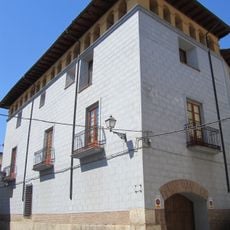
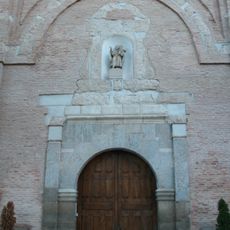
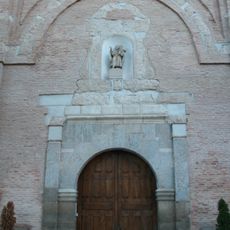
Mesón de la Dolores is a restaurant and three-star hostal in Calatayud, housed in a building originally dating from the late 15th or early 16th century, once the palace of the Marquis of Ayerbe. It was renovated in the late 20th century by architect José María Valero Suárez, preserving the cobbled courtyard with its well, the quadrangular galleries, the wooden beams and the arcaded gallery on the facade.
The original building has been dated to the late 15th or early 16th century and was once the palace of Pedro Ignacio Jordán de Urriés y Palafox, Marquis of Ayerbe. In the 1960s a proposal to turn it into a national parador was never carried out. In the late 20th century Calatayud City Council bought it and had it restored as a three-star hostal by architect José María Valero Suárez.
The name comes from Dolores Peinador Narvión, the Calatayud woman around whom the 1893 drama by José Feliú y Codina and Tomás Bretón's 1895 opera were written. A blind singer known as 'Pascualón' is cited as author or reciter of the earlier anonymous copla, which appeared in mid-19th-century Calatayud and is said to have driven her to Madrid.
The building stands on Plaza de los Mesones, next to the Travesía de los Mesones, in Calatayud's old centre. The late-20th-century renovation by architect José María Valero Suárez kept the cobbled courtyard and its well, the four-sided galleries and the arcaded outer gallery. The café occupies the space that was the cebadero, and the former wine cellar houses a historical-ethnological museum.
The building was long known as the Posada de San Antón and the Mesón de la Gaspara before the Dolores name took hold. In the 1960s a proposal to turn it into a national parador was studied but never carried out; the town council later bought and restored it.
The community of curious travelers
AroundUs brings together thousands of curated places, local tips, and hidden gems, enriched daily by 95,307 contributors worldwide.