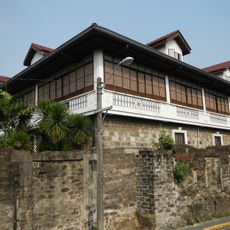
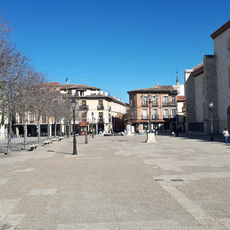
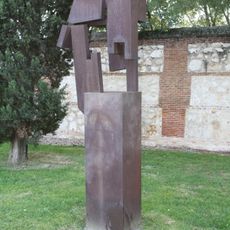
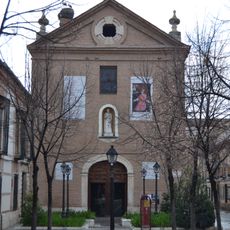
Walls of Alcalá de Henares, Medieval defensive wall in Alcalá de Henares, Spain
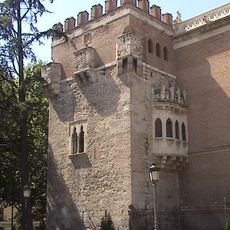
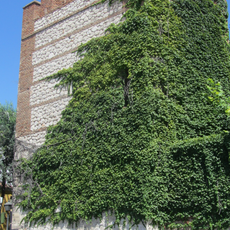
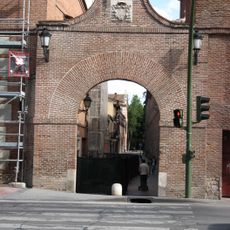
The Walls of Alcalá de Henares consist of two successive medieval enclosures built between the 13th and 15th centuries. Of the first, a circular wall of 37 hectares with seven gates, about 700 metres remain around the Archbishop's Palace, with 16 rectangular towers, the Arco de San Bernardo and the Puerta de Madrid. The second enclosure, begun around 1454, was demolished in the 19th century.
This fortification began in the 13th century to defend the town during the medieval period and underwent significant changes under Archbishop Tenorio during the 14th century. These modifications reflected changing military needs and the town's evolving role in the region over time.
The walls shape how people move through and perceive the historic center, with the main gates marking traditional entry points into town. These structures remain woven into the everyday landscape and help residents and visitors understand the old boundaries of the community.
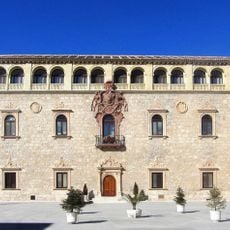
The walls are not a visitable monument with regular opening hours; they are public fortifications visible from the street. The best-preserved section is the 700-metre stretch with 16 towers around the Archbishop's Palace, where you can see the Arco de San Bernardo and the Puerta de Madrid. Look for the small moat between towers 2 and 3, and the pentagonal albarrana tower on Calle Andrés Saborit.
Two towers on Calle Andrés Saborit break the rectangular pattern: number 7 is a free-standing pentagonal albarrana tower, and number 8 has a semicircular plan. The albarrana tower was partly demolished in 1834, its stone reused to build the town cemetery.
The community of curious travelers
AroundUs brings together thousands of curated places, local tips, and hidden gems, enriched daily by 95,281 contributors worldwide.