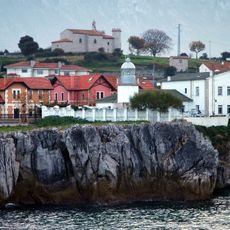
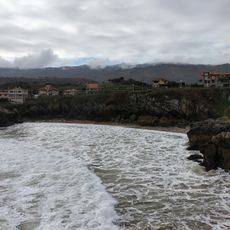
Playa de Vidiago, Coastal beach in Llanes, Spain.
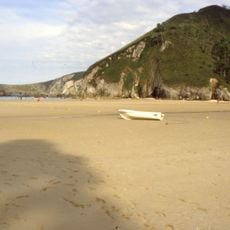
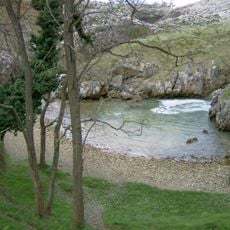
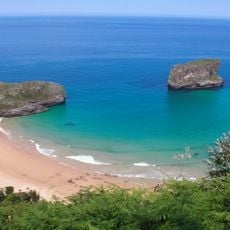
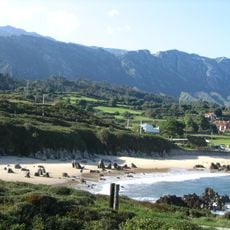
Playa de Vidiago is a beach along the Asturian coast made up of gravel and sand, bordered by natural rock formations. The cove extends roughly 200 meters and contains different areas for swimming and relaxing.
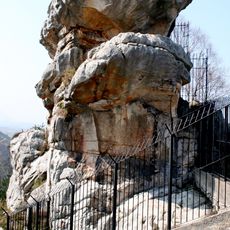
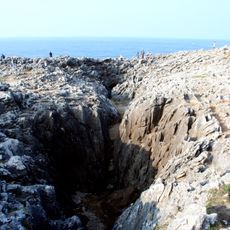
Near the beach stands the Ídolo de Peña Tú, a decorated rock with schematic paintings and engravings attributed to the Bronze Age. The site was declared a Historic-Artistic Monument in 1924, making it one of the first prehistoric monuments in Asturias to receive protection. The nearby Bufones de Arenillas, marine blowholes in the cliffs, are another geological feature of the area.
The beach's other names come from its geography: Novales from the river that empties into the eastern stretch, Bretones from local usage for the two coves. Bathers reach the western cove, about 60 metres long, from Vidiago village by a signposted path ending at a car park at the sand's edge; the eastern stretch, roughly 200 metres, is reached by a footpath and steps over the dividing promontory.
The western Bretones beach, about 60 metres long, is reached from Vidiago village by a signposted access road ending at a car park at the sand's edge. The eastern section, roughly 200 metres, connects to it by a path and steps over the dividing promontory. Cleaning and lifeguard services operate in summer; facilities are otherwise few.
The beach is really two beaches, Bretones west and Bretones east, split by a promontory and linked by a path and steps. The shorter western stretch, about 60 metres, is reached from Vidiago past a car park; the eastern one runs some 200 metres to the mouth of the Novales river, which gives the beach its other name.
The community of curious travelers
AroundUs brings together thousands of curated places, local tips, and hidden gems, enriched daily by 94,473 contributors worldwide.