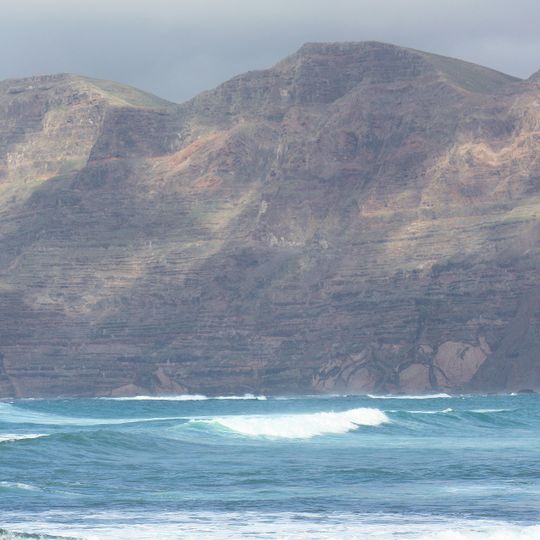
Famara, Mountain massif and cliffs in Teguise and Haría, Lanzarote, Spain
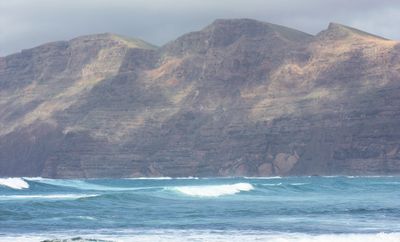
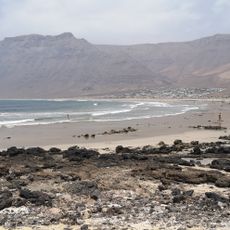
Famara is a volcanic massif in the north of Lanzarote, the eastern slope of a Miocene volcano, whose cliffs are the remains of a caldera about ten kilometres in diameter centred south of La Graciosa. The massif runs 23 km through Teguise and Haría and peaks at 671 m at the Peñas del Chache. Its west face drops as a cliff over Playa de Famara and the Atlantic, with layered grey-brown, rust and mauve rock cut by eroded gullies.
Famara was shaped millions of years ago during the Miocene period by volcanic eruptions that created the basalt cliffs visible today. These ancient lava formations stand as testimony to Lanzarote's powerful volcanic past and continue to define the landscape.
At the top of the massif stands the Ermita de Nuestra Señora de las Nieves, chapel of Lanzarote's historic patron saint, visited by islanders in pilgrimage. The name Famara is also used for the beach at the foot of the cliffs, which marks the northern edge of El Jable, the sandy belt reaching into the island's centre.
Driving from Haría via the LZ-10 road is the easiest way to reach the viewpoints, with parking available at several stops along the route. Wear comfortable shoes, bring plenty of water, and pack a windbreaker, as conditions can be breezy and paths are mostly unpaved.
The cliffs of Famara are the eroded remains of a caldera about ten kilometres across, centred south of La Graciosa. Near the massif lies the Valle Grande site, where eggs of flightless bird species were found and remain unexplained. The coastal plain at the foot of the cliffs holds around ten endemic plant species, isolated for more than a million years.
The community of curious travelers
AroundUs brings together thousands of curated places, local tips, and hidden gems, enriched daily by 93,462 contributors worldwide.