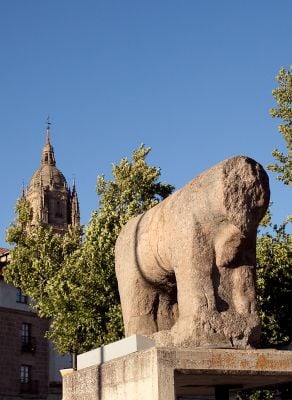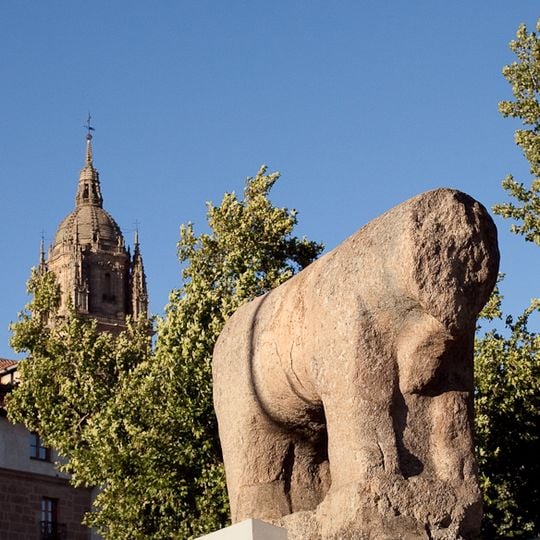
Verraco del puente, Stone animal statue at Roman bridge entrance, Salamanca, Spain
The Verraco del puente is a granite sculpture of a bull or boar placed at the entrance of the Roman bridge in Salamanca. The figure sits directly on the ground and measures about 210 cm long and 157 cm tall, putting it at eye level for people walking past.
The Vettones, a pre-Roman people of the western Iberian meseta, carved the figure in the late Iron Age, under Emperor Augustus at the end of the 1st century BCE. It has stood by the Roman bridge since at least the late 12th century, when documents and city council records mention it. In 1834 governor José María Cambronero had it thrown into the Tormes, breaking it in three; recovered in 1867, it returned to the bridge on 23 October 1954.
The figure is known as the bull of Salamanca and appears in the city's coat of arms. In Lazarillo de Tormes (1554), the blind man tricks Lázaro into putting his ear to the stone, then knocks his head against it. Lope de Vega also mentions it in El mejor maestro, el tiempo (1615).
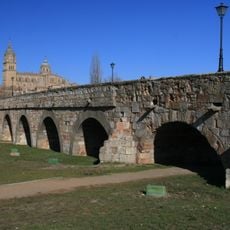
The sculpture stands at the bridge in the center of Salamanca and is easy to reach on foot from the old town. It is accessible at any time since it sits in the open air on the pavement, with no barriers or enclosure around it.
The statue's head is missing and its body was split in half, yet it was rebuilt. The figure was thrown into the Tormes in 1834 on the orders of governor José María Cambronero, who wrongly thought Charles I had placed it there after the Revolt of the Comuneros. It broke into three pieces and was rescued in 1867.
The community of curious travelers
AroundUs brings together thousands of curated places, local tips, and hidden gems, enriched daily by 94,777 contributors worldwide.