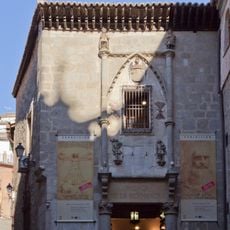
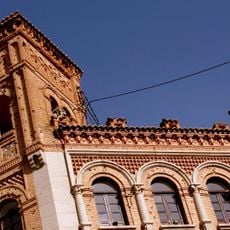
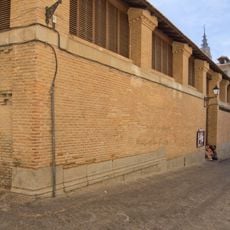
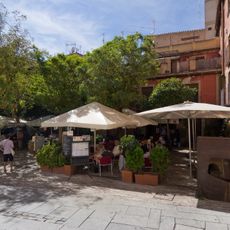
Arco de la Sangre, Medieval city gate at Plaza de Zocodover, Toledo, Spain.
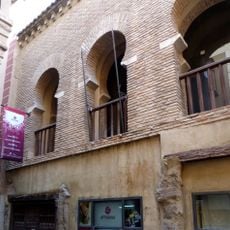
Arco de la Sangre is a medieval city gate on the eastern side of Plaza de Zocodover, distinguished by its characteristic horseshoe arch made of stone. The structure connects the plaza to lower-lying streets through a series of steps and serves as a key passage between different elevation levels of the old city.
The gate was originally named Bab-al-Yayl during Arab rule and formed part of the inner defensive walls protecting the Alficén district. Over the centuries, it remained a key passage within Toledo's urban layout and retained its strategic importance.
The gate's name comes from the Sangre de Cristo quarter it opens onto, a district Luis Vélez de Guevara names in El diablo cojuelo (1641), where he places the Sevillana inn. The horseshoe arch, called Bab-al-Yayl ("gate of the Horses") in Arab times, is crossed by steps that carry pedestrians between the plaza and Calle de Cervantes.
The passage is accessible at any time and offers a natural route for visitors moving between the plaza and lower-lying areas. It is wise to account for the steps when planning your visit, as the climb or descent can be steep depending on which direction you are heading.
The gate's Arabic name, Bab-al-Yayl, means "Gate of the Horses". It stood in an inner wall of the alficén, the fortified core that enclosed the whole of Toledo, so the arch once marked a line inside the city rather than its outer edge. Steps still run through the horseshoe arch.
The community of curious travelers
AroundUs brings together thousands of curated places, local tips, and hidden gems, enriched daily by 93,859 contributors worldwide.