Place Victor-Hugo, Public square in Paris, France
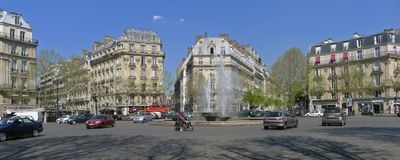
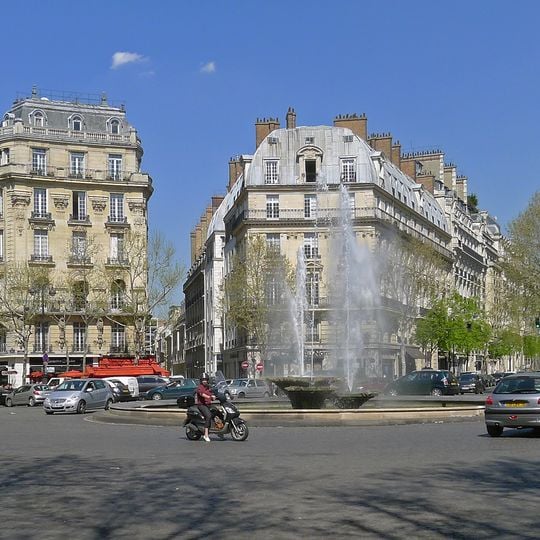
Place Victor-Hugo is a public square in the 16th arrondissement of Paris, where several streets and avenues meet around a central round basin with a fountain. The square is paved in pale grey stone and is enclosed by two broad building facades, one pale stone on the left and one taller cream stone on the right, with no inscription or sign on the ground.
The square was laid out in 1825 as the central roundabout of the Passy plain development and was renamed in honour of Victor Hugo the day after his death in 1885. A large wooden hippodrome stood here from 1856 until it burned down in 1869, and the square later received a monument to Hugo in 1902, which was replaced by the current fountain in 1964.
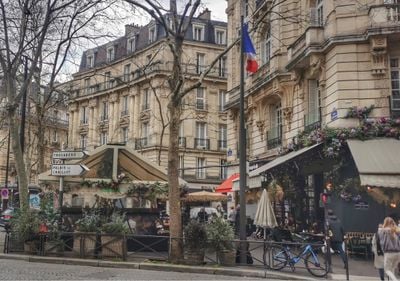
The square is named after Victor Hugo, the French writer and politician, and local residents often use it as a meeting point before heading to the nearby shops and cafes. The fountain in the centre is a modern replacement, and the square remains a busy crossing point in the neighbourhood, with people passing through at all hours.
The square is easy to reach on foot from the nearby metro station and serves as a natural starting point for exploring the surrounding streets. Visitors can walk around the central basin and sit on the low stone rim, but there are no benches or shaded areas directly on the square itself.
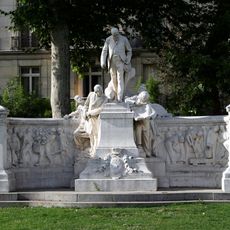
The square appears in Patrick Modiano's novel De si braves garçons, where he mentions a brasserie called Scossa that once stood on the square. The bronze monument to Hugo was melted down for weapons during the Occupation in 1943, and its stone base reliefs were saved and can now be seen in Calais and Veules-les-Roses.
The community of curious travelers
AroundUs brings together thousands of curated places, local tips, and hidden gems, enriched daily by 94,563 contributors worldwide.