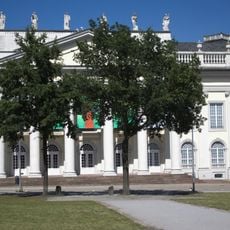
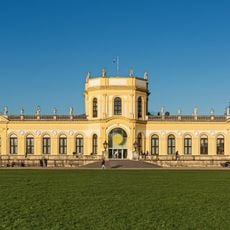
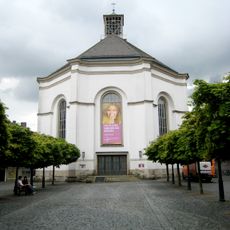
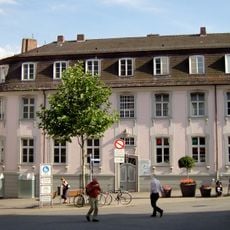
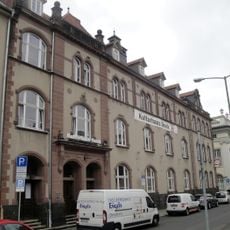
Ottoneum, Natural history museum and former theater in Kassel, Germany.
The Ottoneum is a former theater building from the 17th century in Kassel that now houses natural science collections. The exhibitions display preserved animals, rocks, fossils, and plants arranged across several rooms of the historic structure.
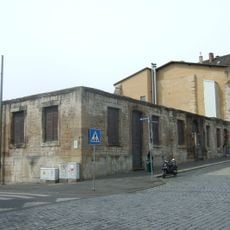
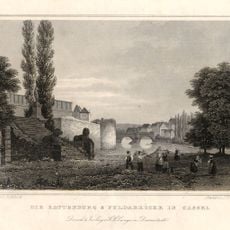
Built between 1603 and 1606 under Landgrave Moritz by architect Wilhelm Vernuken, the Ottoneum was Germany's first permanent theatre. After the Thirty Years' War it was converted from 1690 by court builder Johann Conrad Giesler to hold the Landgrave art and natural history collections. From 1778 to 1806 it housed the Hessian cadet corps, then served as tax office, jury court and cadastral office. It has been used solely as a natural history museum since 1884.
The name Ottoneum honours Otto, favourite son of Landgrave Moritz. After the Thirty Years' War the building lost its theatrical role and from 1690 housed the landgrave's art and natural history collection; the Collegium Carolinum, founded in 1709, taught natural sciences here. Today the Schildbach Wooden Library, 530 volumes made from the wood of the trees they describe, is shown in a cabinet by American artist Mark Dion made for documenta (13).
The Ottoneum stands on Steinweg in Kassel's city centre, right next to the Staatstheater and close to Friedrichsplatz. The building has three floors; the permanent exhibitions occupy all of them, with special programmes for children alongside temporary shows. The 1994–1997 renovation created additional exhibition space, part of which served documenta X shortly afterwards.
The Goethe Elephant is one of the oldest mounted skeletons of a large mammal in a German natural history museum. Samuel Thomas von Soemmerring lent it to Goethe for research on the premaxilla; the elephant's preserved skin was lost in the 1943 fire.
The community of curious travelers
AroundUs brings together thousands of curated places, local tips, and hidden gems, enriched daily by 93,118 contributors worldwide.