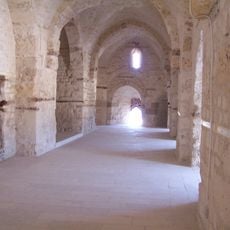
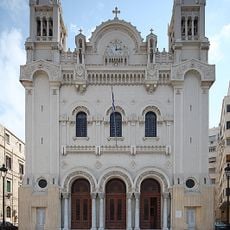
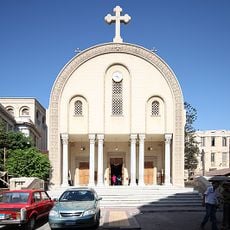
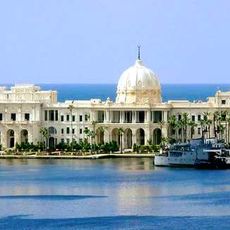
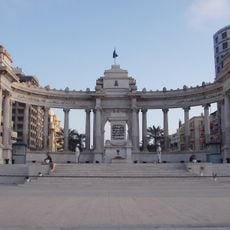
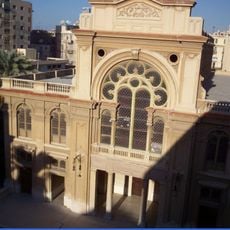
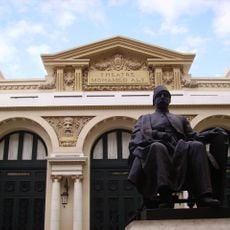
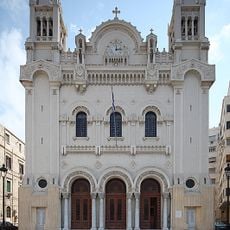
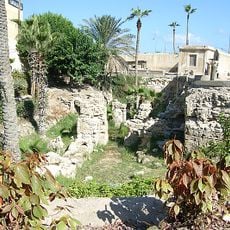
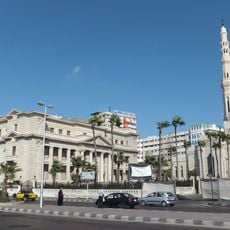
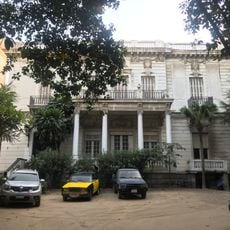
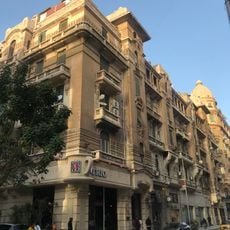
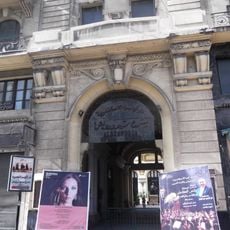
Heptastadion, Archaeological site in central Alexandria, Egypt.
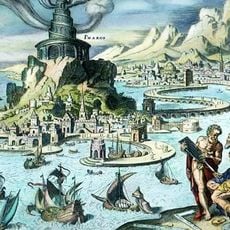
The Heptastadion was an ancient causeway in Alexandria, Egypt, that linked the city to the island of Pharos and created two natural harbors on either side. It was wide enough to walk across and had openings that allowed boats to pass between the two harbors.
The causeway was built in the 3rd century BC under the Ptolemaic rulers to connect the island of Pharos to the mainland. Over time, sediment filled in around the structure and slowly turned it from a bridge into solid ground, permanently joining the island to the city.
The name Heptastadion comes from Greek and means "seven stadia", referring to the approximate length of the original causeway. This unit of measurement was common in the ancient Greek world and gives a sense of how builders at the time described their work.
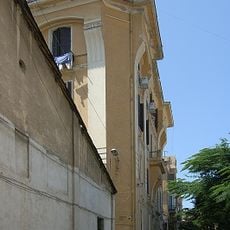
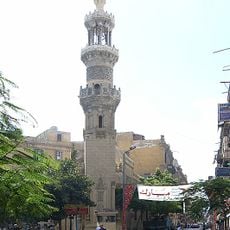
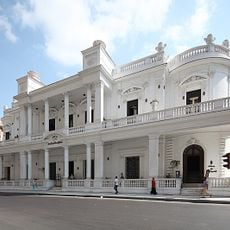
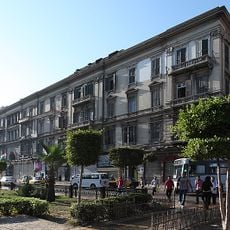
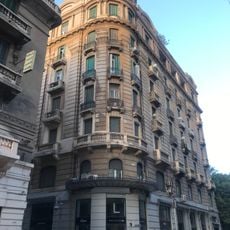
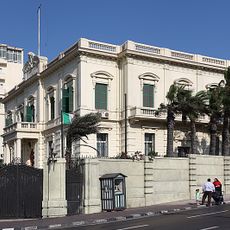
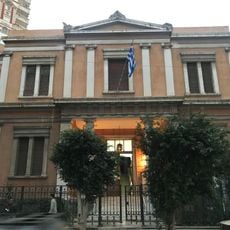
Nothing of the original structure is visible above ground today, as it lies entirely beneath a modern neighborhood. Those interested in the area can explore it on foot and notice how the current urban layout sits on top of ancient foundations.
The Heptastadion is no longer a separate place but forms the base of the peninsula where the Anfushi neighborhood now stands. This means that millions of people over the centuries have lived literally on top of an ancient engineering work without knowing it.
The community of curious travelers
AroundUs brings together thousands of curated places, local tips, and hidden gems, enriched daily by 90,754 contributors worldwide.