Catacombs of Kom el Shoqafa, Roman burial site in Alexandria, Egypt.
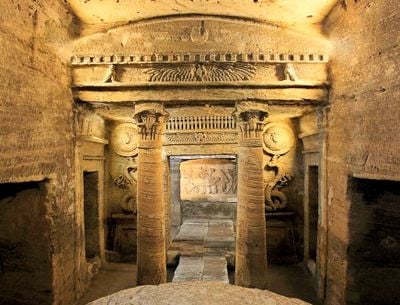
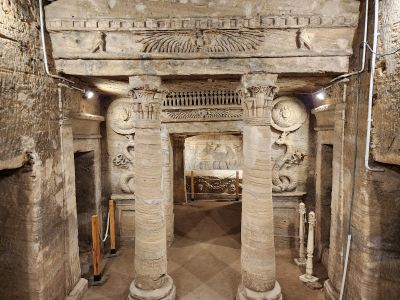
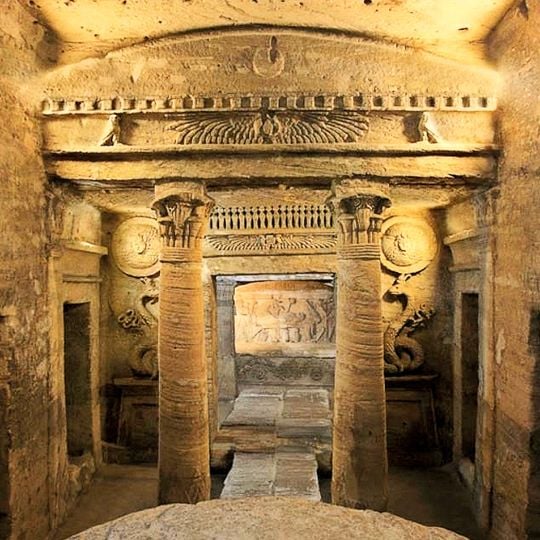
The Catacombs of Kom el Shoqafa are cut into the bedrock of Alexandria's western necropolis on three levels, reached by a spiral staircase around a cylindrical light shaft about 6 m across. The principal tomb chamber has a temple-like facade: two columns with papyrus, lotus and acanthus capitals support an architrave carved with a winged sun disk flanked by Horus falcons, and carved snakes with Medusa shields flank the entrance. A triclinium with three stone couches opens off the round hall.
The site dates to the 2nd century AD and served as a cemetery for wealthy families during the Roman period. It was accidentally discovered in 1900 when an animal fell through an opening at ground level.
The name Kom El Shoqafa, "Mound of Shards", comes from the broken clay jars and plates left by visitors who brought food and wine to the tombs and smashed the containers rather than carry them home. A triclinium, a funeral banquet hall with stone couches, was used for meals at burials and on later commemorative visits. The carved Agathodaemon snakes at the tomb entrance each wear a Roman caduceus, a Greek thyrsus and the Egyptian pschent.
Entry is down a spiral staircase around a cylindrical light shaft about 6 m across, with steps roughly 1.20 m wide; the lower steps are taller than the upper ones, easing the climb out. The third level is flooded and closed. Lighting is dim, so bring sturdy shoes and let your eyes adjust.
A special hall served as a dining space where families gathered to honor their deceased relatives with ceremonial meals. These rooms reveal how daily life and beliefs about the afterlife were deeply connected for people here.
The community of curious travelers
AroundUs brings together thousands of curated places, local tips, and hidden gems, enriched daily by 94,675 contributors worldwide.