Shanta Durga Temple, Hindu temple in Kavale, Ponda district of Goa, India
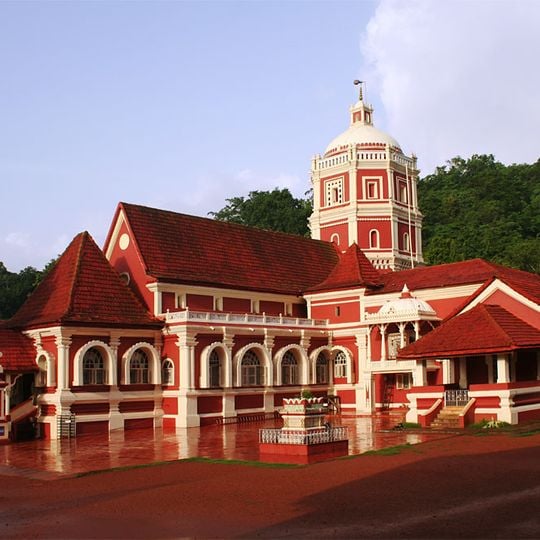
Shanta Durga Temple stands at the foot of a hill in Kavale, Ponda Taluka, Goa. Its deep red walls with white trim carry a red gabled roof, two rows of arched windows with white surrounds, a white balustrade and a five-arch arcade; a tall tower rises to the right, with an octagonal red and white drum pierced by windows and a white ribbed dome. Lower red-roofed wings, one with a small white domed pavilion and one with columns, adjoin it, and a small red and white gate-like structure stands in the paved courtyard. The pillars and floors are of Kashmir stone.
The original temple at Quelossim (Keloshi) in Salcete was destroyed by the Portuguese in 1566, and the goddess was shifted to Kavalem. The present temple was built between 1713 and 1738 under Maratha ruler Shahu Maharaj of Satara. Minister Naroram Mantri secured the village of Kavalem for the temple from Peshwa Baji Rao I in 1738, and reconstruction began around 1730.
The goddess here is seen as a mediator between Shiva and Vishnu, representing harmony among different religious traditions. Her name Shanta Durga means "peaceful Durga," and rituals performed daily reflect centuries-old practices carried on by the local community.
The temple stands at the foot of a hill in Kavalem village, about 30 km from Panaji in Ponda Taluka. Foreigners are currently barred from entering the temple, a ban the authorities attribute to objectionable dressing and conduct. Agrashaas (guest houses) within the complex serve pilgrims attending ceremonies.
The temple's golden palanquin carries the deity on festive occasions, and the complex also holds a Deep Jyoti Stambh (lamp tower) and agrashalas (guest houses). The main shrine and three smaller temples of other deities stand on three sides of the main temple.
The community of curious travelers
AroundUs brings together thousands of curated places, local tips, and hidden gems, enriched daily by 94,839 contributors worldwide.