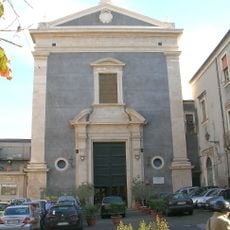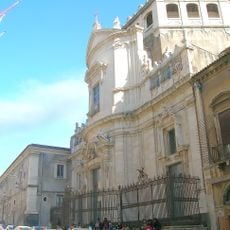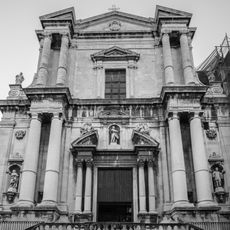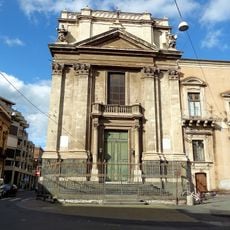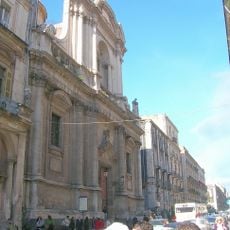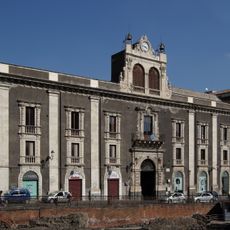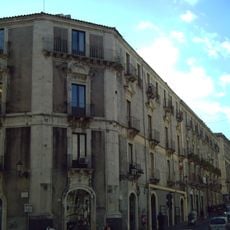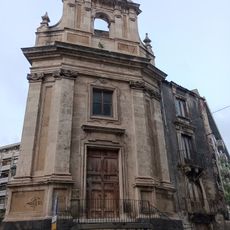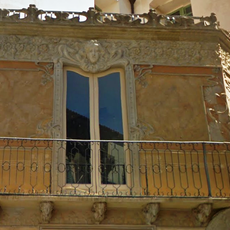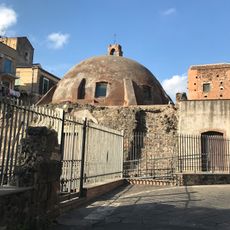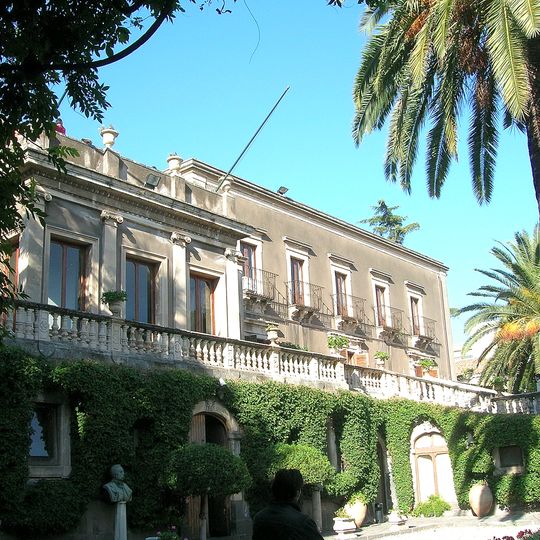
Villa Cerami, 18th century villa in Catania, Italy
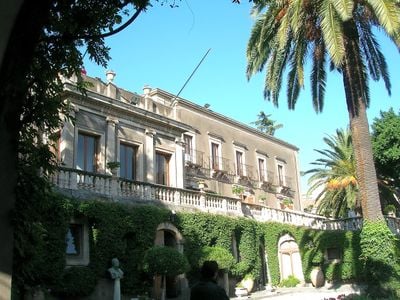
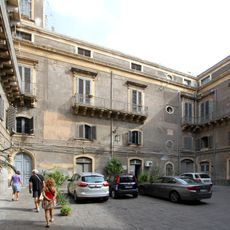
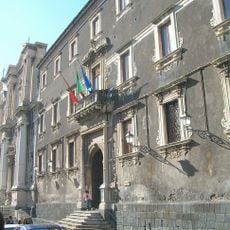
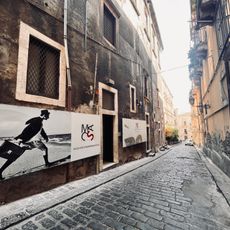
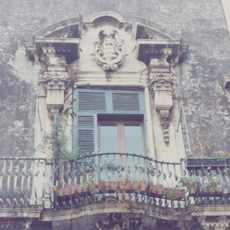
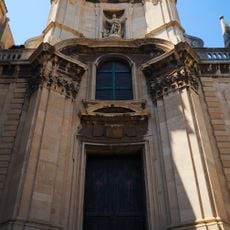
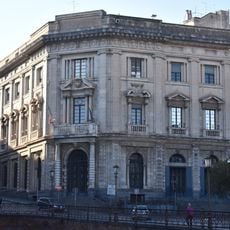
Villa Cerami is a Baroque palace from the 18th century in Catania, featuring a stone entrance portal with carved decorations, a monumental staircase, and a courtyard with a bronze fountain. The building sits at the northern end of Via Crociferi and follows the style of Sicilian Baroque architecture that spread across the city after the 1693 earthquake.
After the 1693 earthquake destroyed much of Catania, Domenico Rosso, the third Prince of Cerami, commissioned architect Giovanni Battista Vaccarini to rebuild the palace around 1724. In the 20th century, the building passed to the University of Catania and became home to its Law Faculty.
The coat of arms of the Rosso di Cerami family is carved above the entrance portal, marking who once owned the building. In the courtyard, the bronze sculpture "Grande Bagnante" by Emilio Greco adds an unexpected modern note to the old stone surroundings.
The building now serves as an active university campus, so access to some areas may be limited during teaching hours. The courtyard and entrance portal can usually be seen without restriction, making a short stop worthwhile even for a quick look.
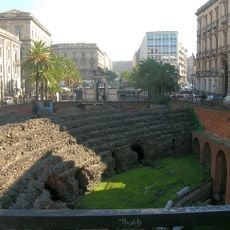
The palace was built directly over the ruins of a Roman amphitheater, the remains of which can be seen today in nearby Piazza Stesicoro. Walking along Via Crociferi means standing above one of the largest ancient arenas in Sicily without most people realizing it.
The community of curious travelers
AroundUs brings together thousands of curated places, local tips, and hidden gems, enriched daily by 91,364 contributors worldwide.