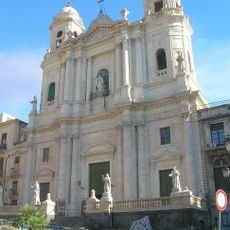
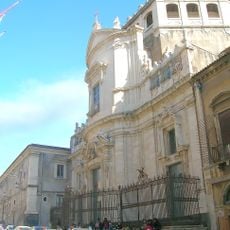
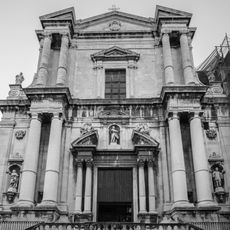
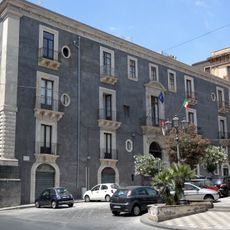
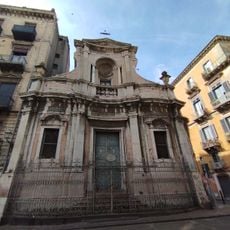
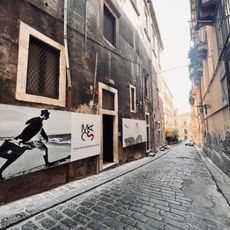
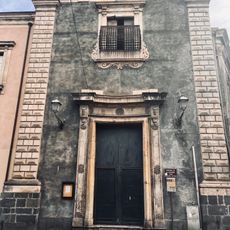
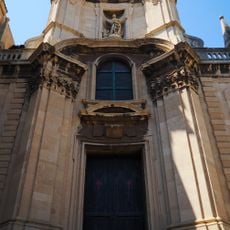
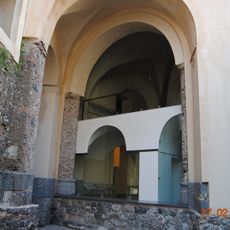
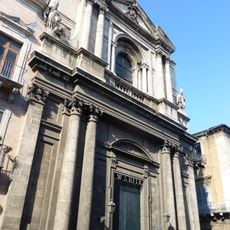
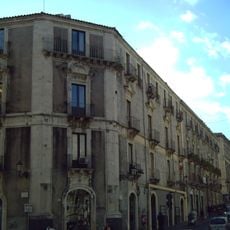
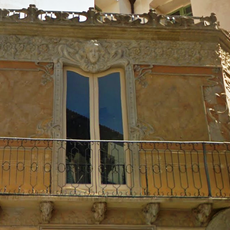
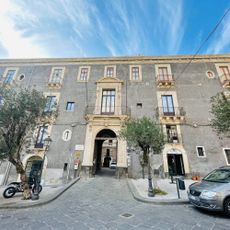
Palazzo Asmundo, Baroque palace in Via dei Crociferi, Catania, Italy.
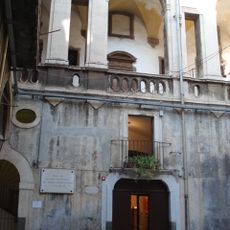
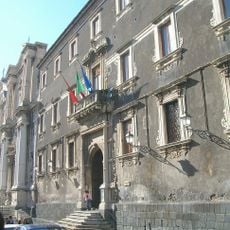
Palazzo Asmundo, also known as Asmundo Francica-Nava, is a two-storey baroque palace attributed to Giovanni Battista Vaccarini. Its main facade on Via dei Crociferi has a wide portal flanked by columns carrying the central balcony, topped by the Asmundo family crest. The building wraps around a courtyard, with a lateral wing holding a hanging garden, the second largest in Catania.
Built in the early 1700s, the palace emerged from reconstruction efforts following the devastating 1693 earthquake that destroyed much of Catania. It became part of the broader rebuilding campaign that reshaped the city's landscape with baroque design.
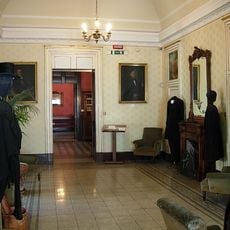
The palace takes its name from the Asmundo family, whose crest sits above the central balcony, and later passed to the Francica-Nava; Archbishop of Catania Giuseppe Francica Nava di Bondifè died here in 1928. The Rococo interiors survive intact, so the carved rooms visitors walk through are the same ones the family used.
The palace opens onto Piazza Asmundo di Gisira, reached from Via dei Crociferi through Via San Benedetto, the alley between the churches of San Benedetto and San Francesco Borgia, or from Via Teatro Greco via Via Ospizio di Beneficenza. The two-storey facade with the Asmundo crest faces the piazza, not the main street.
The palace's hanging garden, on the lateral wing, is the second largest in Catania by surface area. It is reached through the building's courtyard layout, and the garden sits above ground level rather than at street level. The garden is not visible from Via dei Crociferi, so visitors often miss it when viewing the facade.
The community of curious travelers
AroundUs brings together thousands of curated places, local tips, and hidden gems, enriched daily by 93,551 contributors worldwide.