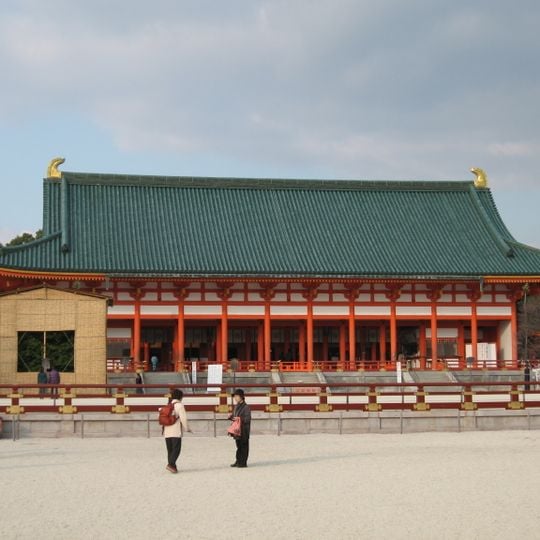
Heian Palace, Imperial palace ruins in Kyoto, Japan
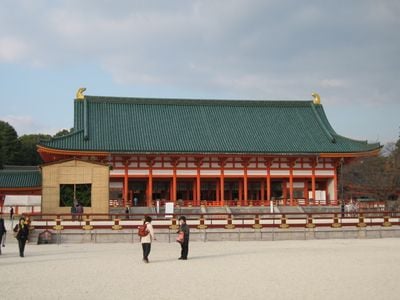
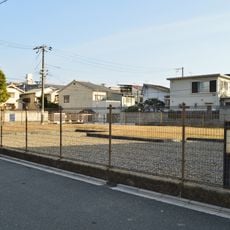
Heian Palace was a rectangular compound with ceremonial halls, administrative buildings, and residential quarters following Chinese architectural traditions of the Tang dynasty. The layout followed a symmetrical grid with broad avenues and courtyards, though today only archaeological traces and ground irregularities hint at the original scale.
Emperor Kammu moved the capital from Nara to Heian-kyō in 794 to reduce Buddhist influence on government. A major fire destroyed the palace compound entirely in 1227, and it was never reconstructed.
The name Heian-kyō means roughly "capital of peace and tranquility," revealing how the emperor wanted the new seat to represent a fresh start far from older monastic pressures. Today the site shows only traces of foundation stones and earthworks where grand wooden structures once rose, offering visitors a quiet space to imagine the ceremonial routines that once filled these grounds.
Guided tours explain the functions of different sections through archaeological remains and information panels. Visitors should wear comfortable shoes, as the site is open and uneven.
Literary works like the Tale of Genji mention the palace rooms and their ceremonies in great detail, making them some of the best-documented lost buildings in Japan. These narratives allow scholars to reconstruct the spatial arrangement and courtly life with remarkable accuracy.
The community of curious travelers
AroundUs brings together thousands of curated places, local tips, and hidden gems, enriched daily by 92,142 contributors worldwide.