Hassam House, Historic house in Naka-Yamate-dori, Japan.
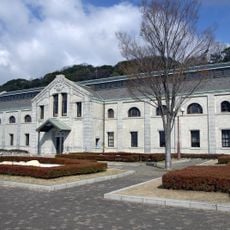
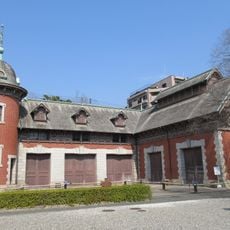
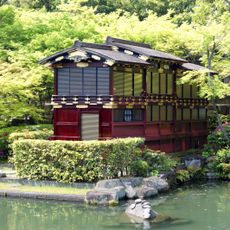
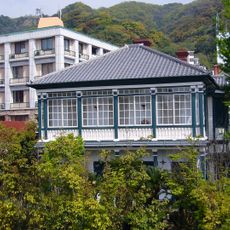
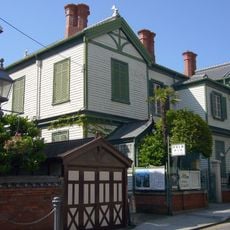
The Hassam House is a two-storey wooden residence completed in 1902, now standing inside Sōrakuen garden in Naka-Yamate-dōri. Its south veranda faces a large Japanese garden, with an arcade of arches on the ground floor and a colonnade above. The walls are clad in horizontal boards, with bay windows, louvred shutters and pediments; the floor area is about 398 m².
Built in 1902 in Kitano-chō as the residence of J.K. Hassam, an Indian-British merchant, the house is attributed to architect Alexander Nelson Hansell. In 1961 its owner, the Kobe Mosque, donated it to the city, and in 1963 it was moved to Sōrakuen. The 1995 Great Hanshin earthquake dropped a brick chimney into a pantry; the repaired house displays the fallen chimney in the front garden.
The house was built in 1902 for J.K. Hassam, an Indian-British merchant, next to the Drewell residence in Kitano-chō. Its south veranda faces a Japanese garden, with an arcade on the ground floor and a colonnade above. In 1961 the Kobe Mosque, then owner, gave it to the city, and it was moved to Sōrakuen in 1963.
The house stands inside Sōrakuen garden at 5-3-1 Naka-Yamate-dōri; enter through the garden, which closes on Thursdays unless that day is a public holiday, then opens the following day. The house itself opens only in late April to early May and late October to mid-November, 9:00 to 16:30; confirm the dates with the garden. From Kenchōmae subway station it is a five-minute walk, from Motomachi about ten.
Two gas lamps in the front garden were made around 1874 as street lights for the former foreign settlement; they are among the oldest surviving gas lamps in Japan. The brick chimney that fell into the pantry during the 1995 Great Hanshin-Awaji earthquake is displayed in a corner of the front garden as a record of the quake.
The community of curious travelers
AroundUs brings together thousands of curated places, local tips, and hidden gems, enriched daily by 93,389 contributors worldwide.