Hanakuma Castle, Japanese castle in Hanakuma-chō, Japan
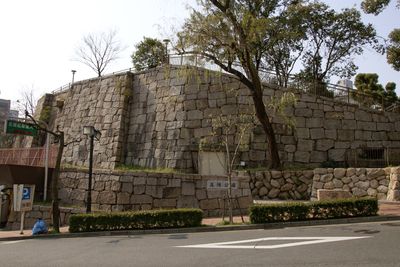
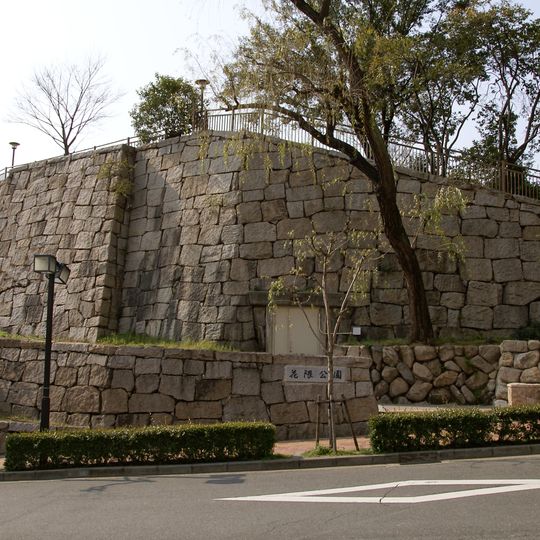
Hanakuma Castle was a 16th-century Japanese castle in Chūō-ku, Kobe, now a park with a stone monument inscribed "花隈城跡" and a plaque by Ikeda Nobumasa. The park holds a mock stone wall and a mock keep base, and a small recess with a pale door is set into the lower wall. The upper wall leans back slightly above a projecting base of rounded stones.
The castle's construction date is debated: sources name 1567 under Oda Nobunaga, 1568 under Wada Koremasa, or 1574 under Araki Murashige. Built with stone by the Ōmi Anōshū, it fell in 1580 after Ikeda Tsuneoki's assault; Murashige fled to the Mōri. Ikeda then built Hyōgo Castle using Hanakuma's materials.
The name Hanakuma was also written with characters meaning "nose corner", describing Mount Rokkō's ridge jutting into the sea. The castle site is now Hanakuma Park, where a stone monument inscribed by Ikeda Nobumasa marks the former main bailey, alongside a mock keep platform and mock stone walls.
The former main bailey area now holds both an underground parking facility and a public park with stone markers showing historical points. Visitors can walk among the markers to get a sense of the layout of the compound.
The name was also written with the characters for "nose" and "corner", describing the spur of the Rokkō hills jutting into the sea and the ridge line behind it. The area itself was called Hanakuma before the castle existed.
The community of curious travelers
AroundUs brings together thousands of curated places, local tips, and hidden gems, enriched daily by 93,803 contributors worldwide.