Hiruiōzuka Kofun, Ancient burial mound in Ogaki City, Japan.
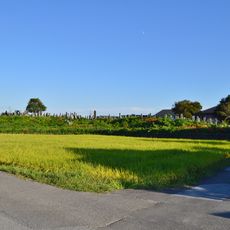
Hiruiōzuka Kofun is a three-tiered keyhole-shaped tumulus 150 meters long, with a 99-meter-diameter, 12-meter-high rear circular mound and an 80-meter-wide, 9.5-meter-high front rectangular mound, oriented southwest. Its slopes are covered with fukiishi stones from the Ōtani River, and cylindrical haniwa once stood on each terrace, about 150 around the rear mound top. A 2-meter-deep moat with a keyhole shape encircles it, bringing the total length to 180 meters.
This burial site dates to the late 4th century and held three separate grave chambers within a single pit for regional leaders. Its construction reflects how burial practices evolved during that period.
The name "Hirui" comes from the old village of Hirui in Ōgaki. On the top of the rear circular mound, about 150 cylindrical haniwa once stood in a 20-meter circle, alongside house- and lid-shaped haniwa; many talc beads and haji pottery were found there, traces of rites later moved to the constricted neck of the mound.
The park is a three-minute walk from the Akasaka Sōgō Center bus stop, served by Meihan Kintetsu buses from Ōgaki Station; by rail it is about 25 minutes on foot from Mino-Akasaka Station on the JR Mino-Akasaka branch line. The restored moat and haniwa rows on the rear mound can be viewed from the paths around the mound.
Excavations uncovered painted clay figures, curved jewels, glass beads, and pottery that reveal burial practices of the time. These discoveries show the range of objects communities prepared for their leaders.
The community of curious travelers
AroundUs brings together thousands of curated places, local tips, and hidden gems, enriched daily by 94,658 contributors worldwide.