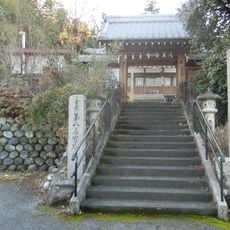
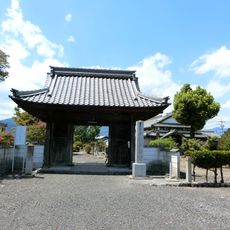
Myōjōrin-ji, Buddhist temple in Ogaki, Japan
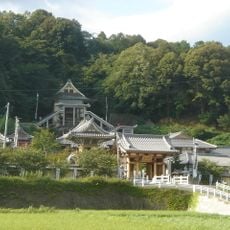
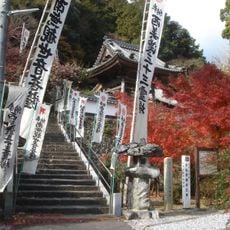
Myōjōrin-ji is a Shingon temple near the summit of Mount Kinjō (217.1 m) in Ogaki, Gifu Prefecture. Its main hall, rebuilt in 1863 with aid from Toda Uchiyoshi, houses a sculpture of Kokūzō Bosatsu carved inside a cave, said to have been made by En no Gyōja. The temple is also known as Akasaka Kokūzō.
The temple was founded in the 7th century by the Buddhist monk En no Gyōja, a figure closely tied to the origins of mountain asceticism in Japan. It was rebuilt and changed several times over the centuries but kept its role as a place of worship in the region.
The temple is commonly called Akasaka Kokūzō or Kokuzō-san, and is counted among Japan's three great Kokūzō sites. Its main image of Kokūzō Bosatsu is a carving set inside a cave. A local tale tells of a woman from Ise who turned into a giant serpent to pursue Kokūzō; she is now honoured as the temple's guardian, Jāō Gongen.
The grounds are easy to walk through, with paved paths connecting the main buildings and smaller shrines. Coming early in the day gives you more time and a better chance of seeing morning rituals when they take place.
The temple's honzon, a sculpture of Kokūzō Bosatsu kept inside a cave, is said by tradition to have been carved by En no Gyōja himself. The temple is counted among Japan's three great Kokūzō sites, alongside Hōrin-ji in Kyoto and Kongōshō-ji on Mount Asama in Ise. A local tale explains why a great serpent is honoured here as the guardian deity.
The community of curious travelers
AroundUs brings together thousands of curated places, local tips, and hidden gems, enriched daily by 93,442 contributors worldwide.