Shinzen-in, Buddhist temple in Tarui, Japan
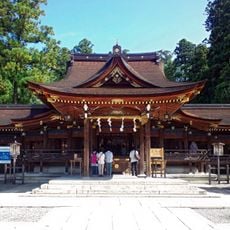
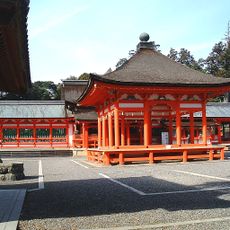
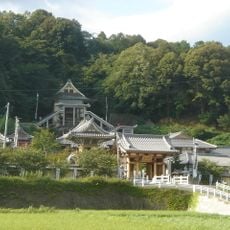
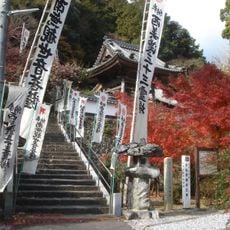
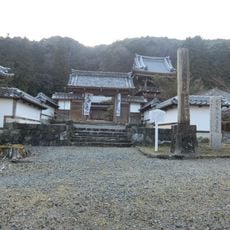
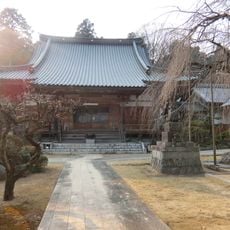
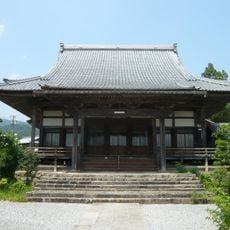
Shinzen-in is a Tendai Buddhist temple in Tarui, Gifu Prefecture, with the mountain name Asakura-san. Its grounds hold a three-story pagoda and a Hondo (main hall) built in 1642, both moved here from Nangū Shrine in the early Meiji era. The pagoda has polychrome patterns on its beams; the Hondo has an irimoya-tiled roof with a gabled front.
Tradition traces its predecessor, Miyasho-ji, to 739, and Shoku Nihongi records Emperor Shomu visiting it in 740. The temple was one of the monk quarters of Nangu Shrine; its three-story pagoda and Honji-do were built in 1642 under Tokugawa Iemitsu and moved here in 1868-1871 after the separation of Shinto and Buddhism.
The temple is the 17th stop on the Nishi-Mino Thirty-Three Kannon Pilgrimage and houses a Daikokuten of the Mino Seven Lucky Gods. Its main image, Muryōju Nyorai (Amida), was the original deity (honji) of Nangū Shrine, reflecting the shrine-temple fusion that ended with the Meiji separation of 1868.
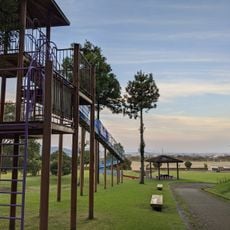
Shinzen-in stands about 1 km west of Nangū Taisha in the Miyashiro Asakura district of Tarui. On foot it is roughly 30 minutes from the south exit of Tarui Station on the Tōkaidō Main Line; the Tarui town loop bus (Sawayaka-gō) stops at Asakura Sports Park, about 2 minutes away. By car it is about 10 minutes from Sekigahara IC and 15 minutes from Yōrō Smart IC.
The temple's bell, though unsigned, is estimated to date from the Nara to early Heian period, based on the position of its striking boss and the way its dragon-head handle is attached. It is a nationally designated Important Cultural Property, older than the 1642 three-story pagoda that houses it.
The community of curious travelers
AroundUs brings together thousands of curated places, local tips, and hidden gems, enriched daily by 95,355 contributors worldwide.