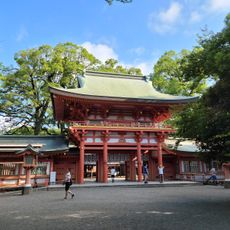
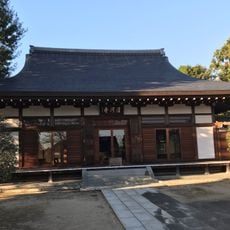
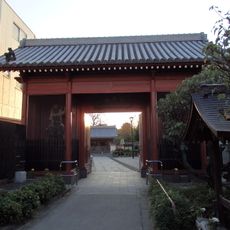
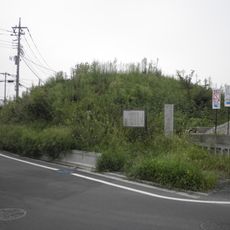
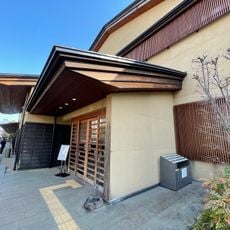
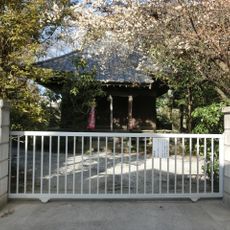
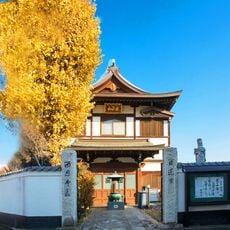
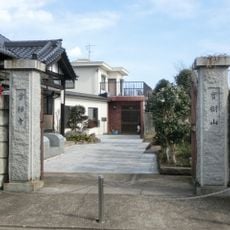
普門院, Buddhist temple in Saitama, Japan
Fumonji is a Soto Zen temple in the Omiya ward of Saitama, founded in 1426 when the local lord Kaneko Taisei took the tonsure and turned his castle, Taiseikan, into a temple. Its mountain name, Taiseizan, comes from that castle, and the temple holds a city-designated natural monument, a tarayo holly. It stands about 15 minutes on foot from Omiya Station's west exit.
In 1426 (Ōei 33), the local lord Kaneko Taisei took vows under Getsukō Shōbun, shaved his head and called himself Genkō-anju, and converted his residence, Taiseijō Castle, into a temple. The mountain name Taiseizan and temple name Fumon-in derive from that castle. It belongs to the Sōtō school of Zen Buddhism.
The temple belongs to the Soto school of Zen Buddhism. Its name comes from the founder Kaneko Taisei, who took the name Ganko Anshu after shaving his head, and turned his own castle, Taiseijo, into the temple in 1426. The temple's Chinese hawthorn (tarayo) tree is a natural monument designated by the city.
The temple stands in Omiya Ward, Saitama, about 15 minutes on foot from the west exit of Omiya Station, served by JR and Tobu lines. Buses toward Hirakata, Ageo Station west exit or Nishi-Ageo housing stop at Taisei Fire Station; the Shinsan Jidosha line stops at Shokugyo Anteijo Iriguchi. The grounds hold a city-designated tareyo holly tree.
The temple's Japanese holly (tarayō) tree is a city-designated natural monument; its leaves were traditionally used as writing paper. The temple was founded in 1426 when the local lord Kaneko Taisei took the tonsure as Genkō Anshu and converted his castle, Taisei-kan, into a temple, giving it the mountain name Taiseizan and temple name Fumon-in.
The community of curious travelers
AroundUs brings together thousands of curated places, local tips, and hidden gems, enriched daily by 93,468 contributors worldwide.