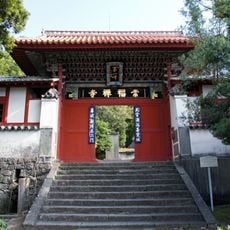
Honren-ji, Buddhist temple in Nagasaki, Japan
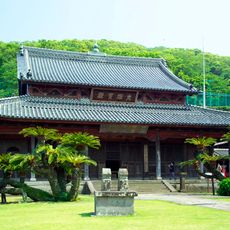
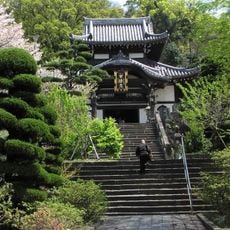
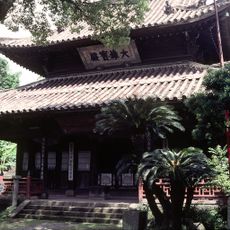
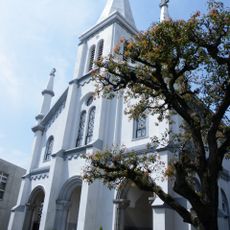
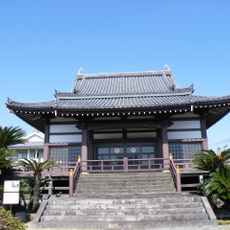
Honren-ji is a temple that combines Japanese and Chinese architectural styles, with a large glass lantern hanging from the main hall's ceiling as a focal point. The layout includes traditional temple structures arranged around gardens and courtyards that visitors can explore.
In 1616 the monk Nichie moved from Ōmura to Nagasaki and preached the Lotus Sutra. Rewarded by the shogunate through magistrate Hasegawa Gonroku, in 1620 he received the site of the ruined church of São João Batista and 50 silver pieces, and built a hall named Honren-ji. The temple burned in the 1698 Tsugime fire, was rebuilt in 1702, and its main hall was rebuilt in 1954 after the atomic bombing.
Honren-ji belongs to the Nichiren school, not Obaku Zen; it was founded in 1620 by Nisshin's disciple Nichie, who came from Mototsune-ji in Omura. It is one of the five temples of the Nichiren prayer "Myo-ho-ren-ge-kyo", standing for "ren", alongside Honmyo-ji in Kumamoto and Honkyo-ji in Omura. The temple was counted among Nagasaki's three great temples together with Kotai-ji and Dainen-ji.
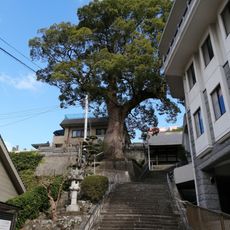
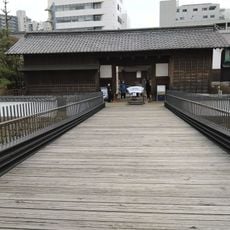
Honren-ji stands in Nagasaki's Teramachi temple district, near the sites of the former St. John the Baptist church and St. Lazarus hospital. The main hall was rebuilt in 1954 after the atomic bombing, so the present buildings are modern reconstructions. Look for the Namban Well, a remnant of the church grounds, said to have been dug by Portuguese traders and also called the Gedō Well.
The glass lantern hanging in the main hall was imported from China during the temple's early years and remains largely unchanged. Few visitors realize this single object represents centuries of trade routes and the movement of goods between distant shores.
The community of curious travelers
AroundUs brings together thousands of curated places, local tips, and hidden gems, enriched daily by 94,775 contributors worldwide.