Mandara-ji, Buddhist temple in Kōnan, Japan
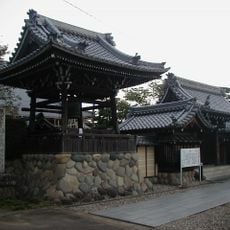
Mandara-ji is a Jodo-shu temple in Konan, Aichi Prefecture, whose main hall (shodo) was rebuilt in 1632 by Hachisuka Iemasa, founder of the Tokushima domain, in imitation of the Shishinden of the imperial palace. The hall is an irimoya-zukuri structure with a cypress-bark roof and is a National Important Cultural Property. The temple grounds also contain a park that hosts the annual Wisteria Festival.
Founded between 1324 and 1329 on the orders of Emperor Go-Daigo, with his uncle Tennen Jōun as founding abbot, the temple was first called Enpuku-ji and took its present name in 1462. Toyotomi Hideyoshi granted it a 204-koku red-seal charter, and the Tokugawa shogunate a 231-koku black-seal charter. The main hall was rebuilt in 1632 by Hachisuka Iemasa, a local native who became lord of Tokushima.
The temple's name changed from Enpuku-ji to Mandara-ji in 1462. Its wisteria festival runs from late April to 6 May, with a start date that shifts each year; the chrysanthemum festival moved to Suitopia Konan in 2006. The temple keeps documents issued by Oda, Toyotomi and Tokugawa lords, shown to the public each spring during the wisteria festival.
From Meitetsu Konan Station on the Inuyama Line, take the Meitetsu bus bound for Konan Danchi and get off at the Mandara-ji stop, about 15 minutes; the temple is a 2-minute walk away. Buses also run from Meitetsu Ichinomiya Station. The temple stands at 202 Tera-machi, Maehibo-cho, Konan.
The temple grounds transform from April to May during the Wisteria Festival, when purple blossoms form natural tunnels along several pathways. This seasonal display draws many visitors who come specifically to walk beneath these flowering vines.
The community of curious travelers
AroundUs brings together thousands of curated places, local tips, and hidden gems, enriched daily by 94,205 contributors worldwide.