Higashiyama Kaizuka Harabeleri, Archaeological excavation site near Meguro River, Tokyo, Japan
Higashiyama Kaizuka is a multi-period archaeological site on the northern slope of the Meguro plateau, spanning the Paleolithic through the Kofun period. It is one of Tokyo's three major shell mounds, alongside Nishigahara and Maruyama. The site includes shell layers and pit dwellings; the shell species are mostly marine, with few freshwater, indicating the lowland along the Meguro River was once sea.
The settlement dates to the Middle Jomon period and represents a long history of human occupation in the Tokyo area. Systematic excavations starting in the 1980s have revealed how people adapted and lived across different generations.
The name Higashiyama Kaizuka means "shell mound," and the shells found there are mostly marine species such as clams and cockles, with few freshwater ones, indicating that the lowland along the Meguro River was once a sea. Fish bones of sea bream and horse mackerel, plus deer and boar bones, show fishing and hunting; such fishing traces are rare at other sites in Meguro Ward.
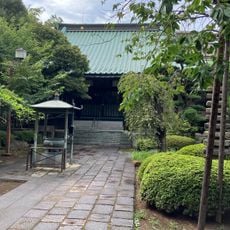
The excavation itself is not open to visitors; what remains on the site is Higashiyama Kaizuka Park, established in 1979, where a reconstructed pit-dwelling model stands and local primary schoolchildren come for history lessons. A spring seeps from the cliff behind the park and feeds a pond that flows into the Meguro River. The artifacts are held elsewhere, so the park is the place to see on site.
The shell layer yielded mostly marine species such as hamaguri, shiofuki, asari and isoshijimi, plus brackish-water clams, showing that the lowland by today's Meguro River was sea in the Jomon period and the site lay at the back of a deep inlet. Bones of black sea bream, horse mackerel, boar, deer, badger, dog and whale were also found; fishing traces are rare at other sites in Meguro Ward.
The community of curious travelers
AroundUs brings together thousands of curated places, local tips, and hidden gems, enriched daily by 94,040 contributors worldwide.