Saion-ji, Buddhist temple in Nanbu, Japan
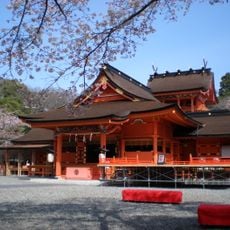
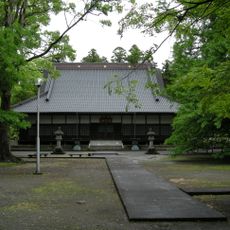
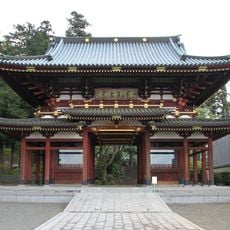
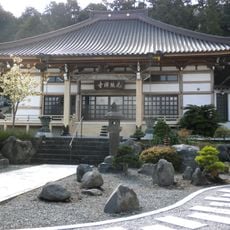
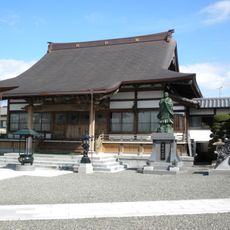
Saion-ji is a Rinzai-shu Myoshin-ji school temple in Fushi, Nanbu, Yamanashi, on a flat stretch of the Fushi River valley near the Shizuoka border. Its butsuden, a wooden hall in the medieval Kanto Zen style, keeps its original kato windows and bow-shaped ranma; the floor is boarded over what was once packed earth. The temple was formerly Tendai-shu, and its principal image is Shaka Nyorai.
According to temple tradition, Saion-ji was founded during the Chōkyū era (1040–1044) as a Tendai temple; it was revived as a Rinzai Zen temple by Ritsuo in the Ōei era (1394–1427). In 1568 Takeda Shingen visited and donated temple lands. Documents record protection and tax exemptions from the Anayama clan, and after the death of Anayama Katsuchiyo in 1588, his mother Kenshō-in made the temple his memorial temple.
The temple holds the portrait of Akenoyama Katsuchiyo, painted in 1591 by order of his mother Kenshō-in after the boy died of smallpox in 1588 at sixteen. The hanging scroll, 90.5 by 49.5 cm, shows him in an eboshi cap after his coming of age, with the Akenoyama three-flower-diamond crest on his sleeve.
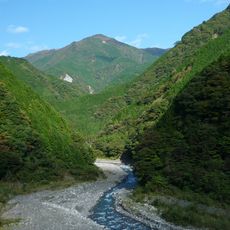
Saion-ji stands in the Fushi district of Nanbu, near the border with Shizuoka Prefecture, on flat ground along the Fushi River, a tributary of the Fuji River. The nearest rail access is Ide Station on the JR Minobu Line, about ten minutes away by taxi. The temple is north of the former Anayama residence site.
The temple's main hall keeps original medieval details: the arched windows and bow-shaped transoms date to the early Muromachi period, around the Ōei years (1394–1427), and the floor shows the transition from bare earth to raised boards. The hall is counted among the oldest surviving examples of the Zen style in eastern Japan.
The community of curious travelers
AroundUs brings together thousands of curated places, local tips, and hidden gems, enriched daily by 94,851 contributors worldwide.