水沢城, Japanese castle in Oshu, Iwate Prefecture, Japan
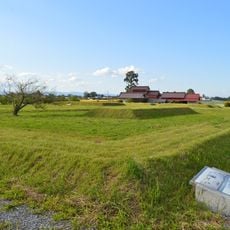
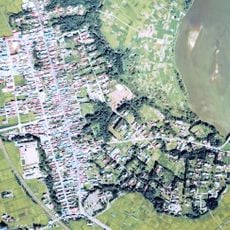
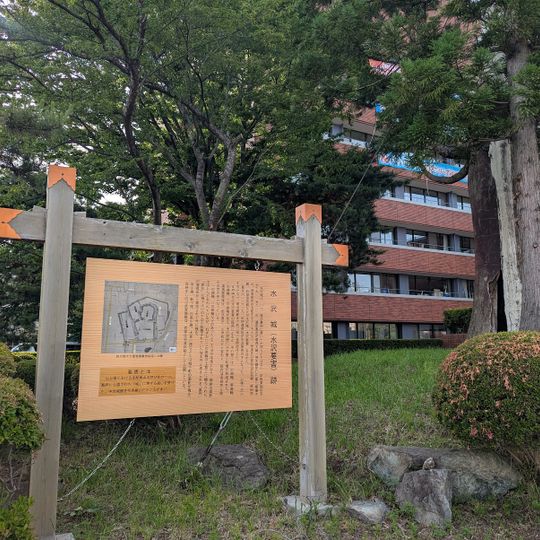
Mizusawa Castle is a flatland castle in the Mizusawa district of Oshu, Iwate Prefecture, on the west bank of the Kitakami River. It was a ladder-style fortification with four enclosures: the honmaru at the northwest, then ninomaru, sannomaru, and the southern south enclosure, each surrounded by water moats and earthen walls. The honmaru held storehouses and a horse ground, and the ninomaru contained the lord's palace.
Mizusawa Castle's origin is unrecorded; a 19th-century gazetteer credits Minamoto no Yoriyoshi with building it in 1057, while local tradition names retainers of the Kasai clan. After the Kasai were dispossessed in 1591, Date Masamune's retainer Shiraishi Munesada took the castle with a 15,000-koku fief. In 1629 Rusu Munetoshi, a cousin of Masamune, entered, founding the Mizusawa Date house that ruled until the Meiji Restoration.
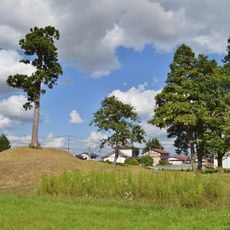
The castle's name is also written 臥牛城 (Gagyū-jō, "lying cow castle") and 大休城 (Daikyū-jō). The honmaru held the Wakō Inari shrine, and the drum turret was decorated with a shachi, the fish-like ornament of the Date family. The site is now occupied by Oshu City Hall, and the 500-year-old cedar called Ubasugi stands in front of it.
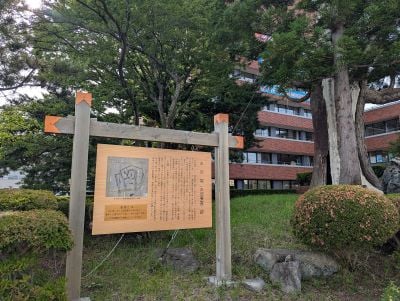
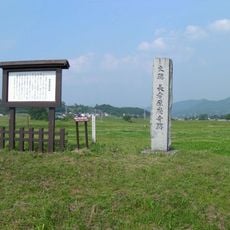
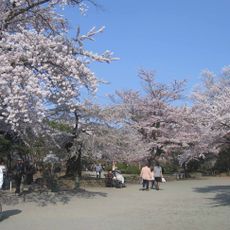
Visitors can walk through the grounds at their own pace, with informational signs placed throughout to explain the layout. The site is accessible and easy to navigate on foot.
The castle's name is also written 臥牛城 ("reclining cow castle") and 大休城. Of the buildings, only the Kaminari gate area survives as fragments: a karin tree said to have stood at the honmaru's Wako Inari shrine, part of the sannomaru earthwork, and a cedar on it estimated at 500 years old, the "Ubasugi", in front of the city office.
The community of curious travelers
AroundUs brings together thousands of curated places, local tips, and hidden gems, enriched daily by 94,930 contributors worldwide.