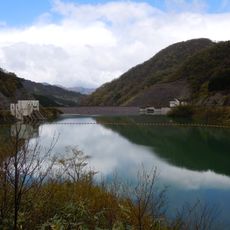
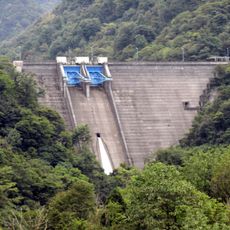
Tsubawara Dam, Gravity hydroelectric dam in Shirakawa, Gifu Prefecture, Japan
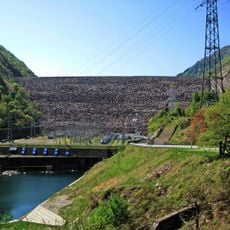
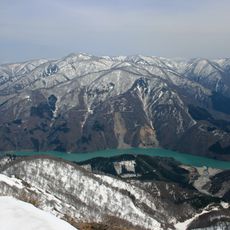
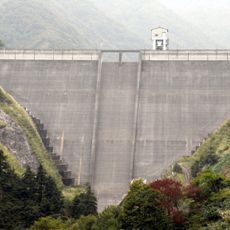
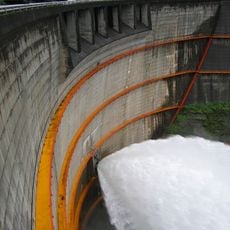
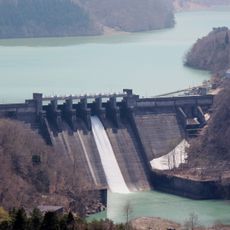
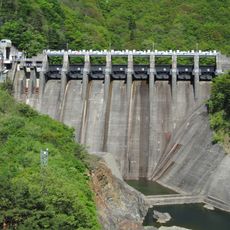
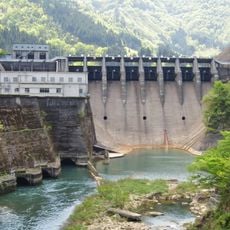
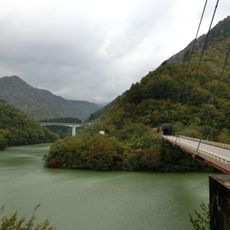
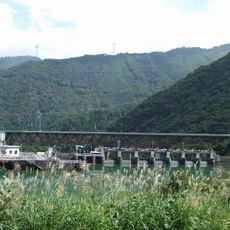
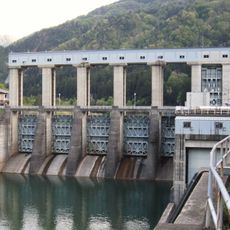
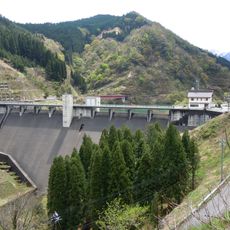
The Tsubawara Dam is a 68.2-meter-high gravity concrete dam on the Shō River in Shirakawa, Gifu Prefecture. It supplies water to the Tsubawara and Shin-Tsubawara hydroelectric power stations, which together generate up to 101,800 kilowatts. The dam is located just upstream of the Tsubawara Bridge on the Tōkai-Hokuriku Expressway.
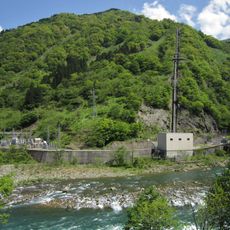
Kansai Electric Power took over the Shō River plants in 1951 and finished the upstream Nariude Dam that year. Work on the Tsubawara Dam began in 1952, and the 42 MW Tsubawara Power Station started operating on 8 January 1954. A second, 65 MW station, Shin-Tsubawara, was added in March 1975.
The name Tsubawara comes from the camellia (tsubaki) flowers that once covered the surrounding hills each spring; locals say they have become scarcer. The dam feeds two power stations, Tsubawara and Shin-Tsubawara, and the older station building stands beside Route 156 just after the road enters Shirakawa from Toyama Prefecture.
From the Gokayama Interchange on the Tokai-Hokuriku Expressway, follow Route 156 south past Akao Dam and Narude Dam into Shirakawa; the Tsubawara Power Station building appears first, with the newer Shin-Tsubawara station a short distance east. The dam lies upstream of both stations, and the Tokai-Hokuriku Expressway's Tsubawara Bridge crosses the river just below it. The structure is viewed from the road; there is no visitor facility.
The structure is one of nine dams in a coordinated water management system along the Shō River. Each facility works as part of an integrated network rather than as an isolated installation.
The community of curious travelers
AroundUs brings together thousands of curated places, local tips, and hidden gems, enriched daily by 94,368 contributors worldwide.