橘樹神社, Shinto shrine in Japan
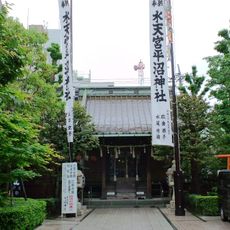
Tachibana Shrine in Hodogaya-ku, Yokohama, enshrines Susanoo. Its copper-clad main hall, built in 1951 in the shinmei style, stands within grounds that also hold subsidiary shrines to Amaterasu, Inari and Sarutahiko. The shrine was renamed Tachibana in 1921 after earlier names Gion-sha and Tenno-gu.
The shrine traces its founding to 1186 (Bunji 2), when a divided spirit of Kyoto's Gion Shrine, today's Yasaka Shrine, was invited here to be worshipped as Susanoo. Its name changed over time: Gion-sha, Gozu Tenno-sha, Tenno-gu and Tachibana-sha, before becoming Tachibana Shrine in 1921. The neighbourhood name Tenno-cho comes from the old shrine name. The present main hall, a copper-sheeted Shinmei-zukuri building, was erected in 1951.
The name Tenjincho comes from the shrine's former name, Tenno-gu. Its main festival, the Tenno-sai, is held on the Saturday and Sunday nearest 15 June, with a portable mikoshi and festival floats. On the fourth Saturday of each month the grounds host the Tenjincho Silk Road Antique Bazaar, run by a citizens' recycling group.
The shrine is about three minutes on foot from Sagami Railway's Tennocho Station. The grounds are compact, with the main hall, the subordinate shrines and the office close together, so a visit takes little time. The Tennocho Silk Road antique bazaar is held in the grounds on the fourth Saturday of each month.
The shrine's name changed several times: it was called Gion-sha, Gozu Tenno-sha and Tenno-gu before becoming Tachibana Shrine in 1921. The neighbourhood name Tenno-cho comes from the old shrine name, so the address itself records the site's history.
The community of curious travelers
AroundUs brings together thousands of curated places, local tips, and hidden gems, enriched daily by 94,417 contributors worldwide.