神明社, Shinto shrine in Japan
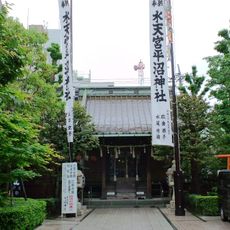
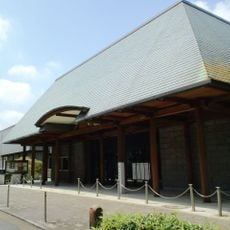
Shinmei Shrine is a Shinto shrine in Hodogaya-ku, Yokohama, with a main hall (honden) in the shinmei-zukuri style rebuilt in 1998. Its roughly 20,000 m² grounds include a separate Toyouke-daijingū, twelve subsidiary shrines such as Inari and Itsukushima, and a protected forest covering half the site.
According to the shrine's origin record of 1555, Amaterasu came to the Hannya peak in 970, and the shrine later moved through Kawai, Futamatagawa and Kitahodogaya Miyabayashi. In 1225 an outer shrine (Geku) was built at Godo, and the shrine became tutelary deity of the eight villages of the Hannya estate. Tokugawa Ieyasu had the hall built and granted shrine land in 1590; the main shrine moved to its present site in 1619. In 1998 all twelve shrine buildings were rebuilt.
The name Shinmei refers to Amaterasu, the sun goddess of Ise Jingu, whose worship the shrine adopted; the shrine also has a Toyouke-daijingu, as at Ise. Its annual rites include the Reitaisai on the third Saturday of August and the Niinamesai on 23 November. The grounds hold eleven subsidiary shrines, among them Inari, Itsukushima and Tenmangu.
The shrine is a 10-minute walk from Tennōchō Station on the Sagami Railway main line; the address is 107 Gōdo-chō, Hodogaya-ku, Yokohama. About half of the roughly 20,000 m² grounds is designated as a scenic conservation forest, so expect wooded paths rather than open lawns.
About half of the shrine's roughly 20,000 m² of grounds is designated as a scenic conservation forest (風致保安林), a protected woodland within the city. The shrine also keeps a separate Toyouke-daijingū, the outer shrine of Ise, built in 1225 in the Gōdo district.
The community of curious travelers
AroundUs brings together thousands of curated places, local tips, and hidden gems, enriched daily by 94,307 contributors worldwide.