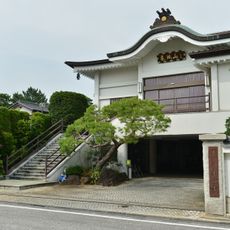
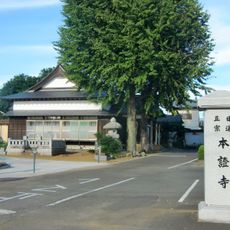
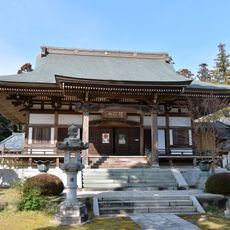
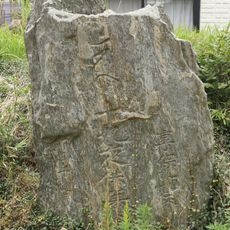
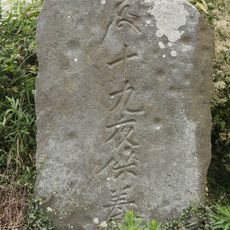
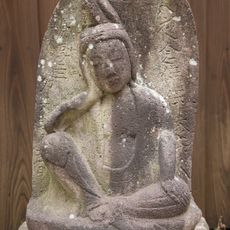
Kiyotaki-dera, Buddhist temple in Tsuchiura, Japan.
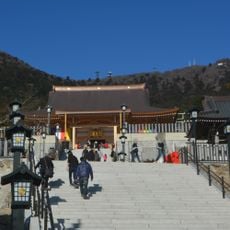
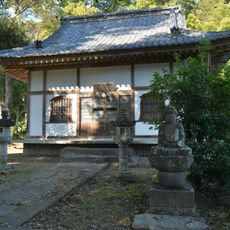
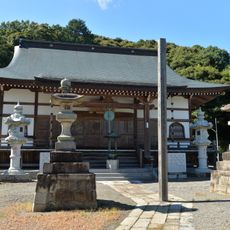
Kiyotaki-dera is a Shingon Buzan-ha temple on the northern edge of Tsuchiura, known as the 26th stop on the Bandō Sanjūsankasho pilgrimage. Visitors climb to the grounds through a two-storey Niō-mon gate, a turret gate flanked by guardian figures, then face the main hall with its pyramidal roof; a bell tower stands among the few other buildings, with the abbot's quarters lower down.
According to temple tradition, the origin dates to 607, when a statue of Shō Kannon said to have been made by Prince Shōtoku was placed on Ryūga-mine, the mountain behind the temple. In 807 the priest Tokuitsu moved it to the mountainside, and the Kannon hall was later built on the present site. The temple held a shuinjō from the Edo shogunate, and its main hall burned down in 1969; the sanmon gate built between 1830 and 1844 survives.
The temple is the 26th stop on the Bandō Sanjūsankasho pilgrimage and is also known as Kiyotaki Kannon. Its goeika hymn expresses a vow to keep a pure heart now that one has come to worship here. The main image is a Shō Kannon, and the temple belongs to the Buzan branch of Shingon Buddhism.
The temple stands on a hillside at the northern edge of Tsuchiura, reached by a climb; visitors pass through the Niō-mon gate, a two-storey tower gate flanked by the two Niō guardians, then ascend a stairway to the terrace with the Hondō and bell tower. The abbot's and monks' quarters lie lower down.
The main hall burned down in 1969 in a fire of unknown origin; the oldest structure standing today is the mountain gate (sammon), built between 1830 and 1844. It takes the form of a tower gate with two Niō guardians flanking the passage, and visitors climb a stairway through it to reach the temple terrace.
The community of curious travelers
AroundUs brings together thousands of curated places, local tips, and hidden gems, enriched daily by 94,138 contributors worldwide.