Hōōzuka Kofun, Keyhole-shaped kofun in Kōnodai, Ichikawa, Japan
Hōōzuka Kofun is a keyhole-shaped burial mound in Kōnodai, Ichikawa, Chiba Prefecture, on the left bank of the lower Edo River. Its reconstructed length is 54.5 m (58 m as surveyed), with a 27 m-diameter, 5.7 m-high rear circle and a 35 m-wide, 5.6 m-high front section facing northwest. A corridor-style stone chamber of tuffaceous sandstone (Bōshū stone) opens southwest from the rear circle.
This burial mound was built during the 6th century in Japan. The structure demonstrates the advanced construction skills of ancient Japanese societies that designed such monumental tombs for their leaders.
The name Hōōzuka is also written with the characters for "hōō" (法王/鳳凰), which share its pronunciation. Until 1875 a Tenmangū shrine stood on the summit; it was moved about 300 metres northwest when land was bought for the university. Haniwa from the mound include cylindrical, house, human, horse, waterbird and spear-shaped figures, some made locally in Shimōsa style and others at the Ikueduka kiln in Kōnosu, Saitama.
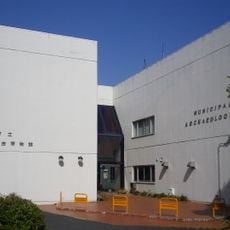
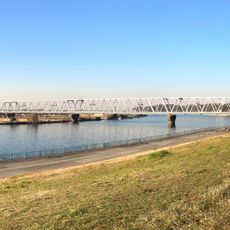
The mound stands on the Kōnodai campus of Tokyo Medical and Dental University in Ichikawa, Chiba Prefecture, on the left bank of the lower Edogawa. It is not a designated historic site, so access follows campus rules; the excavated finds are displayed at the Ichikawa City Archaeological Museum in Horinouchi.
The mound's top once held Kōnodai Tenmangū, a shrine moved about 300 metres northwest in 1875 when land was bought for the university. Before World War II the surrounding area became military land, and its redevelopment partly destroyed the mound and faced it with stone walls.
The community of curious travelers
AroundUs brings together thousands of curated places, local tips, and hidden gems, enriched daily by 93,411 contributors worldwide.