Mama no Tsugihashi, Former bridge in Mama, Japan
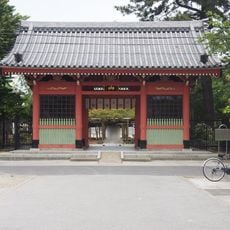
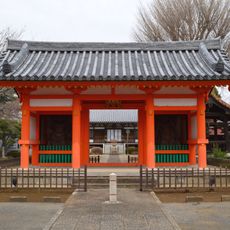
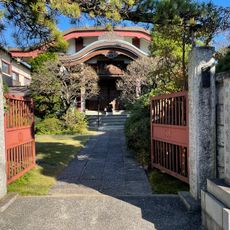
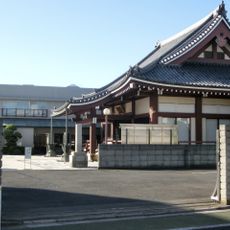
Mama no Tsugihashi is a former bridge located in front of Mamasan Guhoji Temple's Niomon Gate, distinguished by red parapets and stone steps that connect different paths. The structure reflects traditional Japanese bridge construction from earlier periods.
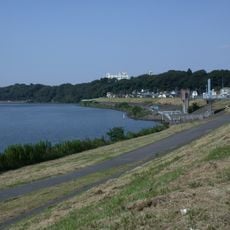
In antiquity the site lay on the Mama inlet, a coastal area with sandbars where boats moored, and the bridge carried the road toward the provincial capital at Konodai, its name meaning a chain of plank bridges relayed across the sandbars. It was celebrated as a utamakura in the Manyoshu. In 1696 Suzuki Nagayori erected the three Mama monuments at the presumed site, and by the time Hiroshige depicted it in the One Hundred Famous Views of Edo the inlet had silted into farmland.
The bridge appears in classical Japanese poems from the Manyoshu collection, where it inspired writers celebrating the surrounding landscape and local customs. This literary connection makes the location meaningful for those exploring Japan's poetic heritage.
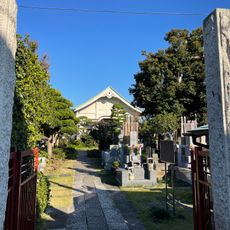
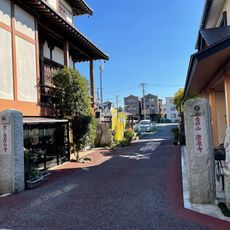
The monument stands along the approach to Guhoji Temple in Mama, Ichikawa, a short walk from Keisei-Mama Station on the Keisei Line. The red parapet and stone marker sit beside the temple path, so visitors pass them on foot while climbing toward the temple grounds.
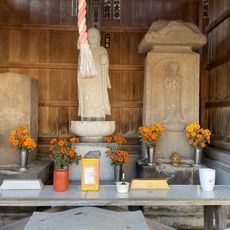
The 1696 marker is one of the "Mama no Sanpi", three stone monuments Suzuki Nagayori raised at the supposed site. The bridge itself no longer spans water: a short red parapet with giboshi finials now stands mid-way along the approach to Guhoji, with no river beneath it.
The community of curious travelers
AroundUs brings together thousands of curated places, local tips, and hidden gems, enriched daily by 94,266 contributors worldwide.