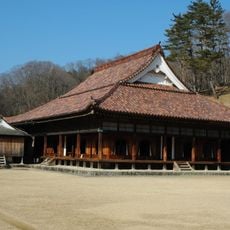
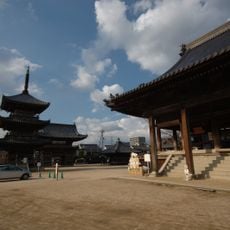
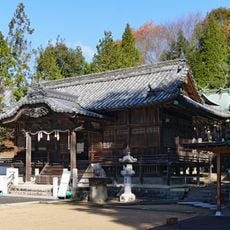
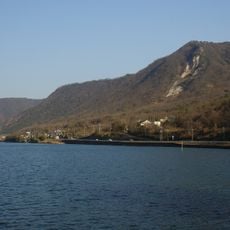
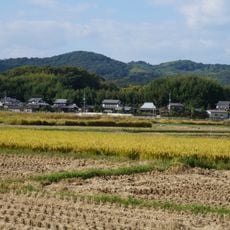
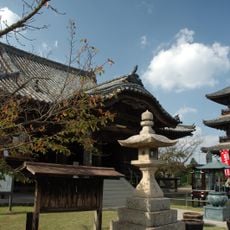
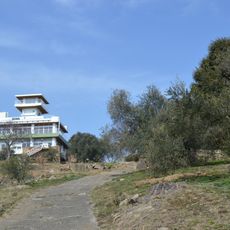
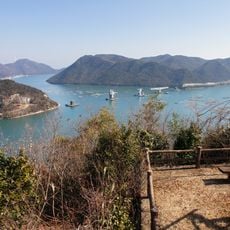
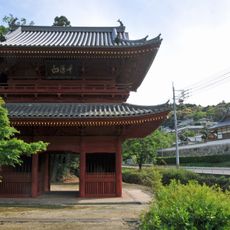
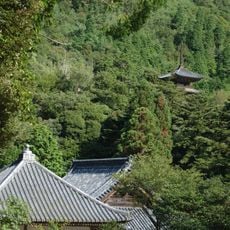
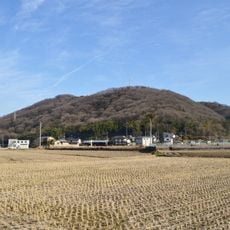
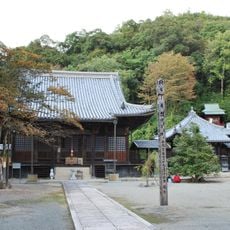
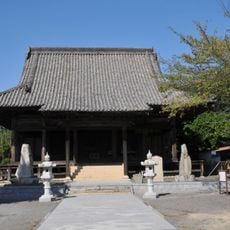
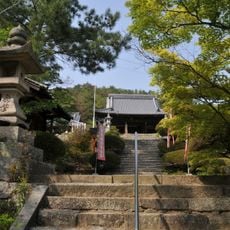
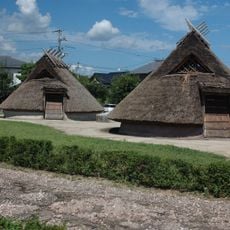
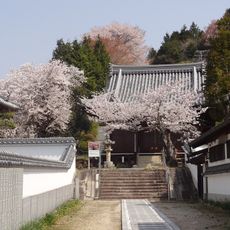
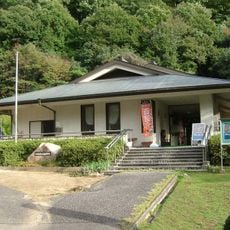
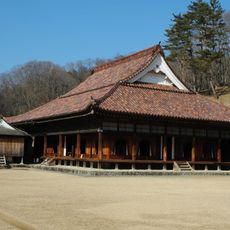
Kumayama ruins, Buddhist temple ruins in Akaiwa, Japan.
Kumayama ruins are the remains of a stepped stone structure built from rhyolite masonry in Okayama Prefecture. The structure has three tiers that grow smaller from the base upward, with carefully fitted stones and carved niches in the upper levels.
The structure was built in the early 8th century during the Nara period, on a mountain that had already been used for ritual ceremonies during the Yayoi period. The Buddhist construction was placed directly over this older sacred ground, layering two distinct religious traditions in a single spot.
The name Kumayama means "Bear Mountain" in Japanese, and the site sits within a landscape that still feels remote and set apart from everyday life. Niches carved into the second tier once held Buddhist statues, which gives a sense of how the place was actively used for worship rather than just built and forgotten.
The ruins sit on a mountainside at around 508 meters (1665 feet) elevation and require a walk uphill to reach, so sturdy footwear is a good idea. Morning or late afternoon light makes it easier to see the details of the stonework.
A ceramic container found during excavations held a sancai pot and a leather scroll that could have told researchers a great deal about why this site was built. The container was stolen in 1937 before anyone could study the scroll, so its contents remain unknown.
The community of curious travelers
AroundUs brings together thousands of curated places, local tips, and hidden gems, enriched daily by 90,862 contributors worldwide.