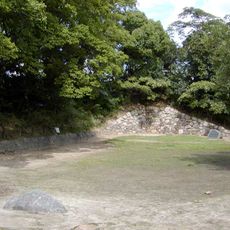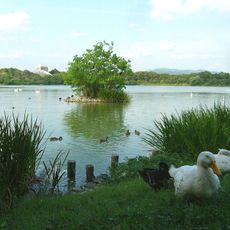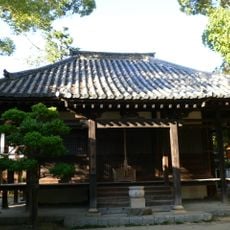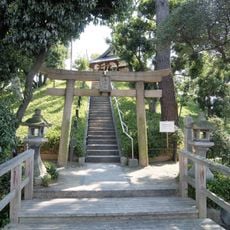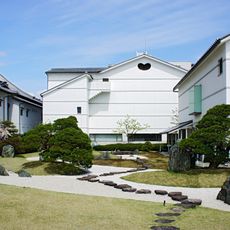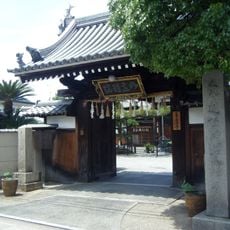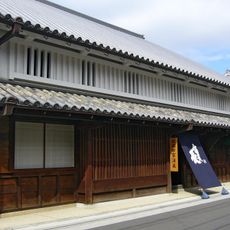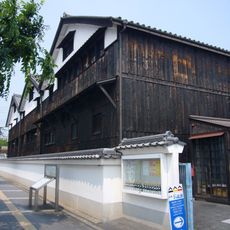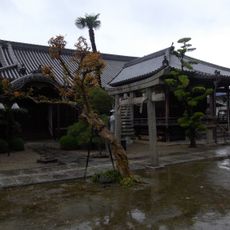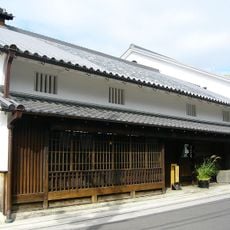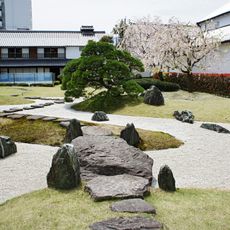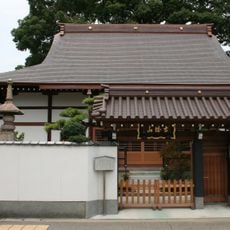
Inadera haiji ato, Former Buddhist temple ruins in Amagasaki, Japan.
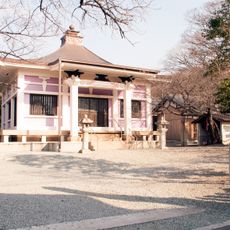
Inadera haiji ato is the site of a former Buddhist temple on a diluvial terrace on the west bank of the Muko River, now within Sabokugaoka Park in Amagasaki. Excavations by 1958 revealed a layout close to that of Horyu-ji: a kondo (main hall) to the east, a five-story pagoda to the west, and a cloister enclosing both. Roof tiles of the Kawaradera style date its founding to the Hakuhō period.
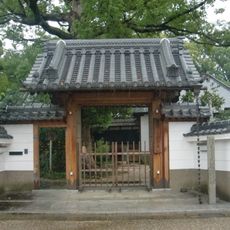
Inadera haiji ato was founded in the late Asuka period, in the Hakuho era, as shown by roof tiles of the Kawaradera style found on the site. Haniwa unearthed there suggest a burial mound or dwellings stood here before the temple. The complex burned in 1577 during the war between Araki Murashige and Oda Nobunaga and was abandoned. Some scholars identify it with Hoyu-ji, reestablished on part of the grounds in 1756.
The name Inadera comes from this temple, which stood from the Asuka period until the Muromachi period. Excavated roof tiles, including Kawaradera-style eave tiles, date its founding to the Hakuho period. Some scholars instead identify the temple with Hoen-ji, reestablished in 1756 on part of the site.
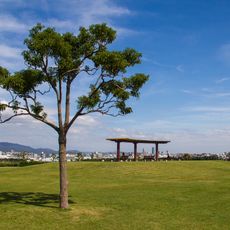
The site lies in Sabokugaoka Park in Inadera 1-41, Amagasaki, about a 12-minute walk from JR Inadera Station on the JR Takarazuka Line. The excavated area is an open park ground, so there are no opening hours to plan around.
Clay tiles unearthed at the site, including Kawaradera-style eave tiles, date the temple's founding to the Hakuhō period of the late Asuka era. Haniwa figures found in the same digs suggest a burial mound or dwellings stood here before the temple was built.
The community of curious travelers
AroundUs brings together thousands of curated places, local tips, and hidden gems, enriched daily by 94,053 contributors worldwide.