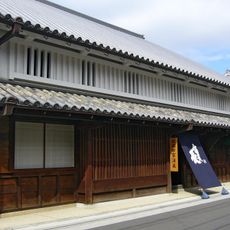
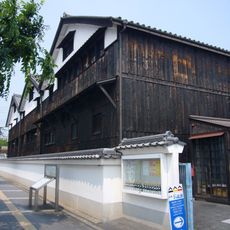
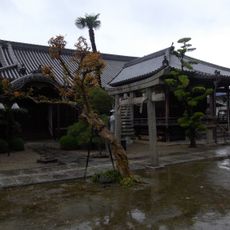
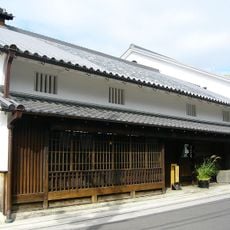
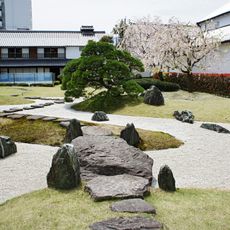
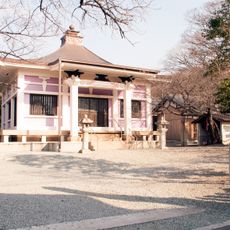
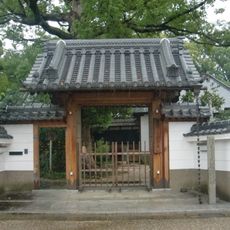
Kōson-ji, Buddhist temple in Itami, Japan.
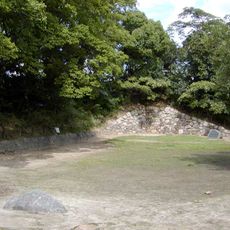
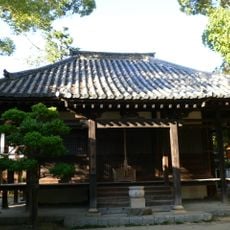
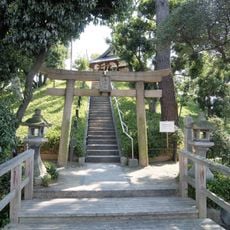
Kōson-ji is a Sōtō Zen temple in Itami, Hyōgo Prefecture, standing on the site called Itami古城, part of the former Arioka Castle grounds. Its precinct holds a Gyōja-dō, a Ryūō-dō and an Inari-dō, a stone hōkyōintō pagoda dated 1374, a single-stone five-tier pagoda from 1842, and a haiku stone for Ueshima Onitsura. It moved to its present location in 1977.
Kōson-ji began as a Zen meeting place: a cotton merchant from Itami, Tokusaburō, invited the monk Shōzan Kokei from Sakai to teach meditation. In the Tenpō era (1830–1843) it became a nunnery founded by the nun Ichimyō Hōkoku, named Jōyama-an, then renamed Kōson-an after the ruined castle of Araki Murashige. It took the name Kōson-ji in 1964 and moved to its present site in 1977.
The temple's name comes from Araki Murashige's old castle: it was called Jōyama-an, then renamed Ara村-an after the castle ruins, and in 1964 became Kōson-ji. On the grounds stands a haiku stone erected in 1865 by late-Edo literati Yamaguchi Taitsu, Okada Kōjin and Kaji Kyokufu, inscribed with Ueshima Onitsura's verse "Old castle — the brambles black with crickets".
Kōson-ji stands about three minutes on foot from JR Itami Station on the Fukuchiyama Line. The temple was moved to this spot in 1977 during the redevelopment of the station's surroundings, so it now sits close to the tracks rather than on the former Arioka Castle grounds.
The temple's name comes from Araki Murashige's old castle: the site was renamed Ara村庵 ("Ara village hermitage") after his ruined stronghold, then became Kōson-ji in 1964. In 1977 the JR Itami station redevelopment moved the temple from the area near the Flanders carillon to its present location.
The community of curious travelers
AroundUs brings together thousands of curated places, local tips, and hidden gems, enriched daily by 94,303 contributors worldwide.