Towatari Shrine, Shinto shrine in Chuo, Chiba, Japan
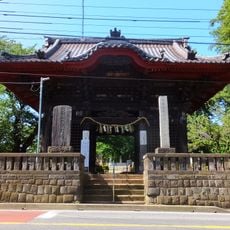
Towatari Shrine is a Shinto shrine in Nobuto, Chūō-ku, Chiba. Its honden, built in 1860 by carpenter Monjirō of Yagi village, was originally the main hall of Jōin-ji and was moved to its current position in 1990. The keyaki-wood honden has a copper-tiled irimoya roof and relief carvings by Tatekawa Washirō Tomimasa, designated Chiba City cultural properties in 1967.
Chiba Sadatane, 33rd head of the Chiba clan, founded the site in 1644 as Hakujasan Shinkō-in Jōin-ji, a branch temple of the Myōken temple Kongojū-ji (today's Chiba Shrine). In Keiō 3 (1867) it became Towatari Shrine, dedicated to Ame-no-Minakanushi, Takamimusubi and Kamimusubi. Its 1860 hall was moved and a new worship hall built in 1990; Ame-no-Hiwashi was added in 1908.
The shrine's annual festival runs from 4 to 6 September, and on the 5th a portable mikoshi is carried through the streets. The Nobuto kagura hayashi, a local festival music tradition, was registered by Chiba City as an intangible folk cultural property in 2008. The shrine is also known as Nobuto Shrine.
The visit works best if you move slowly through the grounds and enjoy the quiet surroundings, as the shrine typically attracts few crowds. The nearby neighborhood has small shops and cafes where you can walk around after your visit and enjoy a drink or snack.
The shrine grounds hold a stone pillar from 1882, erected by the Suisan-kō, a Fuji-worship confraternity, on the hilltop beside the honden. Katsushika Hokusai is said to have depicted this spot as "Nobuto-ura" in his Thirty-six Views of Mount Fuji. A first-order levelling benchmark stands beside the front torii.
The community of curious travelers
AroundUs brings together thousands of curated places, local tips, and hidden gems, enriched daily by 94,264 contributors worldwide.