眼鏡岩, Natural rock formation in Sasebo, Japan.
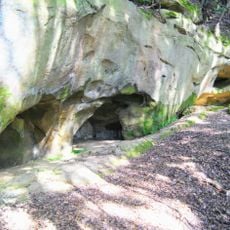
Megane-iwa Rock is a coastal formation in Sasebo featuring two natural circular openings that resemble spectacles. The structure was created through long-term erosion processes and now stands as a notable landmark visible from various vantage points along the shore.
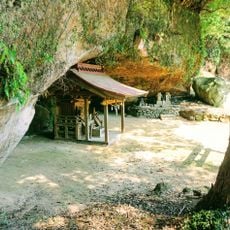
The rock's shape is thought to result from wave erosion when this land lay under the sea, followed by uplift and weathering. It measures about 6 m thick, 20 m long and 10 m high, and is counted among the Hirado Eight Views. In 804 the monk Kukai is said to have passed here en route to Tang China and carved a Thousand-Armed Kannon image and Sanskrit characters on the rock face; they are faint but still discernible.
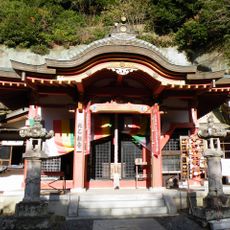
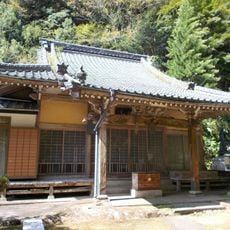
The name Megane-iwa comes from the two holes that make the rock look like a pair of spectacles. It is counted among the Hirado Hakkei, eight scenic spots of the old Hirado domain, and the grounds in front belong to Megane-iwa-ji temple. The site also serves as a fudasho, a stamp station, of the Sasebo 88 Kannon pilgrimage, a local copy of the Shikoku 88-temple route.
Access is available via roads that connect easily from the city center, with several pathways offering different viewing angles of the rock. Comfortable walking shoes are recommended since the surrounding terrain can be uneven and visitors often want to approach for closer inspection.
The openings are not the rock's only man-made marks: tradition holds that in 804 the monk Kukai, bound for Tang China, passed here and carved a Thousand-Armed Kannon figure and Sanskrit characters on the rock face. Both are faint today but still discernible.
The community of curious travelers
AroundUs brings together thousands of curated places, local tips, and hidden gems, enriched daily by 94,797 contributors worldwide.