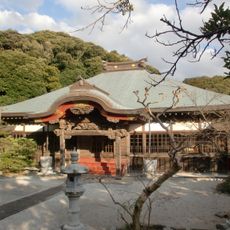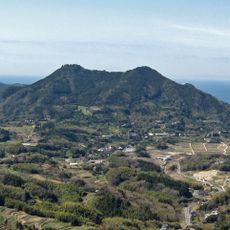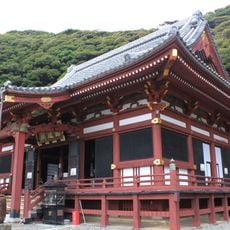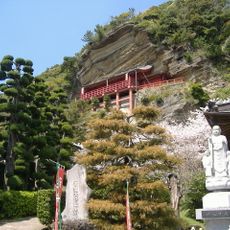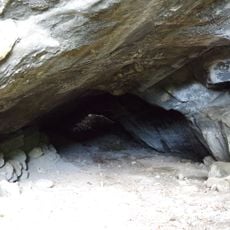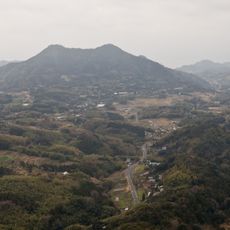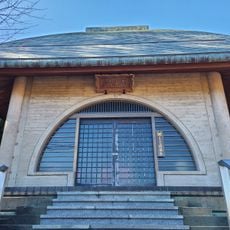
Ishidō-ji, Buddhist temple in Minamiboso, Japan.
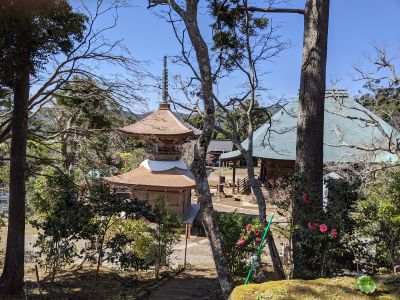
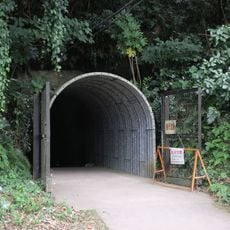
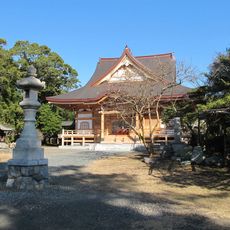
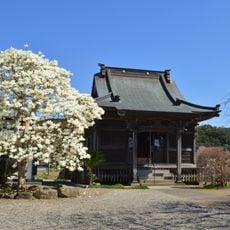
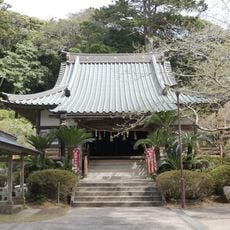
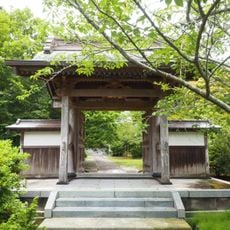
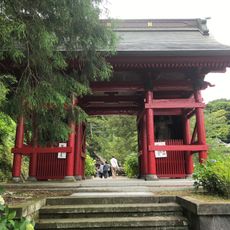
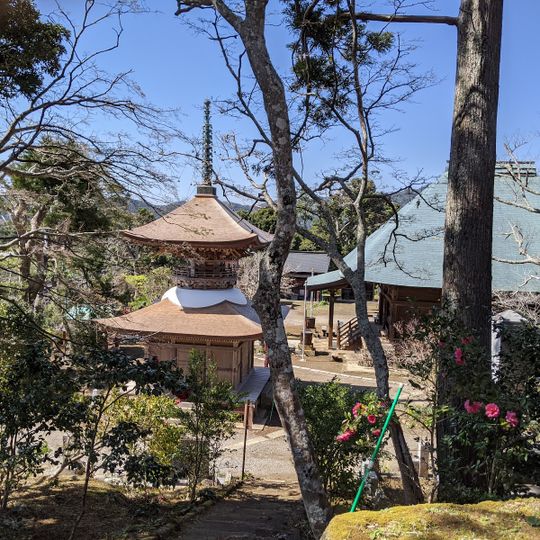
Ishidō-ji is a Tendai Buddhist temple in Minamiboso, Chiba Prefecture, entered through a mountain gate with a winding path up to the compound. At the top stand the main hall, a 1545 tahōtō pagoda, a bell tower with a 1331 bell, and a thatched Yakushi-dō moved here in 1971.
Tradition attributes its founding to the monk Gyōki in 726, though sources also name the monks Eimei and Tōshō in 708 and Ennin's restoration in the 850s. Originally called Sekitō-ji, it was one of the Three Pagoda Temples alongside those in Ōmi and Kōzuke. It burned down in 1487 and was rebuilt by 1522 with support from the Maru family, who ruled the area. It was later renamed Ishidō-ji after Ashikaga Yoriuji, raised here under the childhood name Ishidōmaru.
The temple's name changed from Sekitō-ji to Ishidō-ji after Ashikaga Yoriuji, raised here as a child, whose boyhood name was Ishidōmaru. The temple is stop 20 on the 34-site Awa Province Kannon pilgrimage, and its treasures include a Heian-period eleven-headed Kannon carved from a single block of Japanese nutmeg wood.
The temple stands on a wooded hill in Minamibōsō, Chiba Prefecture; visitors enter through the mountain gate and climb a winding path to the halls. The grounds are reached by the Nitto Bus stop "Ishidōji-mae". The Yakushi-dō was moved here in 1971 from the Ishidōhara district and stands slightly apart from the main buildings.
The temple bell in the bell tower dates from 1331, while the tower itself was built in 1738. Near the main hall stands a small Hōkyōintō pagoda made of bronze rather than stone, cast in 1841.
The community of curious travelers
AroundUs brings together thousands of curated places, local tips, and hidden gems, enriched daily by 93,446 contributors worldwide.