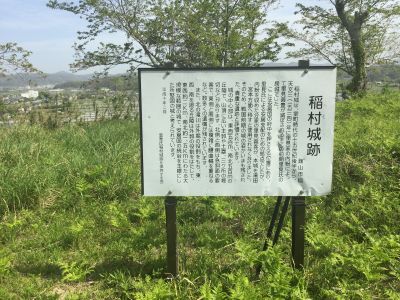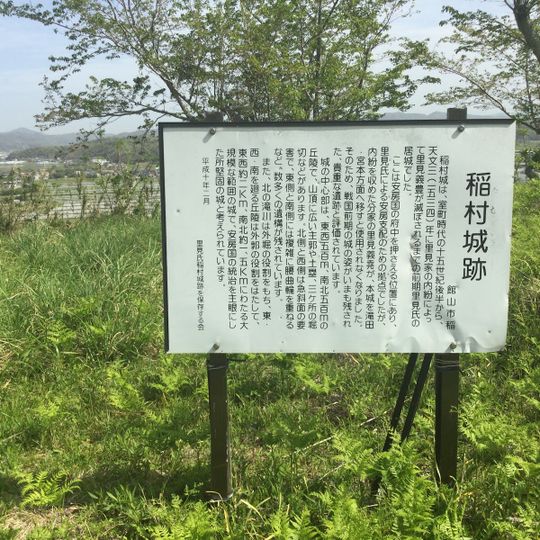
Inamura Castle, Hilltop castle ruins in Tateyama, Japan
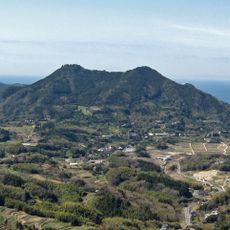
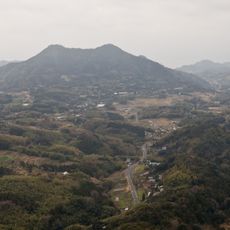
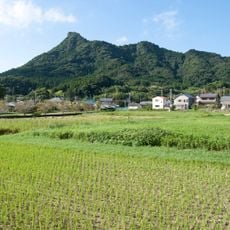
Inamura Castle is a Muromachi-period hilltop castle ruin on Shiroyama Hill in Tateyama, Chiba Prefecture, at 64 meters elevation overlooking the entrance to Tokyo Bay. Its layout runs as a semicircle across a curved ridge for up to 500 meters, the largest castle in Awa Province. The trapezoidal inner bailey, about 50 meters long, is ringed by clay ramparts, terraces on the slopes and dry moats, with a complex gated entrance.
The fort was built by Satomi Yoshizane between 1486 and 1491 to control access to Tokyo Bay from the southern tip of the peninsula. It served the Satomi clan as a base during a period when regional power in Japan was frequently disputed and reshaped.
The castle gave its name to the Inamura Incident (Inamura no hen), the 1533–1534 internal Satomi feud in which the fourth head, Satomi Yoshitoyo, was killed by his cousin Yoshitaka, who took the clan leadership. The site is now kept by a local preservation society, and the ridge paths let visitors trace the earthworks of what was the largest castle in Awa Province.
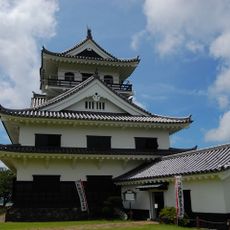
The site has no public facilities and no reconstructed buildings; only earthworks and trail paths remain. It is about a 10-minute walk from Kokonoe Station on the JR East Uchibo Line. The Inamura Castle Preservation Society maintains the grounds, so stay on the marked paths across the terraces and dry moats.
The entire fort was built without any stone, using only compacted earth for the ramparts and moats, which was common practice in Japan at that time. This method worked well as a defense but left the structures open to gradual erosion, which is why only the outlines remain today.
The community of curious travelers
AroundUs brings together thousands of curated places, local tips, and hidden gems, enriched daily by 94,116 contributors worldwide.