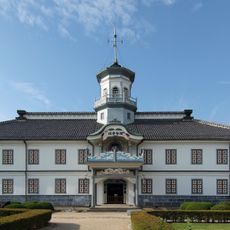
Todoroki Residence, Historical inn in Azumino, Japan
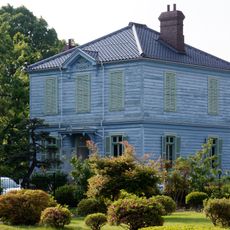
Todoroki Residence is a historic building in Hotaka Todoroki, Azumino, Nagano Prefecture, designated as a tangible cultural property of Azumino City. Its grounds include a nagayamon gate, a main house with four rooms including a daimyo's chamber, and a garden with a shumisen stone arrangement in the style of the mid-Momoyama period. The garden and the shoin were built in the mid-Edo period.
The Todoroki family, retainers of the Nishina clan, became local samurai under the Edo shogunate and later headmen (shōya). The residence served as the honjin of the Matsumoto domain, where the lord rested during hunting trips to the duck grounds here. The family founded Tōryū-ji, predecessor of today's Tōkō-ji, and moved the building from Kaimei's Kitajō in 1590.
A honjin was not an ordinary inn but a place reserved strictly for daimyo, imperial messengers, and high-ranking officials. Visitors today can still see how the rooms were arranged by the rank of each guest, with separate entrances for different levels of status.
The residence is in an easily reachable part of Azumino and is best visited with a guided tour that explains the purpose of each room. Going in the morning tends to be quieter, as groups often arrive later in the day.
The name is read "Todoriki", not "Todoroki": Edo-period land registers of 1647 and 1702 give the reading in kana, and the 1:25,000 maps of the Geospatial Information Authority of Japan follow it. The common reading "Todoroki" rests on a single late-Edo variant text of the Oto Monogatari, a 19th-century account of the Oto battle, not a place-name source.
The community of curious travelers
AroundUs brings together thousands of curated places, local tips, and hidden gems, enriched daily by 93,480 contributors worldwide.