Funagatayama-jinja, Shinto shrine in Taiwa, Miyagi Prefecture, Japan
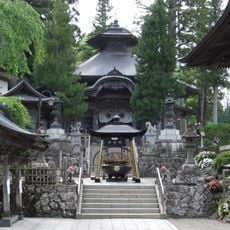
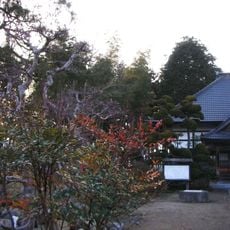
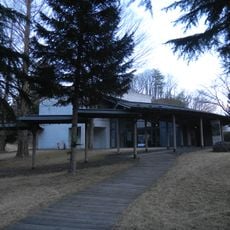
Funagatayama-jinja is a small Shinto shrine in Taiwa featuring nagare-zukuri architecture, characterized by a roof that slopes to one side and projects outward to create a small portico above the entrance. The wooden structure blends naturally with surrounding trees and stones, creating a warm and welcoming appearance.
The founding date is unknown; one account in the Oku Kanshō Iroshi attributes it to the reign of Emperor Hanzei. It was built to worship Mount Funagatayama from afar. In the Edo period it received donations from the Sendai Domain and, with the Shingon temple Shingyō-ji as its betto, was one of ten rain-prayer sites in the domain.
The shrine's annual rite on 1 May, the Ofunetenzan-sai, centres on a 15 cm gilt-bronze bodhisattva kept buried in a secret spot on Mount Funagata. It is dug out, carried to the Yakushi-dō and unveiled; the statue's dampness is read as a sign of the year's weather. Worshippers then scramble for a bonten pole thrown among them, a custom designated a prefectural intangible folk cultural property as "Funagatayama-jinja no bonten-bayai".
The shrine sits about 20 km west of the Yoshioka district where Taiwa town hall is located. By car, take Miyagi Prefectural Route 147 toward Mount Funagata; near the Hatasaka campsite, a forest road runs along the western edge of the Ojoji-hara training ground toward central Shikama. The shrine stands at the mountain's foot, not on the summit.
The shrine's go-shintai is a 15 cm gilt-bronze standing bodhisattva in a style from the Korean Three Kingdoms period (mid-6th century), likely brought to Japan by immigrants around the time of Buddhism's introduction. It is buried in a secret spot in the mountain and unearthed only for the May 1 festival, when its dampness is said to foretell the year's weather.
The community of curious travelers
AroundUs brings together thousands of curated places, local tips, and hidden gems, enriched daily by 94,452 contributors worldwide.