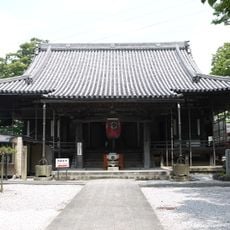
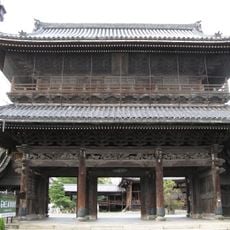
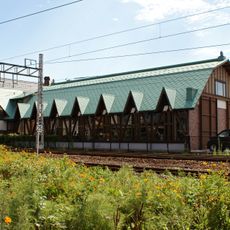
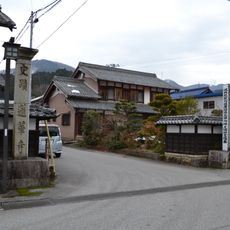
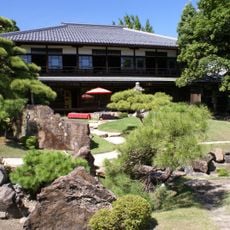
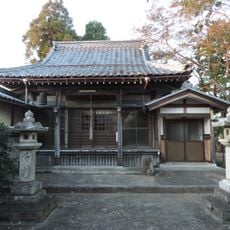
Shana-in, Buddhist temple in Nagahama, Japan.
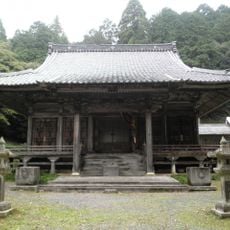
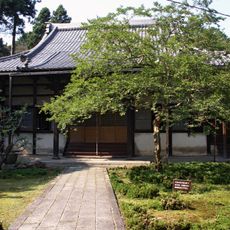
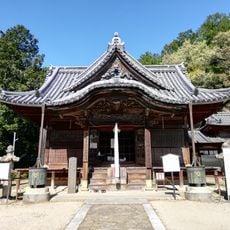
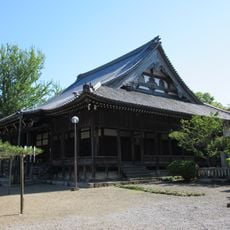
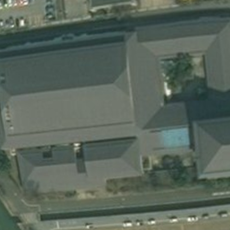
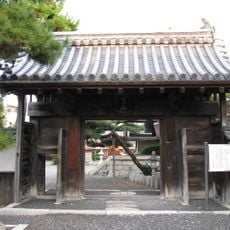
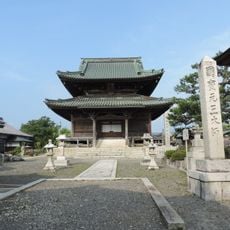
Shana-in is a Shingon-shu Buzan-ha temple whose main hall (Hondo) was rebuilt in 1810 by master carpenter Murao Kyubei and repaired in 1942; its side doors were transferred from the old National Diet building. The Goma-do hall, a Muromachi-period building of three bays by three with a hip-and-gable cypress-bark roof, is a rare surviving medieval structure. The grounds also hold a Kannon-do, a bell tower rebuilt in 1755, and a pond called Shinji-ike.
Founded in 814 by Kukai as the head temple of Shin-Hojo-ji, it was first called Shana-in. In 1069 Minamoto no Yoshiie, after praying there for victory in the Former Nine Years' War, received the mountain name Shogun-san from Emperor Gosanjo, who also had a Hachiman shrine built on the grounds. The temple was later renamed Shana-in in the Meiji period.
The temple holds Buddha statues rescued from temples that closed during the Meiji period's religious reforms. These sculptures represent a chapter when many sacred sites had to reshape their role in the changing spiritual landscape.
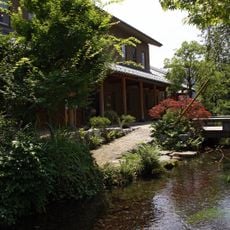
Shana-in is about a 15-minute walk from Nagahama Station on the JR Hokuriku Main Line; the temple stands directly west of Nagahama Hachimangu in Miyamae-machi. The grounds hold the main hall, a tea house, a bell tower and a pond, so allow time to walk between them.
The site once housed a tea room called Bosen that was later relocated to Sapporo and renamed the Hassoan Tea House in 1919. This relocation reflects how religious spaces and their elements could be moved and transformed across Japan's landscape.
The community of curious travelers
AroundUs brings together thousands of curated places, local tips, and hidden gems, enriched daily by 93,542 contributors worldwide.