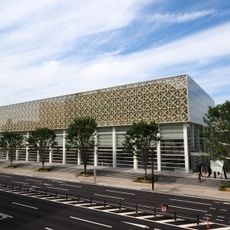
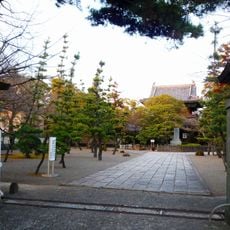
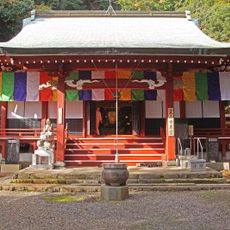
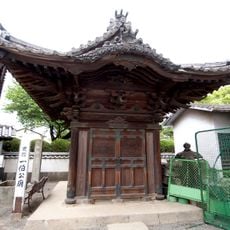
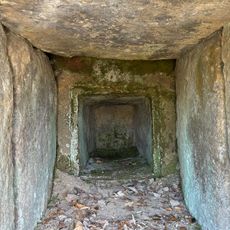
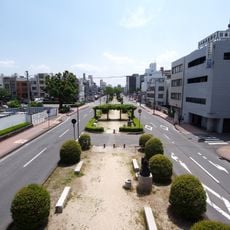
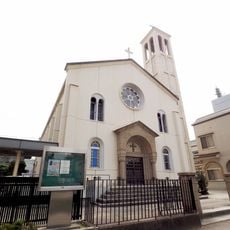
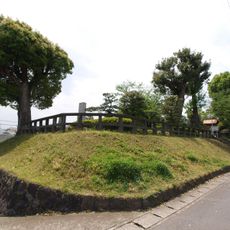
Bungo Kokubun-ji, Provincial temple in Ōita, Japan.
Bungo Kokubun-ji is a Tendai temple in Ōita whose main hall, the Yakushi-dō, stands on the stone foundations of the original 8th-century kondō, while the Kannon-dō occupies the spot of the former pagoda. Excavations show the temple grounds measured 183 m east-west by 300 m north-south, with a central gate, kondō, lecture hall and dining hall aligned north-south and a seven-storey pagoda southwest of the kondō.
Emperor Shōmu founded this site in the 8th century as one of a nationwide system of provincial temples designed to strengthen Buddhism across Japan. The creation of this network marked a turning point in how the state integrated religious institutions into its governance structure.
The temple belongs to the Tendai school and is known as Iōzan Kokubun-ji, with a Yakushi Nyorai as its principal image. A standing Eleven-Faced Kannon statue, designated a city cultural property in 1981, is kept here. The temple was the only Kokubun-ji in Japan to become a subsidiary temple of a provincial ichinomiya, the Usa Hachiman-gū, by the Nanboku-chō period.
The temple stands at Kokubu 972 in Ōita, a two-minute walk from JR Kyūdai Main Line's Bungo-Kokubu Station. From Ōita Station on the Nippō Main Line, take an Ōita Bus to the Rekishi Shiryōkan Iriguchi stop, right by the site. The excavated precinct, about 3.3 hectares, is laid out as a park beside the Ōita City History Museum.
Excavations found no trace of the 1586 burning of Funai by Shimazu Iehisa, though tradition holds that the fire destroyed the temple. The pagoda foundation, 18 m on each side, points to a seven-storey tower about 60 m tall, among the three largest of Japan's 64 provincial temples.
The community of curious travelers
AroundUs brings together thousands of curated places, local tips, and hidden gems, enriched daily by 93,642 contributors worldwide.