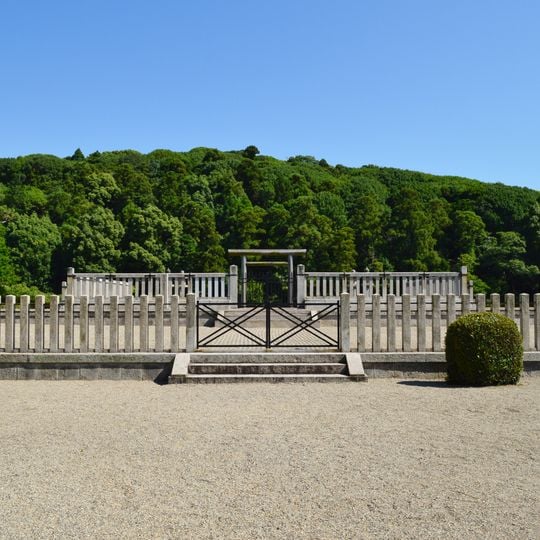
Konda Gobyōyama Kofun, Imperial mausoleum in Habikino, Japan
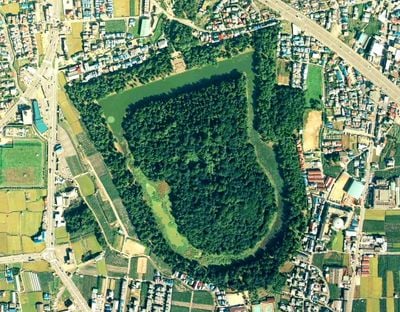
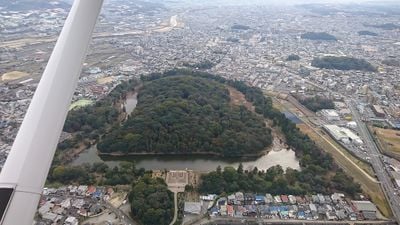
Konda Gobyōyama Kofun is a keyhole-shaped mound with a circular rear section about 250 metres across and 35 metres high, joined to a rectangular front section about 300 metres wide and 36 metres high. The whole mound is covered in trees and encircled by a water-filled moat; on the west side a second, narrower moat lies beyond a middle embankment. The total mound length is about 425 metres.
This burial mound was built during the first half of the 5th century and is designated by the Imperial Household Agency as the resting place of Emperor Ōjin. Its construction occurred during a period when such monumental structures demonstrated the power and influence of early Japanese ruling families.
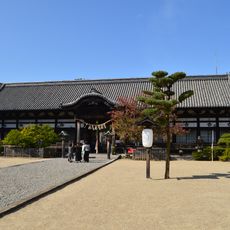
The mound is tended as the sacred grove of neighbouring Hōda Hachimangū, Japan's oldest Hachiman shrine, which grew up around the tomb and keeps a 15th-century painted scroll describing its founding. The shrine's precinct borders the burial mound to the south. The inner moat is a habitat of the himebotaru firefly.
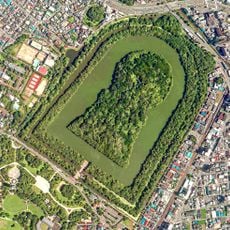
The Imperial Household Agency manages the mound, and entry onto it and archaeological investigation are not permitted; visitors view it from outside. The inner moat is 170–250 cm deep, deeper than at Daisenryō Kofun. The outer moat and outer embankment were built only on the west side, not the east. The worship point (haisho) stands at the front of the front section, reached from the south side where Hōda Hachimangū sits.
The inner moat is 170 to 250 cm deep, considerably deeper than that of the Daisenryō Kofun. Pottery figures of fish — whale, squid, octopus, shark and dolphin — were unearthed from it together with haji ware, and fireflies live in the water today.
The community of curious travelers
AroundUs brings together thousands of curated places, local tips, and hidden gems, enriched daily by 93,465 contributors worldwide.