Dōmyō-ji, Buddhist temple in Fujiidera, Japan
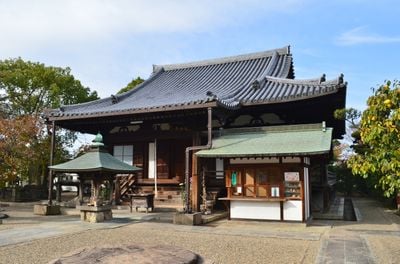
Dōmyō-ji is a Buddhist nunnery in Fujiidera housing an eleven-headed statue of Avalokiteśvara carved from a single piece of kaya wood during the early Heian period. This sculpture stands as one of the site's most treasured religious artworks and draws visitors interested in traditional Buddhist craftsmanship.
Haji no Yashima donated his residence in 594 to found Haji-dera, named for his Haji clan, on land south of what is now Dōmyō-ji Tenmangū. In 947 the temple enshrined an eleven-headed Kannon attributed to Sugawara no Michizane and took the name Dōmyō-ji from his title. It became a prayer temple for the Kamakura and Muromachi shogunates, burned in 1575, and was moved to its present site in 1873 after separation from the shrine.
The nunnery's name comes from Sugawara no Michizane's title, Dōmyō, after it enshrined an eleven-headed Kannon he is said to have carved. Its nuns have long made hoshi-i dried rice, sold today as Dōmyōji hoshi-i; the wrapper inscription is attributed to Toyotomi Hideyoshi. Coarsely ground, it becomes Dōmyōji-ko, the flour used for Kansai-style sakura mochi.
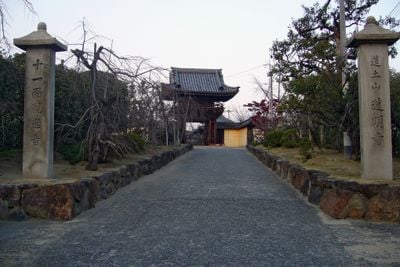
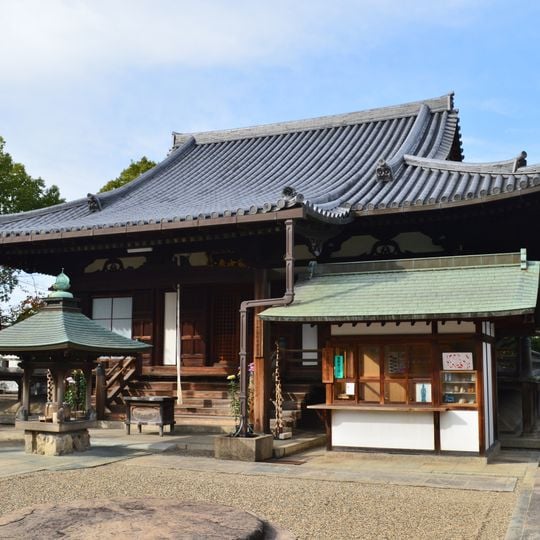
Dōmyō-ji lies about 500 metres west of Dōmyōji Station on the Kintetsu Minami-Osaka and Dōmyōji lines. The main hall, Daishidō, Gomadō, eastern gate, kuri, garden and rōmon stand within the grounds, and the foundation stones of the former five-storey pagoda remain to the south of the temple.
The original foundation stones and the base of a former five-story pagoda remain visible on the grounds. These archaeological remnants tell the story of earlier structures and show how the site changed across the centuries.
The community of curious travelers
AroundUs brings together thousands of curated places, local tips, and hidden gems, enriched daily by 94,441 contributors worldwide.