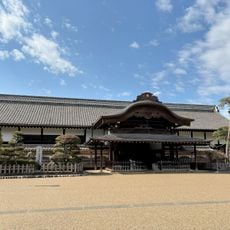
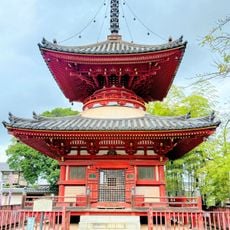
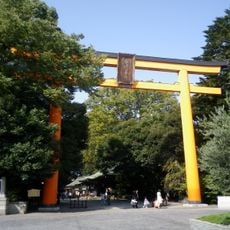
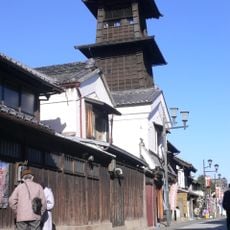
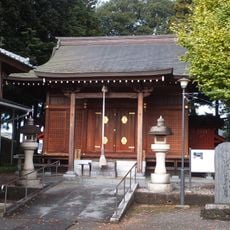
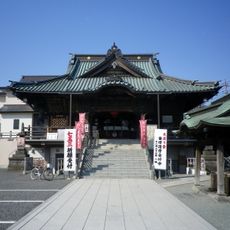
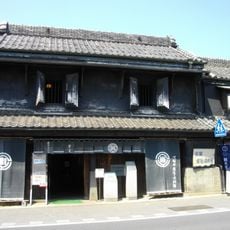
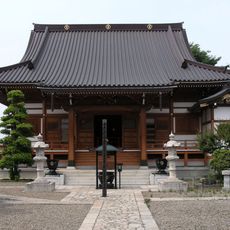
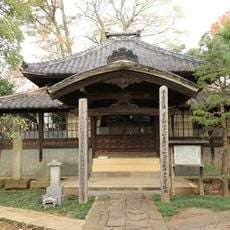
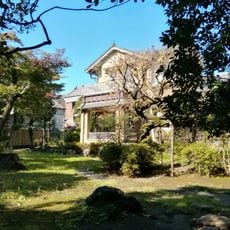
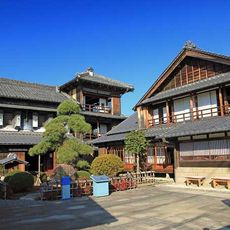
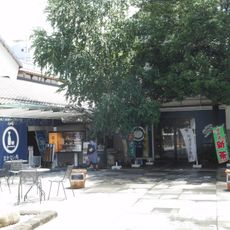
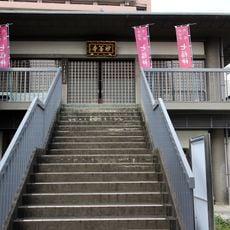
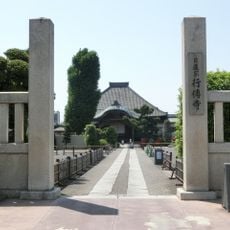
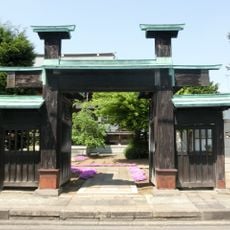
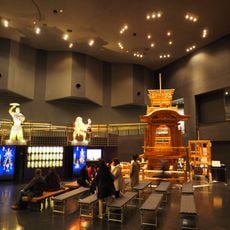
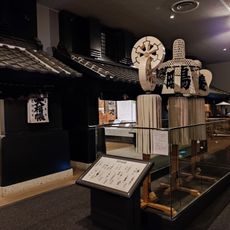
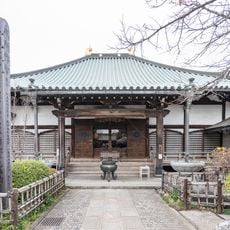
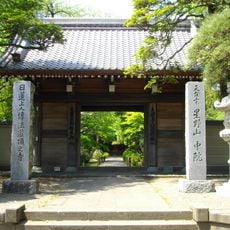
Yōju-in, Buddhist temple in Kawagoe, Japan.
Yōju-in is a Sōtō Zen temple in Motomachi 2-chōme, Kawagoe, with the mountain name Seiryūzan. Its main hall keeps a bronze bell cast in 1260, donated by the Kawagoe clan to the Shin-Hiyoshi Sannō shrine, inscribed "Musashi Province, Kawagoe Estate, Shin-Hiyoshi Sannō Shrine". In the cemetery stands the grave of Kawagoe Tarō Shigeyori, and the temple holds a copy of the memorial tablet of Shigeyori's daughter, Gozen, wife of Minamoto no Yoshitsune.
Founded in 1244 by Kawagoe Tsuneshige, head of the Kawagoe clan, with the monk Daiajari Enkei as founder, Yōju-in began as an esoteric Buddhist site. In 1535 it was converted from the Tendai school to the Sōtō Zen school. When Tokugawa Ieyasu entered the Kantō region, he granted the temple a vermilion-seal stipend of ten koku and stopped there during falconry.
The temple keeps the grave of Kawagoe Tarō Shigeyori and a copy of the memorial tablet of Gozen, daughter of Shigeyori and wife of Minamoto no Yoshitsune, whose original is at Unzai-ji in Iwate Prefecture. The grave of Iwata Hikosuke, chief retainer of Kawagoe daimyō Akimoto Takatomo in the Edo period, also stands in the cemetery.
Yōju-in stands in Motomachi 2-chome, a short walk from the Kawagoe Ichibangai bus stop on the Tobu bus route from Kawagoe Station. The temple grounds are flat and compact, with the main hall, bell tower and cemetery close together, so visiting takes little time.
The temple keeps a bronze bell cast in 1260, donated by the Kawagoe clan to the Shin-Hiyoshi Sannō shrine; its inscription reads "Musashi Province, Kawagoe Manor, Shin-Hiyoshi Sannō" and preserves the old spelling "Kawagoe" (河肥). It is a nationally designated Important Cultural Property.
The community of curious travelers
AroundUs brings together thousands of curated places, local tips, and hidden gems, enriched daily by 93,536 contributors worldwide.