Great Buddha of Takaoka, Copper Amida Buddha statue in Takaoka, Toyama Prefecture, Japan
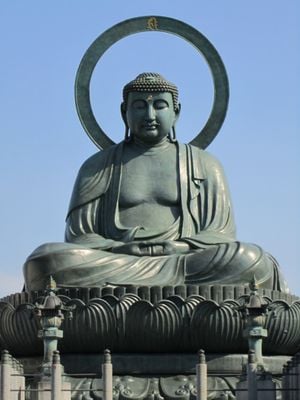
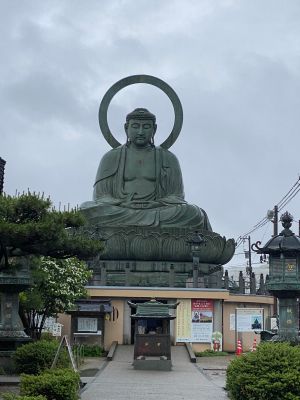
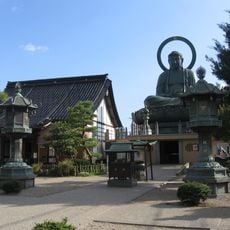
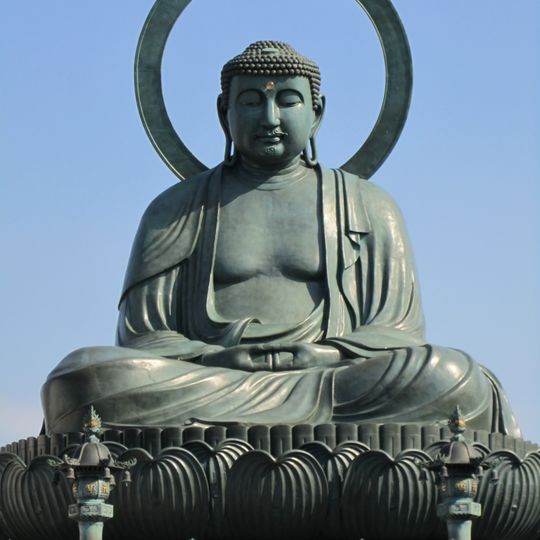
The Great Buddha of Takaoka is a seated Amida figure of patinated copper at Daibutsu Temple in Takaoka, Japan. The cross-legged figure rests on a base of ribbed lotus petals, with two small metal lanterns at the front corners. A plain circular halo rises behind the head, and the hands lie folded in the lap.
The first Buddha, a 4.8-metre wooden figure, was raised in 1221 by Minamoto Yoshikatsu at the foot of Mount Futagami. Moved into the castle town after Maeda Toshinaga founded Takaoka in 1609, it burned and was rebuilt in 1745 as a 9.7-metre gilded wooden statue by the priest Tōyo of Gokuraku-ji, then lost again in 1821 and 1841 fires. The 1900 Takaoka fire destroyed its successor; Matsuki Sōzaemon launched the copper replacement in 1907, completed in 1933.
The statue showcases the skill of local artisans who have worked copper for centuries, making the city a center for metal craftsmanship. Visitors can see in the surface details how carefully the panels were joined together.
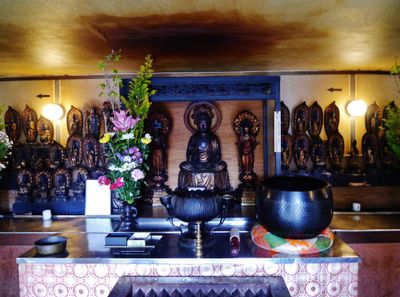
The statue stands in Takaoka's central district, about ten minutes on foot from Takaoka Station and a few minutes from the Sakashitachō tram stop, which carries the secondary name "Takaoka Daibutsu-guchi". A corridor inside the base holds hell paintings and the head of the wooden Buddha lost in the 1900 fire. The grounds are compact and easy to walk.
The poet Yosano Akiko called the face of the figure more handsome than that of the famous Buddha in Kamakura. The facial features appear especially soft and expressive thanks to the refined copper work.
The community of curious travelers
AroundUs brings together thousands of curated places, local tips, and hidden gems, enriched daily by 94,782 contributors worldwide.